
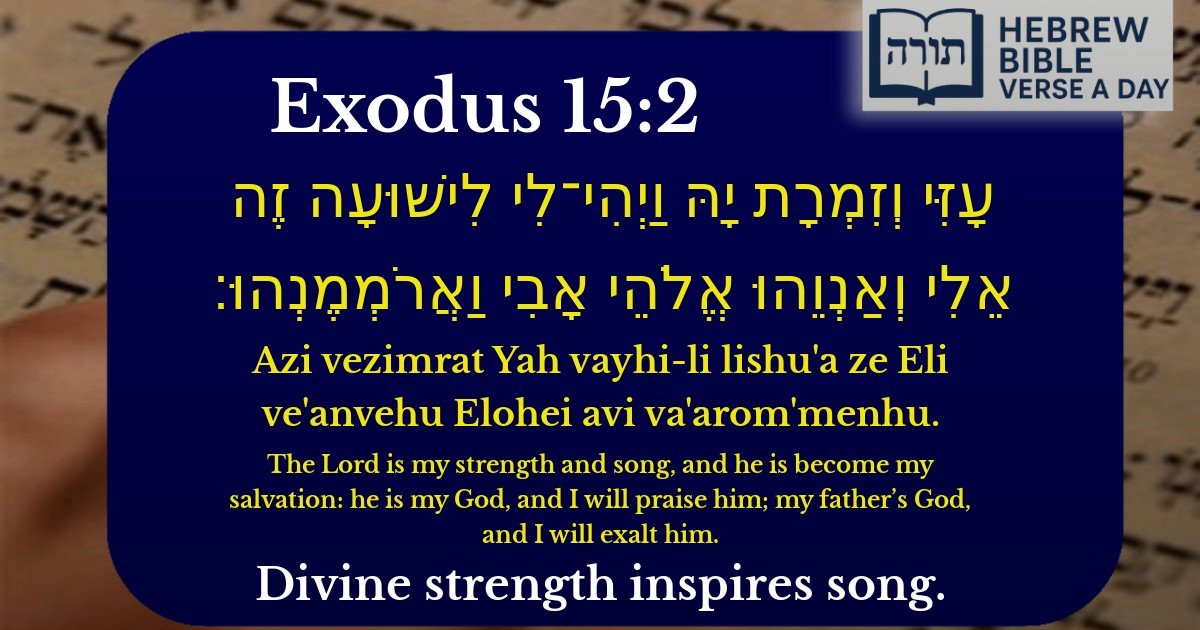

Exodus 15:2 - Divine strength inspires song.

Exodus 15:2 - שמות 15:2

Hebrew Text

עָזִּי וְזִמְרָת יָהּ וַיְהִי־לִי לִישׁוּעָה זֶה אֵלִי וְאַנְוֵהוּ אֱלֹהֵי אָבִי וַאֲרֹמְמֶנְהוּ׃

English Translation

The Lord is my strength and song, and he is become my salvation: he is my God, and I will praise him; my father’s God, and I will exalt him.

Transliteration

Azi vezimrat Yah vayhi-li lishu'a ze Eli ve'anvehu Elohei avi va'arom'menhu.

Hebrew Leining Text

עׇזִּ֤י וְזִמְרָת֙ יָ֔הּ וַֽיְהִי־לִ֖י לִֽישׁוּעָ֑ה&nbsp

🎵 Listen to leining

Parasha Commentary

Verse Context: Shirat HaYam (Song of the Sea)

This verse (Shemot 15:2) is part of Shirat HaYam, the song sung by Bnei Yisrael after the miraculous splitting of the Red Sea. It expresses gratitude and recognition of Hashem's salvation and might. The Midrash (Mechilta D'Rabbi Yishmael) explains that this song was sung with prophetic inspiration, as the people experienced an unparalleled revelation of the Divine.

Analysis of Key Phrases

  • "עָזִּי וְזִמְרָת יָהּ" (My strength and song is the Lord): Rashi explains that "עָזִּי" (my strength) refers to the miracles Hashem performed, while "זִמְרָת" (my song) represents the praise sung in response. The name "יָהּ" (Yah) denotes Hashem's eternal and unchanging nature (Shemot Rabbah 23:1).
  • "וַיְהִי־לִי לִישׁוּעָה" (He has become my salvation): The Ramban notes that this phrase emphasizes that salvation comes exclusively from Hashem, not human effort. The past tense ("has become") suggests an ongoing relationship—Hashem was, is, and will always be the source of deliverance.
  • "זֶה אֵלִי וְאַנְוֵהוּ" (This is my God, and I will glorify Him): The Talmud (Berachot 9b) teaches that "אַנְוֵהוּ" (I will glorify Him) implies beautifying mitzvot—performing them with aesthetic excellence (e.g., a beautiful sukkah or etrog). The Sforno adds that this phrase reflects the people's intimate recognition of Hashem after witnessing His greatness.
  • "אֱלֹהֵי אָבִי וַאֲרֹמְמֶנְהוּ" (My father’s God, and I will exalt Him): The Malbim explains that this connects the present miracle to the legacy of the Avot (Patriarchs), showing continuity in Hashem's covenant. "אֲרֹמְמֶנְהוּ" (I will exalt Him) signifies public proclamation of His greatness (Mechilta).

Themes and Lessons

This verse encapsulates core Jewish principles:

  • Gratitude and Recognition: The song models how to acknowledge Hashem's intervention in history and personal life.
  • Continuity of Faith: By referencing "my father’s God," it teaches that emunah (faith) is both inherited and personally affirmed.
  • Active Praise: The verbs "אַנְוֵהוּ" and "אֲרֹמְמֶנְהוּ" emphasize that devotion requires action—through mitzvot and public declaration.

Kabbalistic Insight

The Zohar (Beshalach) interprets "עָזִּי וְזִמְרָת יָהּ" as alluding to the balance of gevurah</em (strength, "עָזִּי") and chesed (song, "זִמְרָת") in Divine governance. The name "יָהּ" represents the unity of these attributes in Hashem's salvation.

📚 Talmud Citations

This verse is quoted in the Talmud.

The verse is cited in the context of discussing the Song of the Sea (Exodus 15), where it is part of the song sung by the Israelites after crossing the Red Sea. The Talmud discusses the significance of this song and its verses in the context of divine praise and salvation.
📖 Megillah 10b
The verse is referenced in a discussion about the miracles performed for the Israelites and the appropriate responses of praise and gratitude to God. The Talmud uses this verse to illustrate the theme of divine salvation and the proper attitude of worship.

Frequently Asked Questions

Q: What does 'The Lord is my strength and song' mean in Exodus 15:2?
A: Rashi explains that 'my strength' refers to God giving the Israelites the power to overcome Pharaoh, and 'my song' means that God is the subject of their praise after the miracle of the Red Sea. This verse is part of the Song of the Sea (Shirat HaYam), sung after the Exodus.
Q: Why is Exodus 15:2 important in Jewish tradition?
A: This verse is central to the Song of the Sea, which is recited daily in the morning prayers (Pesukei D'Zimrah). It emphasizes gratitude to God for salvation and serves as a model for praising God after experiencing miracles. The Talmud (Sotah 30b) describes how the Israelites sang this song with great inspiration.
Q: How can we apply Exodus 15:2 in our lives today?
A: The Rambam teaches that this verse reminds us to recognize God's hand in our personal salvations, both big and small. Just as the Israelites praised God after the Exodus, we should cultivate gratitude and acknowledge God's help in our daily lives. The phrase 'this is my God' (זֶה אֵלִי) also implies a personal relationship with the Divine.