

Join Our Newsletter To Be Informed When New Videos Are Posted
Hebrew Text
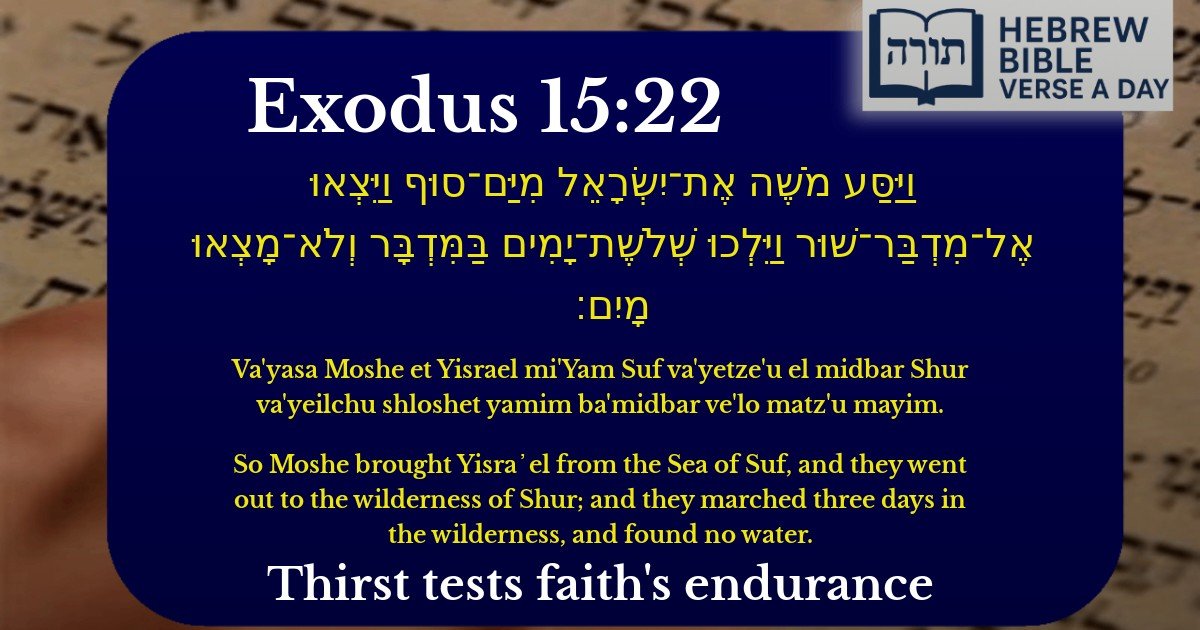
וַיַּסַּע מֹשֶׁה אֶת־יִשְׂרָאֵל מִיַּם־סוּף וַיֵּצְאוּ אֶל־מִדְבַּר־שׁוּר וַיֵּלְכוּ שְׁלֹשֶׁת־יָמִים בַּמִּדְבָּר וְלֹא־מָצְאוּ מָיִם׃
English Translation
So Moshe brought Yisra᾽el from the Sea of Suf, and they went out to the wilderness of Shur; and they marched three days in the wilderness, and found no water.
Transliteration
Va'yasa Moshe et Yisrael mi'Yam Suf va'yetze'u el midbar Shur va'yeilchu shloshet yamim ba'midbar ve'lo matz'u mayim.
Hebrew Leining Text
וַיַּסַּ֨ע מֹשֶׁ֤ה אֶת־יִשְׂרָאֵל֙ מִיַּם־ס֔וּף וַיֵּצְא֖וּ אֶל־מִדְבַּר־שׁ֑וּר וַיֵּלְכ֧וּ שְׁלֹֽשֶׁת־יָמִ֛ים בַּמִּדְבָּ֖ר וְלֹא־מָ֥צְאוּ מָֽיִם׃
🎵 Listen to leining
Parasha Commentary
📚 Talmud Citations
This verse is not quoted in the Talmud.
The Journey After the Splitting of the Sea
The verse (Shemot 15:22) describes Bnei Yisrael's departure from Yam Suf (the Sea of Reeds) and their entry into the wilderness of Shur. Rashi explains that the wilderness of Shur was named after the city of Shur, which was located near the border of Egypt (see Bereishit 16:7). This was the first stage of their journey into the wilderness.
The Three Days Without Water
The Torah emphasizes that they traveled for three days without finding water. The Midrash (Mechilta Beshalach 1) teaches that this was a test from Hashem to strengthen their faith after witnessing the miracles at Yam Suf. Ramban (Nachmanides) adds that this was a necessary hardship to prepare them for future challenges in the wilderness.
Spiritual Significance of "No Water"
Water is often used in Torah as a metaphor for Torah itself (see Talmud, Bava Kama 82a). The Mechilta suggests that the three days without water allude to the future mitzvah of publicly reading the Torah every three days (later codified as the Monday and Thursday readings). This teaches that one should not go three days without engaging in Torah study.
The Location of Marah
The next verses describe their arrival at Marah where the waters were bitter. The Sforno explains that this entire sequence - from Yam Suf to Shur to Marah - was deliberately orchestrated to bring them to Mount Sinai via a specific route that would teach them important spiritual lessons before receiving the Torah.