
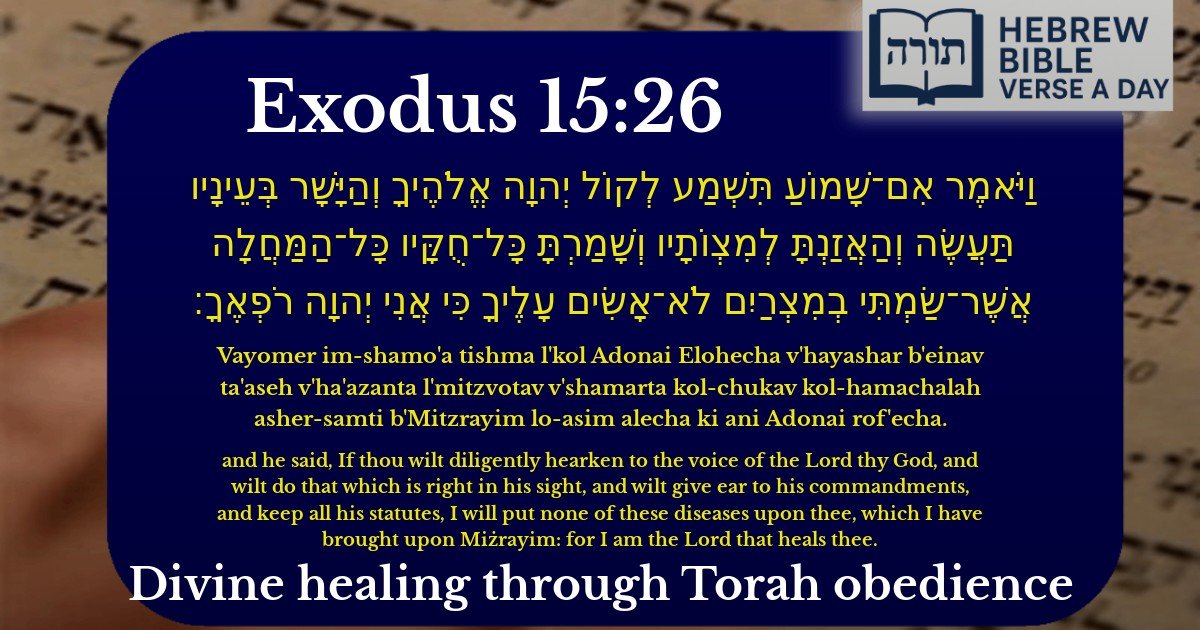

Exodus 15:26 - Divine healing through Torah obedience

Exodus 15:26 - שמות 15:26

Hebrew Text

וַיֹּאמֶר אִם־שָׁמוֹעַ תִּשְׁמַע לְקוֹל יְהוָה אֱלֹהֶיךָ וְהַיָּשָׁר בְּעֵינָיו תַּעֲשֶׂה וְהַאֲזַנְתָּ לְמִצְוֺתָיו וְשָׁמַרְתָּ כָּל־חֻקָּיו כָּל־הַמַּחֲלָה אֲשֶׁר־שַׂמְתִּי בְמִצְרַיִם לֹא־אָשִׂים עָלֶיךָ כִּי אֲנִי יְהוָה רֹפְאֶךָ׃

English Translation

and he said, If thou wilt diligently hearken to the voice of the Lord thy God, and wilt do that which is right in his sight, and wilt give ear to his commandments, and keep all his statutes, I will put none of these diseases upon thee, which I have brought upon Miżrayim: for I am the Lord that heals thee.

Transliteration

Vayomer im-shamo'a tishma l'kol Adonai Elohecha v'hayashar b'einav ta'aseh v'ha'azanta l'mitzvotav v'shamarta kol-chukav kol-hamachalah asher-samti b'Mitzrayim lo-asim alecha ki ani Adonai rof'echa.

Hebrew Leining Text

וַיֹּ֩אמֶר֩ אִם־שָׁמ֨וֹעַ תִּשְׁמַ֜ע לְק֣וֹל ׀ יְהֹוָ֣ה אֱלֹהֶ֗יךָ וְהַיָּשָׁ֤ר בְּעֵינָיו֙ תַּעֲשֶׂ֔ה וְהַֽאֲזַנְתָּ֙ לְמִצְוֺתָ֔יו וְשָׁמַרְתָּ֖ כׇּל־חֻקָּ֑יו כׇּֽל־הַמַּחֲלָ֞ה אֲשֶׁר־שַׂ֤מְתִּי בְמִצְרַ֙יִם֙ לֹא־אָשִׂ֣ים עָלֶ֔יךָ כִּ֛י אֲנִ֥י יְהֹוָ֖ה רֹפְאֶֽךָ׃ {ס}        

🎵 Listen to leining

Parasha Commentary

Context and Source

This verse appears in Shemot (Exodus) 15:26, following the miracle of the splitting of the Red Sea and the song of praise (Shirat HaYam). It is part of Hashem's promise to Bnei Yisrael regarding their health and well-being if they adhere to His commandments.

Key Themes and Interpretation

The verse emphasizes the direct relationship between obedience to Hashem’s will and physical and spiritual well-being. The phrasing "If you diligently hearken..." (im shamo’a tishma) suggests an intensified level of attentiveness to divine commandments.

  • Rashi explains that the double language (shamo’a tishma) implies that one should not only learn Torah but also teach it diligently to others, ensuring its transmission.
  • Rambam (Hilchot De'ot 4:20) connects this verse to the broader principle that proper observance of mitzvot leads to health, as Hashem is the ultimate healer (Hashem rofecha).
  • Sforno notes that "doing what is right in His sight" refers to ethical behavior beyond strict legal obligations (lifnim mishurat hadin).

The Promise of Health

The verse assures that if Bnei Yisrael follow Hashem’s commandments, they will be spared the diseases that afflicted Egypt. This is understood both literally and metaphorically:

  • Literal Interpretation (Ibn Ezra): The plagues of Egypt were supernatural, and Hashem promises protection from similar afflictions.
  • Metaphorical Interpretation (Midrash Tanchuma): The "diseases of Egypt" symbolize moral corruption; avoiding sin preserves spiritual health.

"I am Hashem Your Healer"

The declaration Ani Hashem rofecha ("I am Hashem your healer") underscores that true healing comes from divine providence, not human efforts alone.

  • Ramban explains that this teaches trust in Hashem for both physical and spiritual healing, as He governs all aspects of existence.
  • Chizkuni adds that this phrase reinforces that Hashem’s commandments are not arbitrary but designed for human benefit.

📚 Talmud Citations

This verse is quoted in the Talmud.

📖 Yoma 75b
The verse is referenced in a discussion about the manna and the divine promise of health to those who follow God's commandments.
📖 Nedarim 41a
The verse is cited in the context of discussing the importance of heeding God's commandments for health and well-being.

Frequently Asked Questions

Q: What does Exodus 15:26 mean in simple terms?
A: Exodus 15:26 teaches that if the Jewish people listen to Hashem (God), follow His commandments, and do what is right in His eyes, He will protect them from the illnesses that afflicted the Egyptians. It emphasizes that Hashem is our healer and provider of health when we obey His will.
Q: Why is the phrase 'I am the Lord that heals thee' important in this verse?
A: The phrase 'I am the Lord that heals thee' (ה' רֹפְאֶךָ) reminds us that true healing comes from Hashem. According to Jewish tradition (Rambam, Hilchot De'ot 4:20), maintaining physical and spiritual health requires following Torah guidance. This verse connects obedience to mitzvot with divine protection and well-being.
Q: How does this verse apply to our lives today?
A: This verse teaches that observing Torah and mitzvot brings spiritual and physical blessings. The Sages (Talmud Berachot 5a) explain that suffering can sometimes be a wake-up call to improve our ways. By aligning our actions with Hashem’s will, we invite His protection and healing into our lives.
Q: What does 'if you diligently hearken to the voice of the Lord' imply?
A: The double language of 'שָׁמוֹעַ תִּשְׁמַע' (diligently hearken) implies that we must listen carefully and consistently to Hashem’s commandments. Rashi explains that this means studying Torah thoroughly and fulfilling mitzvot with sincerity, not just superficial obedience.
Q: What is the connection between the Exodus from Egypt and this promise of health?
A: The verse contrasts the plagues in Egypt—which punished the Egyptians for their cruelty—with the promise that Israel will be spared such afflictions if they follow Hashem’s ways. The Midrash (Mechilta) notes that just as Hashem demonstrated His power in Egypt, He also shows mercy to those who serve Him faithfully.