
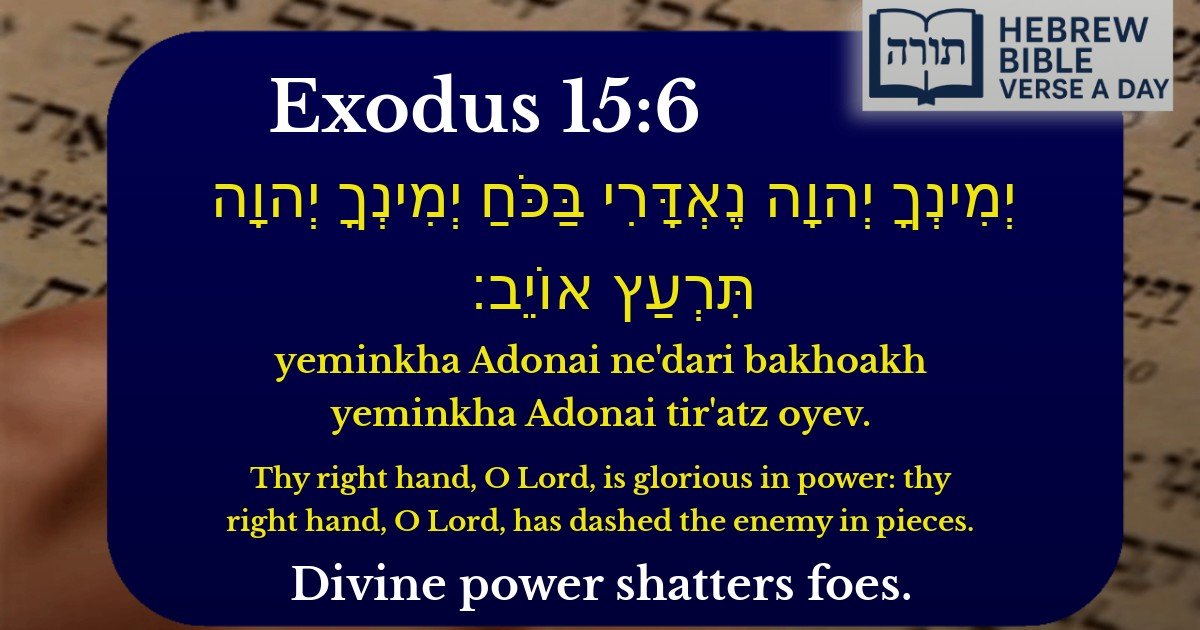

Exodus 15:6 - Divine power shatters foes.

Exodus 15:6 - שמות 15:6

Hebrew Text

יְמִינְךָ יְהוָה נֶאְדָּרִי בַּכֹּחַ יְמִינְךָ יְהוָה תִּרְעַץ אוֹיֵב׃

English Translation

Thy right hand, O Lord, is glorious in power: thy right hand, O Lord, has dashed the enemy in pieces.

Transliteration

Yeminkha Adonai ne'dari bakhoakh yeminkha Adonai tir'atz oyev.

Hebrew Leining Text

יְמִֽינְךָ֣ יְהֹוָ֔ה נֶאְדָּרִ֖י בַּכֹּ֑חַ&nbsp

🎵 Listen to leining

Parasha Commentary

Understanding the Verse

The verse "יְמִינְךָ יְהוָה נֶאְדָּרִי בַּכֹּחַ יְמִינְךָ יְהוָה תִּרְעַץ אוֹיֵב" (Exodus 15:6) appears in Shirat HaYam (the Song of the Sea), sung by Bnei Yisrael after their miraculous deliverance at the Red Sea. It emphasizes Hashem's omnipotent power in defeating their enemies.

Rashi's Commentary

Rashi explains that the repetition of "יְמִינְךָ" (Your right hand) underscores two distinct manifestations of Hashem's power:

  • נֶאְדָּרִי בַּכֹּחַ ("glorious in power")—This refers to the display of Hashem's might in performing the miracles of the Exodus.
  • תִּרְעַץ אוֹיֵב ("dashed the enemy in pieces")—This refers to the execution of judgment upon the Egyptians, drowning them in the sea.

Ibn Ezra's Insight

Ibn Ezra notes that the "right hand" symbolizes strength and direct intervention. The verse poetically describes how Hashem's power was not only revealed in the miracles but also in the swift and decisive punishment of the Egyptians.

Midrashic Interpretation

The Mechilta (a halachic Midrash on Shemot) elaborates that the "right hand" signifies Hashem's attribute of chesed (kindness) in saving Israel, while simultaneously executing justice upon their oppressors. This duality reflects the balance of Divine mercy and judgment.

Rambam's Philosophical Perspective

In Moreh Nevuchim (Guide for the Perplexed), Rambam explains that anthropomorphic language like "right hand" is metaphorical, conveying Hashem's absolute power in a way humans can comprehend. The verse teaches that Divine intervention is both majestic (נֶאְדָּרִי) and decisive (תִּרְעַץ).

Practical Lesson

This verse reinforces the belief in Hashem's active role in history and His ability to protect His people. Reciting it in Shirat HaYam daily during prayers serves as a reminder of past deliverance and a source of faith in future redemption.

📚 Talmud Citations

This verse is not quoted in the Talmud.

Frequently Asked Questions

Q: What does 'Thy right hand, O Lord, is glorious in power' mean in Exodus 15:6?
A: This verse is part of the 'Song of the Sea' (Shirat HaYam), sung by the Israelites after crossing the Red Sea. The 'right hand' of Hashem symbolizes His strength and active intervention in the world. Rashi explains that this phrase highlights Hashem's mighty power displayed when He drowned the Egyptians, showing His ability to save His people and defeat their enemies.
Q: Why is Exodus 15:6 important in Jewish tradition?
A: This verse is significant because it is part of the daily prayer service (Pesukei D'Zimra). It reminds Jews of Hashem's miracles and ongoing protection. The Rambam (Hilchot Tefillah 7:13) emphasizes that reciting these verses daily helps strengthen faith in Hashem's power and justice.
Q: What lesson can we learn from Exodus 15:6 today?
A: The verse teaches that Hashem protects His people and overcomes their adversaries. The Midrash (Mechilta D'Shirah) connects this to trust in Hashem during difficult times—just as He saved Israel from Egypt, He can help us in our struggles when we rely on Him.
Q: How does the 'right hand of Hashem' apply to Jewish belief?
A: In Jewish thought, the 'right hand' represents kindness and strength (based on Kabbalistic teachings). The Talmud (Sanhedrin 90a) associates it with Hashem's saving power. This verse reinforces the belief that Hashem actively guides history with both justice and mercy.
Q: Why does the verse mention Hashem's right hand twice?
A: The repetition emphasizes two aspects of Divine power: 1) Hashem's inherent might ('glorious in power'), and 2) His active intervention ('dashed the enemy'). Ibn Ezra explains that the first refers to potential strength, while the second shows its execution against oppressors.