

Join Our Newsletter To Be Informed When New Videos Are Posted
Hebrew Text
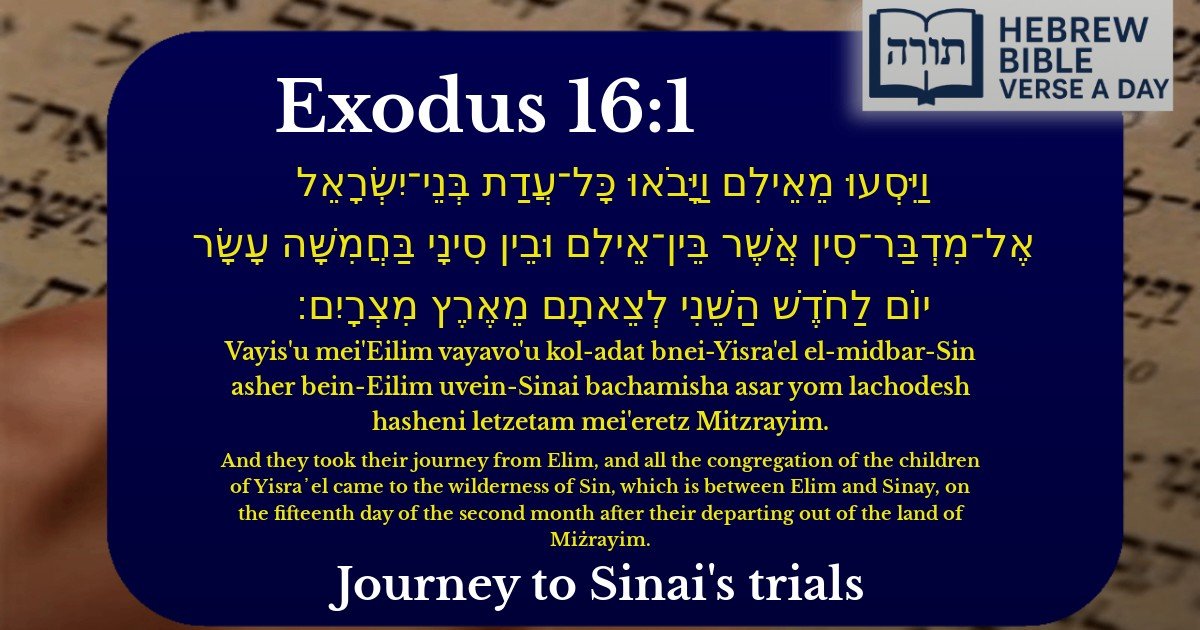
וַיִּסְעוּ מֵאֵילִם וַיָּבֹאוּ כָּל־עֲדַת בְּנֵי־יִשְׂרָאֵל אֶל־מִדְבַּר־סִין אֲשֶׁר בֵּין־אֵילִם וּבֵין סִינָי בַּחֲמִשָּׁה עָשָׂר יוֹם לַחֹדֶשׁ הַשֵּׁנִי לְצֵאתָם מֵאֶרֶץ מִצְרָיִם׃
English Translation
And they took their journey from Elim, and all the congregation of the children of Yisra᾽el came to the wilderness of Sin, which is between Elim and Sinay, on the fifteenth day of the second month after their departing out of the land of Miżrayim.
Transliteration
Vayis'u mei'Eilim vayavo'u kol-adat bnei-Yisra'el el-midbar-Sin asher bein-Eilim uvein-Sinai bachamisha asar yom lachodesh hasheni letzetam mei'eretz Mitzrayim.
Hebrew Leining Text
וַיִּסְעוּ֙ מֵֽאֵילִ֔ם וַיָּבֹ֜אוּ כׇּל־עֲדַ֤ת בְּנֵֽי־יִשְׂרָאֵל֙ אֶל־מִדְבַּר־סִ֔ין אֲשֶׁ֥ר בֵּין־אֵילִ֖ם וּבֵ֣ין סִינָ֑י בַּחֲמִשָּׁ֨ה עָשָׂ֥ר יוֹם֙ לַחֹ֣דֶשׁ הַשֵּׁנִ֔י לְצֵאתָ֖ם מֵאֶ֥רֶץ מִצְרָֽיִם׃
🎵 Listen to leining
Parasha Commentary
📚 Talmud Citations
This verse is not quoted in the Talmud.
Location and Timing of the Journey
The verse describes Bnei Yisrael's journey from Elim to the Wilderness of Sin on the 15th day of the second month (Iyar) after leaving Mitzrayim. Rashi notes that this marks exactly one month since Yetziat Mitzrayim (the Exodus), emphasizing the precise Divine timing of their travels. The Midrash Tanchuma (Beshallach 22) highlights that this location—between Elim and Sinai—was a transitional space where the people began preparing spiritually for Matan Torah (the Giving of the Torah).
The Significance of the Wilderness of Sin
The name "Sin" (סִין) is interpreted by the Ramban (Nachmanides) as related to the word "sneh" (סְנֶה, "thorn bush"), alluding to the future revelation at Har Sinai (Exodus 3:2). The Kli Yakar adds that this wilderness was a place of testing, where Bnei Yisrael would soon face challenges (e.g., the lack of food leading to the manna) to strengthen their emunah (faith).
Chronological Context
Spiritual Preparation
The Ohr HaChaim (R' Chaim ibn Attar) explains that this journey was a necessary step toward Har Sinai. Just as physical travel requires leaving one place to reach another, Bnei Yisrael needed to leave the comfort of Elim to enter the austerity of the wilderness, refining their readiness for Kabbalat HaTorah (Receiving the Torah). The Mechilta (Beshallach 1) further teaches that every stage of their journey was meticulously guided by the Divine Presence, symbolizing the ongoing hashgacha pratit (individual Providence) over Klal Yisrael.