

Join Our Newsletter To Be Informed When New Videos Are Posted
Hebrew Text
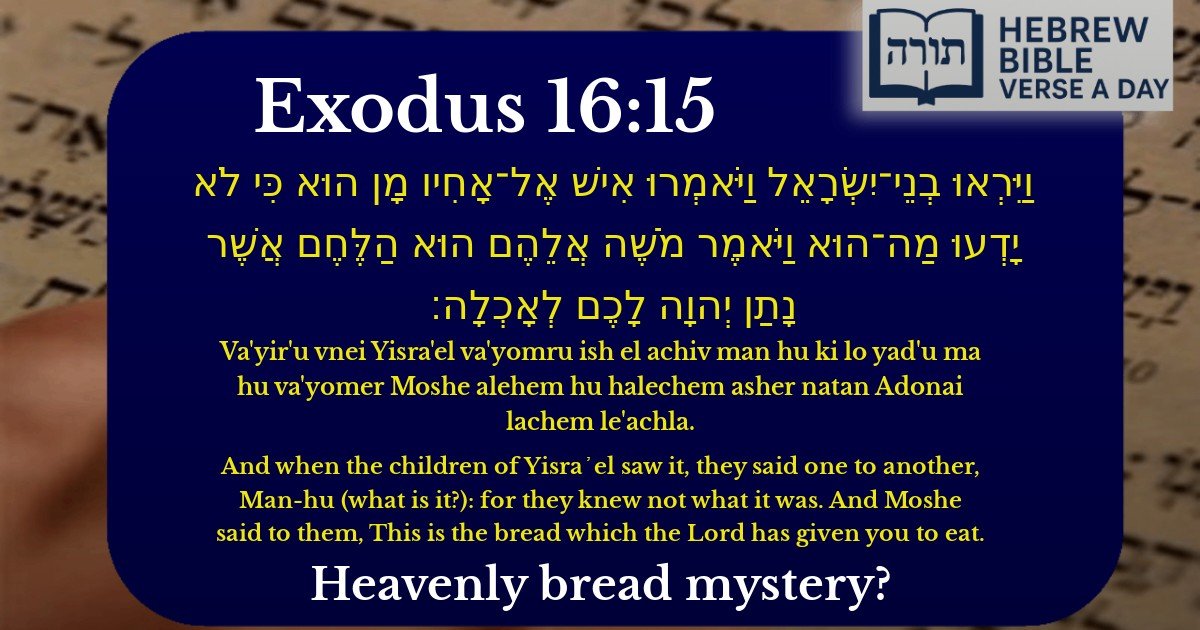
וַיִּרְאוּ בְנֵי־יִשְׂרָאֵל וַיֹּאמְרוּ אִישׁ אֶל־אָחִיו מָן הוּא כִּי לֹא יָדְעוּ מַה־הוּא וַיֹּאמֶר מֹשֶׁה אֲלֵהֶם הוּא הַלֶּחֶם אֲשֶׁר נָתַן יְהוָה לָכֶם לְאָכְלָה׃
English Translation
And when the children of Yisra᾽el saw it, they said one to another, Man-hu (what is it?): for they knew not what it was. And Moshe said to them, This is the bread which the Lord has given you to eat.
Transliteration
Va'yir'u vnei Yisra'el va'yomru ish el achiv man hu ki lo yad'u ma hu va'yomer Moshe alehem hu halechem asher natan Adonai lachem le'achla.
Hebrew Leining Text
וַיִּרְא֣וּ בְנֵֽי־יִשְׂרָאֵ֗ל וַיֹּ֨אמְר֜וּ אִ֤ישׁ אֶל־אָחִיו֙ מָ֣ן ה֔וּא כִּ֛י לֹ֥א יָדְע֖וּ מַה־ה֑וּא וַיֹּ֤אמֶר מֹשֶׁה֙ אֲלֵהֶ֔ם ה֣וּא הַלֶּ֔חֶם אֲשֶׁ֨ר נָתַ֧ן יְהֹוָ֛ה לָכֶ֖ם לְאׇכְלָֽה׃
🎵 Listen to leining
Parasha Commentary
📚 Talmud Citations
This verse is quoted in the Talmud.
📖 Yoma 75a
The verse is discussed in the context of the manna that fell from heaven, exploring its nature and the Israelites' reaction to it.
📖 Chullin 89b
The verse is referenced in a discussion about the humility of Moses and the Israelites' questioning of the manna.
The Nature of the Manna
The verse describes the Israelites' reaction upon first encountering the manna, expressing their bewilderment with the phrase "מָן הוּא" (Man-hu), meaning "What is it?" Rashi (Shemot 16:15) explains that the manna was entirely unfamiliar—a miraculous substance unlike anything they had seen before. The Gemara (Yoma 75a) elaborates that the manna could take on any taste the eater desired, demonstrating Hashem's boundless kindness in providing sustenance tailored to each individual's preference.
Moshe's Clarification
When Moshe responds, "הוּא הַלֶּחֶם אֲשֶׁר נָתַן יְהוָה לָכֶם" ("This is the bread which the Lord has given you"), the Ramban (Shemot 16:15) highlights that Moshe was teaching them to recognize this as a divine gift, not merely natural sustenance. The Midrash (Mechilta Beshalach 4) adds that the manna was given in merit of Moshe, Aharon, and Miriam, emphasizing the role of righteous leaders in facilitating divine providence.
Spiritual Lessons of the Manna
The Manna as a Metaphor for Torah
The Baal HaTurim (Shemot 16:15) notes that the word "מָן" (manna) has the same gematria (numerical value) as "נשמה" (soul), alluding to its spiritual nourishment. The Zohar (Beshalach 62a) further compares the manna to Torah—just as the manna sustained the body, Torah sustains the soul. This aligns with Devarim 8:3, where Moshe teaches that manna symbolized living "by every word that comes from Hashem."