

Join Our Newsletter To Be Informed When New Videos Are Posted
Hebrew Text
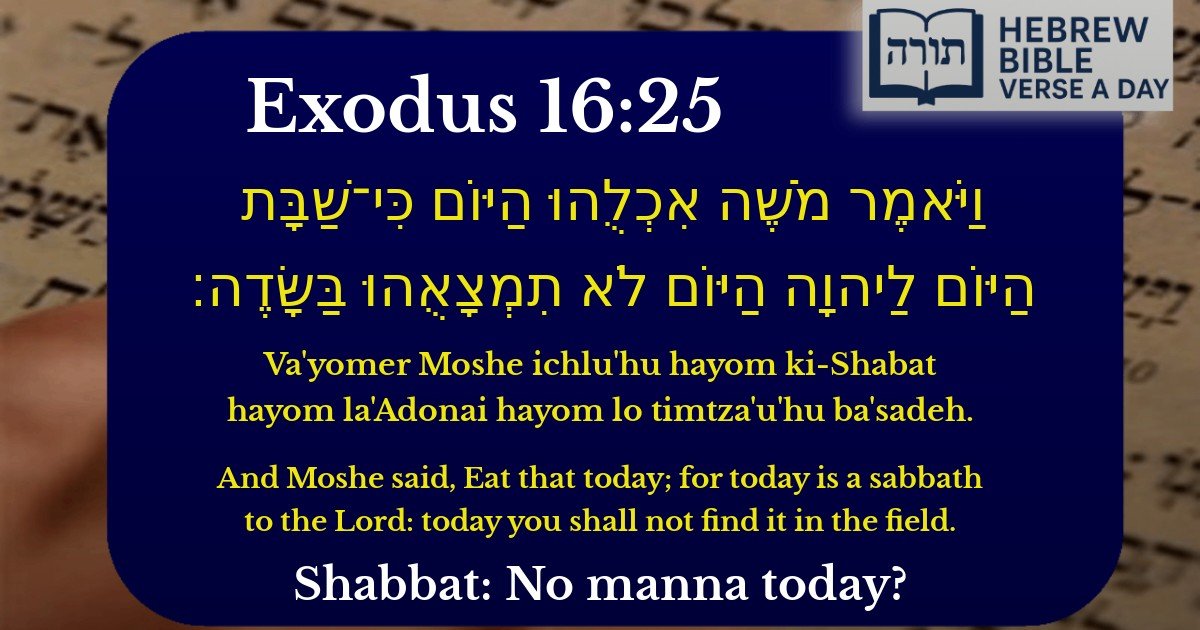
וַיֹּאמֶר מֹשֶׁה אִכְלֻהוּ הַיּוֹם כִּי־שַׁבָּת הַיּוֹם לַיהוָה הַיּוֹם לֹא תִמְצָאֻהוּ בַּשָּׂדֶה׃
English Translation
And Moshe said, Eat that today; for today is a sabbath to the Lord: today you shall not find it in the field.
Transliteration
Va'yomer Moshe ichlu'hu hayom ki-Shabat hayom la'Adonai hayom lo timtza'u'hu ba'sadeh.
Hebrew Leining Text
וַיֹּ֤אמֶר מֹשֶׁה֙ אִכְלֻ֣הוּ הַיּ֔וֹם כִּֽי־שַׁבָּ֥ת הַיּ֖וֹם לַיהֹוָ֑ה הַיּ֕וֹם לֹ֥א תִמְצָאֻ֖הוּ בַּשָּׂדֶֽה׃
🎵 Listen to leining
Parasha Commentary
📚 Talmud Citations
This verse is not quoted in the Talmud.
Context of the Verse
The verse (Shemot 16:25) appears in the narrative of the manna, where Bnei Yisrael receive miraculous sustenance in the wilderness. Moshe instructs the people regarding the proper handling of the manna on Shabbat, emphasizing that no manna will appear in the field on that day.
Rashi's Explanation
Rashi (Shemot 16:25) explains that Moshe's instruction, "Eat that today", refers to the double portion of manna collected on Friday (the lechem mishneh). He clarifies that the phrase "for today is a sabbath to the Lord" means that the manna already gathered should suffice, as no new manna will descend on Shabbat. Rashi further notes that the phrase "today you shall not find it in the field" serves as a warning against futile searching for manna on Shabbat.
Rambam's Perspective
In Hilchot Shabbat (24:1), the Rambam derives from this verse that one must prepare food before Shabbat to avoid the appearance of labor. The absence of manna on Shabbat teaches the principle of hachana (preparation), reinforcing that one should not engage in activities on Shabbat that resemble weekday sustenance-gathering.
Midrashic Insights
The Mechilta (Beshallach 16:25) elaborates that the manna's absence on Shabbat was a test of faith. Bnei Yisrael had to trust that the double portion from Friday would suffice, demonstrating their belief in Hashem's providence. Additionally, the Sifrei connects this verse to the broader concept of menuchah (rest) on Shabbat, where even the land and its produce participate in the sanctity of the day.
Halachic Implications