

Join Our Newsletter To Be Informed When New Videos Are Posted
Hebrew Text
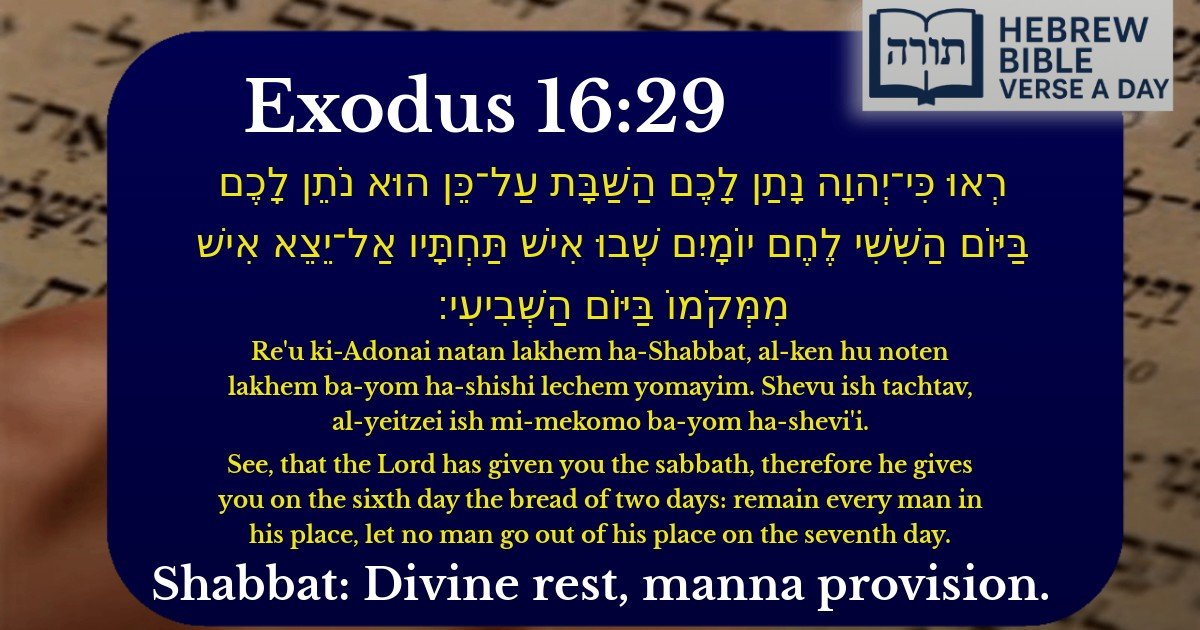
רְאוּ כִּי־יְהוָה נָתַן לָכֶם הַשַּׁבָּת עַל־כֵּן הוּא נֹתֵן לָכֶם בַּיּוֹם הַשִּׁשִּׁי לֶחֶם יוֹמָיִם שְׁבוּ אִישׁ תַּחְתָּיו אַל־יֵצֵא אִישׁ מִמְּקֹמוֹ בַּיּוֹם הַשְּׁבִיעִי׃
English Translation
See, that the Lord has given you the sabbath, therefore he gives you on the sixth day the bread of two days: remain every man in his place, let no man go out of his place on the seventh day.
Transliteration
Re'u ki-Adonai natan lakhem ha-Shabbat, al-ken hu noten lakhem ba-yom ha-shishi lechem yomayim. Shevu ish tachtav, al-yeitzei ish mi-mekomo ba-yom ha-shevi'i.
Hebrew Leining Text
רְא֗וּ כִּֽי־יְהֹוָה֮ נָתַ֣ן לָכֶ֣ם הַשַּׁבָּת֒ עַל־כֵּ֠ן ה֣וּא נֹתֵ֥ן לָכֶ֛ם בַּיּ֥וֹם הַשִּׁשִּׁ֖י לֶ֣חֶם יוֹמָ֑יִם שְׁב֣וּ&thinsp
🎵 Listen to leining
Parasha Commentary
📚 Talmud Citations
This verse is quoted in the Talmud.
📖 Shabbat 87b
The verse is referenced in the discussion about the giving of the manna and the commandment to observe the Sabbath, emphasizing the divine provision of double portion on the sixth day.
📖 Yoma 75b
The verse is cited in the context of discussing the miracle of the manna and the importance of Sabbath observance, highlighting God's instruction to gather a double portion on the sixth day.
The Gift of Shabbat and the Double Portion of Manna
The verse (Shemot 16:29) emphasizes the divine gift of Shabbat and its accompanying miracle—the double portion of manna (lechem mishneh) on the sixth day. Rashi explains that the phrase "כִּי־יְהוָה נָתַן לָכֶם הַשַּׁבָּת" ("that the Lord has given you the sabbath") underscores that Shabbat is a precious gift from Hashem, not merely a restriction. The Talmud (Shabbat 10b) elaborates that Shabbat was given as a cherished endowment to the Jewish people, symbolizing their unique relationship with the Creator.
The Miracle of the Double Portion
The phrase "בַּיּוֹם הַשִּׁשִּׁי לֶחֶם יוֹמָיִם" ("on the sixth day the bread of two days") refers to the double portion of manna that fell on Friday, enabling Bnei Yisrael to refrain from gathering food on Shabbat. The Mechilta notes that this miracle demonstrated Hashem's providence and reinforced the sanctity of Shabbat. Rambam (Hilchot Shabbat 30:6) teaches that this event established the halachic principle of preparing for Shabbat in advance (hachana l'Shabbat), a practice that remains central to Jewish observance.
Prohibition Against Leaving One's Place on Shabbat
The command "שְׁבוּ אִישׁ תַּחְתָּיו אַל־יֵצֵא אִישׁ מִמְּקֹמוֹ בַּיּוֹם הַשְּׁבִיעִי" ("remain every man in his place, let no man go out of his place on the seventh day") is interpreted by Chazal as a prohibition against traveling beyond the techum Shabbat (the Shabbat boundary). The Gemara (Eruvin 17b) derives from this verse the concept of a 2,000-cubit limit for travel outside one's residence on Shabbat. Rambam (Hilchot Shabbat 27:1) codifies this as halacha, emphasizing that this restriction fosters a spirit of tranquility and sanctity on Shabbat.
Spiritual Lessons from the Verse
The Sforno highlights that this verse teaches trust in Hashem (bitachon), as Bnei Yisrael were required to rely on the double portion without doubt. Additionally, the Kli Yakar connects the command to remain in one's place to the idea of menucha (rest), both physically and spiritually, as Shabbat is a time to focus on Torah and closeness to Hashem. The Midrash Tanchuma (Beshallach 22) further expounds that Shabbat is a "taste of Olam Haba," where one experiences divine serenity and detachment from worldly pursuits.