

Join Our Newsletter To Be Informed When New Videos Are Posted
Hebrew Text
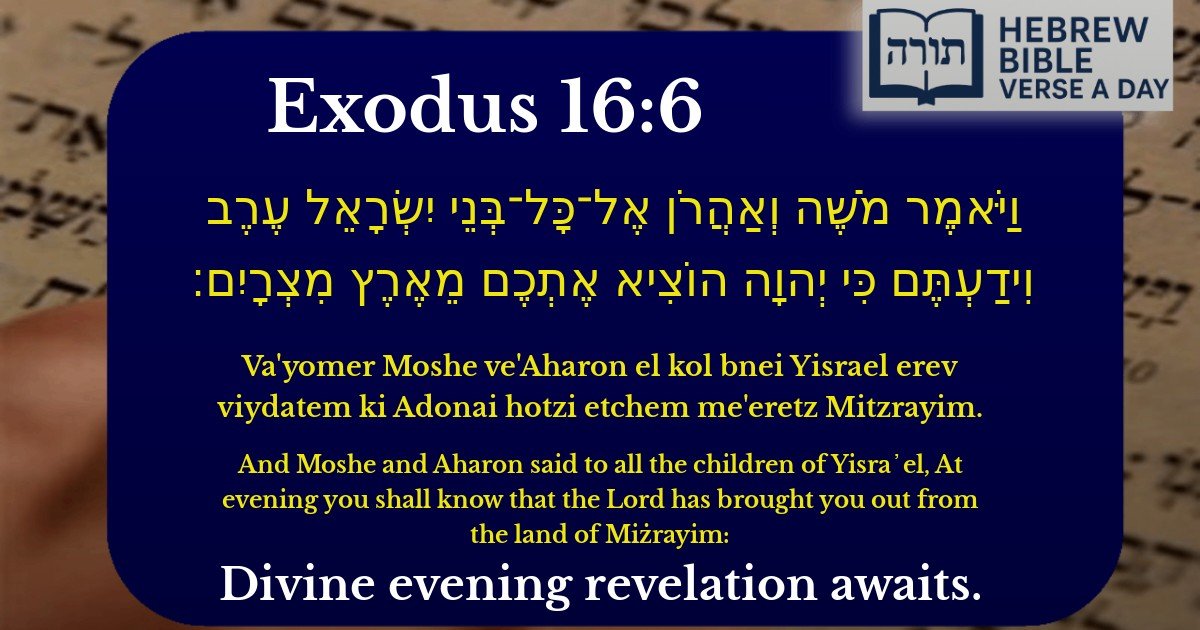
וַיֹּאמֶר מֹשֶׁה וְאַהֲרֹן אֶל־כָּל־בְּנֵי יִשְׂרָאֵל עֶרֶב וִידַעְתֶּם כִּי יְהוָה הוֹצִיא אֶתְכֶם מֵאֶרֶץ מִצְרָיִם׃
English Translation
And Moshe and Aharon said to all the children of Yisra᾽el, At evening you shall know that the Lord has brought you out from the land of Miżrayim:
Transliteration
Va'yomer Moshe ve'Aharon el kol bnei Yisrael erev viydatem ki Adonai hotzi etchem me'eretz Mitzrayim.
Hebrew Leining Text
וַיֹּ֤אמֶר מֹשֶׁה֙ וְאַהֲרֹ֔ן אֶֽל־כׇּל־בְּנֵ֖י יִשְׂרָאֵ֑ל עֶ֕רֶב וִֽידַעְתֶּ֕ם כִּ֧י יְהֹוָ֛ה הוֹצִ֥יא אֶתְכֶ֖ם מֵאֶ֥רֶץ מִצְרָֽיִם׃
🎵 Listen to leining
Parasha Commentary
📚 Talmud Citations
This verse is not quoted in the Talmud.
Context of the Verse
This verse (Shemot 16:6) appears during the narrative of the manna, when Moshe and Aharon reassure Bnei Yisrael that Hashem will provide sustenance in the wilderness. The phrase "עֶרֶב וִידַעְתֶּם" ("At evening you shall know") refers to the quail that would arrive in the evening, demonstrating Hashem's ongoing care for the nation after the Exodus.
Rashi's Explanation
Rashi (Shemot 16:6) clarifies that the "evening" refers to the time when the quail would descend, as described later in the parsha (16:13). This was a sign that Hashem had the power to provide meat miraculously, just as He had redeemed them from Mitzrayim. The knowledge ("וִידַעְתֶּם") would come through experiencing this divine providence firsthand.
Ibn Ezra's Insight
Ibn Ezra emphasizes that the verse connects the miracle of the quail to the Exodus, showing that the same G-d who performed the wonders in Mitzrayim continues to sustain them in the wilderness. The evening timing is significant because it contrasts with the morning manna, demonstrating Hashem's constant supervision day and night.
Midrashic Interpretation
The Midrash (Shemot Rabbah 25:6) explains that the word "עֶרֶב" (evening) alludes to the concept of "ערבוביא" (mixture or confusion). The quail would remove any doubts or confusion among Bnei Yisrael about Hashem's ability to provide for them, reinforcing their faith after leaving Egypt.
Rambam's Perspective
In Moreh Nevuchim (1:28), Rambam discusses how miracles like the quail served as educational tools. The evening revelation was designed to strengthen emunah (faith) by allowing Bnei Yisrael to witness Hashem's direct intervention in nature, thereby internalizing the truth of Yetziat Mitzrayim.
Halachic Connection
The Sages derive from this verse (Berachot 12b) that the Exodus must be mentioned at night, just as it is mentioned during the day (in Kriat Shema). The evening miracle of the quail serves as a basis for this halacha, linking the ongoing commemoration of Yetziat Mitzrayim to this moment of divine revelation.