

Join Our Newsletter To Be Informed When New Videos Are Posted
Hebrew Text
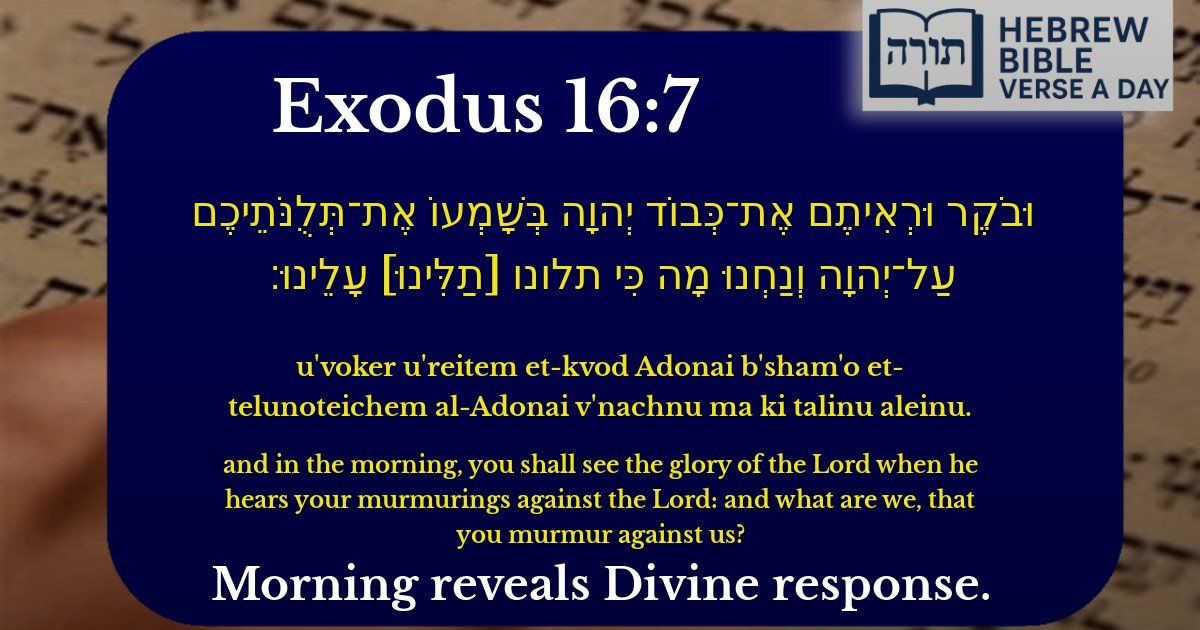
וּבֹקֶר וּרְאִיתֶם אֶת־כְּבוֹד יְהוָה בְּשָׁמְעוֹ אֶת־תְּלֻנֹּתֵיכֶם עַל־יְהוָה וְנַחְנוּ מָה כִּי תלונו [תַלִּינוּ] עָלֵינוּ׃
English Translation
and in the morning, you shall see the glory of the Lord when he hears your murmurings against the Lord: and what are we, that you murmur against us?
Transliteration
U'voker u'reitem et-kvod Adonai b'sham'o et-telunoteichem al-Adonai v'nachnu ma ki talinu aleinu.
Hebrew Leining Text
וּבֹ֗קֶר וּרְאִיתֶם֙ אֶת־כְּב֣וֹד יְהֹוָ֔ה בְּשׇׁמְע֥וֹ אֶת־תְּלֻנֹּתֵיכֶ֖ם עַל־יְהֹוָ֑ה וְנַ֣חְנוּ מָ֔ה כִּ֥י (תלונו) [תַלִּ֖ינוּ] עָלֵֽינוּ׃
🎵 Listen to leining
Parasha Commentary
📚 Talmud Citations
This verse is quoted in the Talmud.
📖 Yoma 75b
The verse is referenced in the context of discussing the manna that the Israelites received in the wilderness, highlighting God's response to their complaints.
📖 Sanhedrin 110b
The verse is cited in a discussion about the rebellion of Korach and his followers, illustrating the consequences of murmuring against God and His appointed leaders.
Context of the Verse
This verse (Shemot 16:7) appears in the narrative of Bnei Yisrael's journey in the wilderness, where they complain about the lack of food. Moshe and Aharon respond by assuring the people that they will witness the glory of Hashem in the morning when He provides the מן (manna). The verse emphasizes the gravity of their complaints against Hashem and the misplaced nature of their grievances against Moshe and Aharon.
Rashi's Explanation
Rashi (Rabbi Shlomo Yitzchaki) comments on the phrase "וּבֹקֶר וּרְאִיתֶם אֶת־כְּבוֹד יְהוָה" ("and in the morning, you shall see the glory of the Lord") by noting that this refers to the miraculous appearance of the מן (manna), which would demonstrate Hashem's kindness and providence despite their complaints. Rashi also explains that the people's murmuring was not truly against Moshe and Aharon but against Hashem Himself, as they doubted His ability to sustain them in the wilderness.
Rambam's Perspective
Rambam (Maimonides) in Moreh Nevuchim (Guide for the Perplexed) discusses the nature of miracles and Divine providence. He explains that the מן was a supernatural phenomenon designed to instill faith in Bnei Yisrael and teach them reliance on Hashem. The phrase "כְּבוֹד יְהוָה" ("the glory of the Lord") signifies a visible manifestation of Divine intervention, reinforcing the idea that Hashem directly oversees their needs.
Midrashic Interpretation
The Midrash (Shemot Rabbah 25:6) elaborates on the phrase "וְנַחְנוּ מָה" ("and what are we?"), explaining that Moshe and Aharon humbly deflect the people's complaints, emphasizing that they are merely messengers of Hashem. The Midrash compares this to a servant who delivers a gift from the king—if the recipient is displeased, the blame should not fall on the servant but on the king who sent it.
Key Lessons from the Verse