

Join Our Newsletter To Be Informed When New Videos Are Posted
Hebrew Text
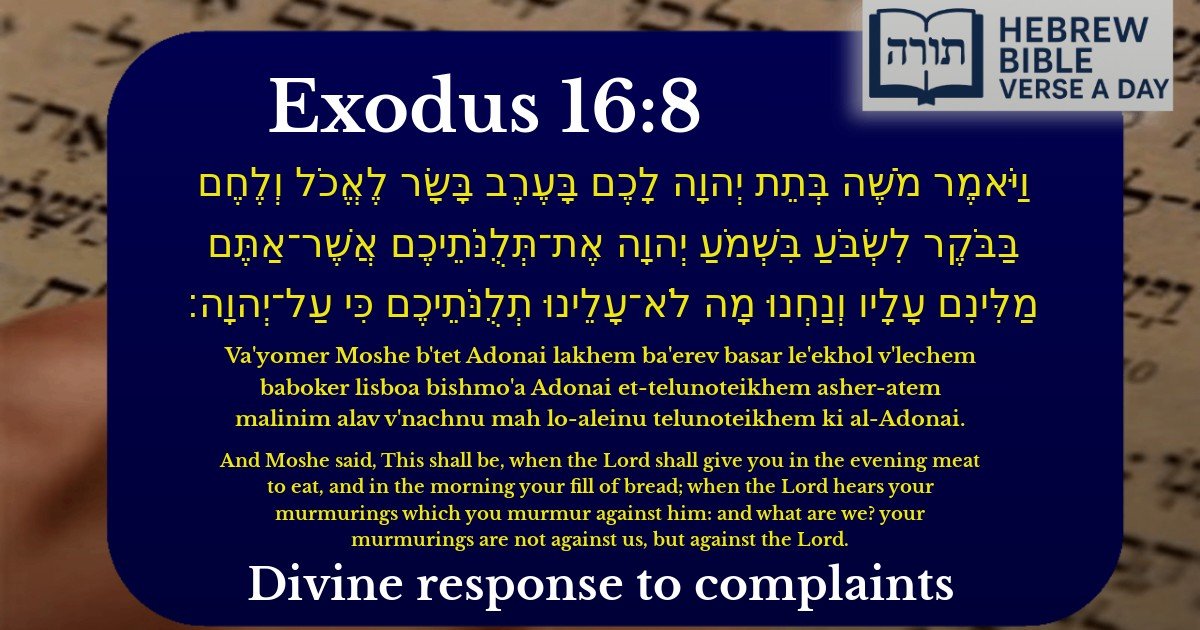
וַיֹּאמֶר מֹשֶׁה בְּתֵת יְהוָה לָכֶם בָּעֶרֶב בָּשָׂר לֶאֱכֹל וְלֶחֶם בַּבֹּקֶר לִשְׂבֹּעַ בִּשְׁמֹעַ יְהוָה אֶת־תְּלֻנֹּתֵיכֶם אֲשֶׁר־אַתֶּם מַלִּינִם עָלָיו וְנַחְנוּ מָה לֹא־עָלֵינוּ תְלֻנֹּתֵיכֶם כִּי עַל־יְהוָה׃
English Translation
And Moshe said, This shall be, when the Lord shall give you in the evening meat to eat, and in the morning your fill of bread; when the Lord hears your murmurings which you murmur against him: and what are we? your murmurings are not against us, but against the Lord.
Transliteration
Va'yomer Moshe b'tet Adonai lakhem ba'erev basar le'ekhol v'lechem baboker lisboa bishmo'a Adonai et-telunoteikhem asher-atem malinim alav v'nachnu mah lo-aleinu telunoteikhem ki al-Adonai.
Hebrew Leining Text
וַיֹּ֣אמֶר מֹשֶׁ֗ה בְּתֵ֣ת יְהֹוָה֩ לָכֶ֨ם בָּעֶ֜רֶב בָּשָׂ֣ר לֶאֱכֹ֗ל וְלֶ֤חֶם בַּבֹּ֙קֶר֙ לִשְׂבֹּ֔עַ בִּשְׁמֹ֤עַ יְהֹוָה֙ אֶת־תְּלֻנֹּ֣תֵיכֶ֔ם אֲשֶׁר־אַתֶּ֥ם מַלִּינִ֖ם עָלָ֑יו וְנַ֣חְנוּ מָ֔ה לֹא־עָלֵ֥ינוּ תְלֻנֹּתֵיכֶ֖ם כִּ֥י עַל־יְהֹוָֽה׃
🎵 Listen to leining
Parasha Commentary
📚 Talmud Citations
This verse is quoted in the Talmud.
📖 Yoma 75a
The verse is discussed in the context of the manna and quails provided to the Israelites in the wilderness, illustrating God's response to their complaints.
📖 Ta'anit 9a
The verse is referenced in a discussion about divine providence and the sustenance provided to the Israelites during their journey in the desert.
Context in Shemot (Exodus)
This verse (Shemot 16:8) appears during the episode of the manna and quails, when Bnei Yisrael complained about lacking food in the wilderness. Moshe responds to their murmuring by emphasizing that their complaints are ultimately directed at Hashem, not at him or Aharon.
Moshe’s Response to Complaints
Rashi explains that Moshe clarifies the people’s error in directing their complaints toward human leaders rather than recognizing that their sustenance comes directly from Hashem. The phrase "וְנַחְנוּ מָה" ("and what are we?") underscores that Moshe and Aharon are merely conduits for Hashem’s will—they have no independent power to provide food.
The Timing of the Miraculous Sustenance
Complaints Against Hashem
The Ibn Ezra emphasizes that murmuring against Moshe and Aharon was tantamount to murmuring against Hashem Himself, since they were acting as His agents. The Talmud (Berachot 32a) derives from here that speaking against righteous leaders is akin to speaking against the Divine Presence.
Midrashic Insights
The Midrash Tanchuma (Beshalach 20) elaborates that Moshe’s words were meant to awaken the people to recognize Hashem’s constant providence. By framing their sustenance as a direct gift from Hashem ("בְּתֵת יְהוָה לָכֶם"), Moshe redirects their focus from human intermediaries to the true Source of their blessings.