

Join Our Newsletter To Be Informed When New Videos Are Posted
Hebrew Text
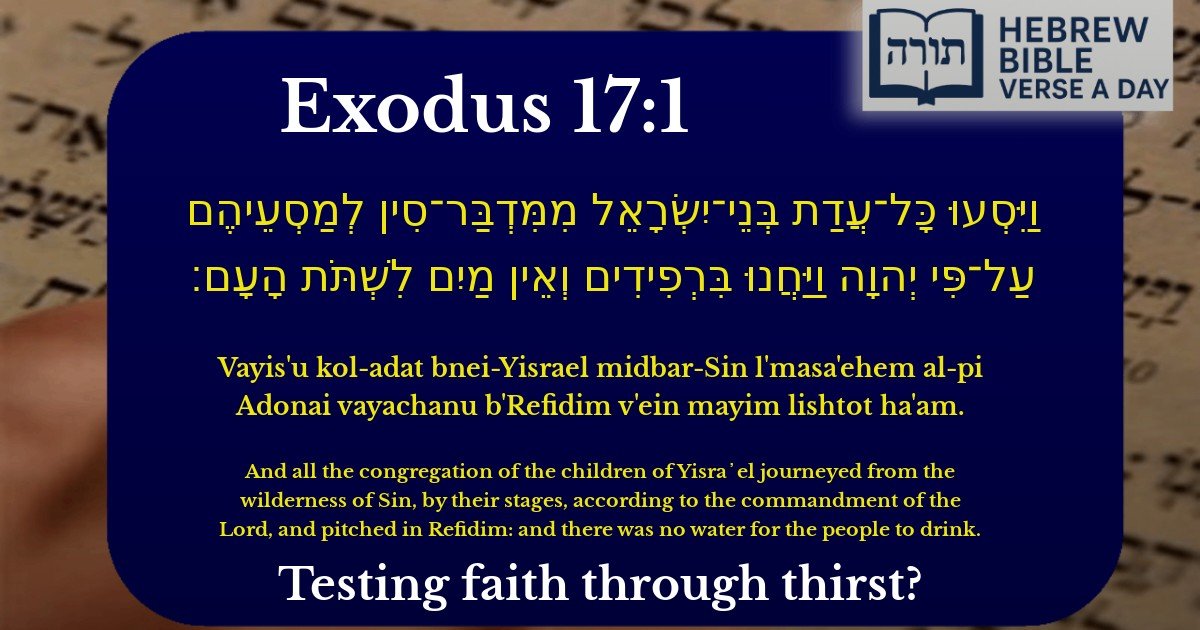
וַיִּסְעוּ כָּל־עֲדַת בְּנֵי־יִשְׂרָאֵל מִמִּדְבַּר־סִין לְמַסְעֵיהֶם עַל־פִּי יְהוָה וַיַּחֲנוּ בִּרְפִידִים וְאֵין מַיִם לִשְׁתֹּת הָעָם׃
English Translation
And all the congregation of the children of Yisra᾽el journeyed from the wilderness of Sin, by their stages, according to the commandment of the Lord, and pitched in Refidim: and there was no water for the people to drink.
Transliteration
Vayis'u kol-adat bnei-Yisrael midbar-Sin l'masa'ehem al-pi Adonai vayachanu b'Refidim v'ein mayim lishtot ha'am.
Hebrew Leining Text
וַ֠יִּסְע֠וּ כׇּל־עֲדַ֨ת בְּנֵֽי־יִשְׂרָאֵ֧ל מִמִּדְבַּר־סִ֛ין לְמַסְעֵיהֶ֖ם עַל־פִּ֣י יְהֹוָ֑ה וַֽיַּחֲנוּ֙ בִּרְפִידִ֔ים וְאֵ֥ין מַ֖יִם לִשְׁתֹּ֥ת הָעָֽם׃
🎵 Listen to leining
Parasha Commentary
📚 Talmud Citations
This verse is quoted in the Talmud.
📖 Ta'anit 9a
The verse is referenced in a discussion about the travels of the Israelites in the desert and the miracles performed for them, particularly focusing on the lack of water at Refidim and how God provided for their needs.
Journey from Midbar Sin to Refidim
The verse describes Bnei Yisrael's journey from Midbar Sin to Refidim "al pi Hashem" (according to the commandment of the Lord). Rashi (Shemot 17:1) explains that their travels were directed by the Anan HaKavod (Cloud of Glory), which guided them when to journey and when to encamp. This emphasizes that their path was divinely ordained, not random.
The Significance of Refidim
The name Refidim is interpreted by the Midrash (Mechilta Beshalach 1) as hinting at a spiritual weakening ("rafu yedeihem"—they slackened their hands) in their commitment to Torah. This foreshadows the subsequent complaints about water and the attack by Amalek, both rooted in a lapse in faith.
The Crisis of No Water
The lack of water at Refidim led to the people's distress. Ramban (Shemot 17:2) notes that this was a test from Hashem to strengthen their emunah (faith). The Talmud (Ta'anit 9a) connects this episode to the Be'er Miriam (Miriam’s Well), a miraculous water source that followed Bnei Yisrael in the desert in her merit. When Miriam passed away (later in Bamidbar 20:1-2), the well temporarily ceased, prompting this crisis.
Lessons in Divine Providence
The Mechilta teaches that this episode underscores the principle of "hakol bidei shamayim chutz mi'yirat shamayim" (all is in the hands of Heaven except fear of Heaven). Hashem provided for their physical needs, but their spiritual response was their own responsibility. The lack of water served as a reminder to trust in Hashem’s continuous care.