

Join Our Newsletter To Be Informed When New Videos Are Posted
Hebrew Text
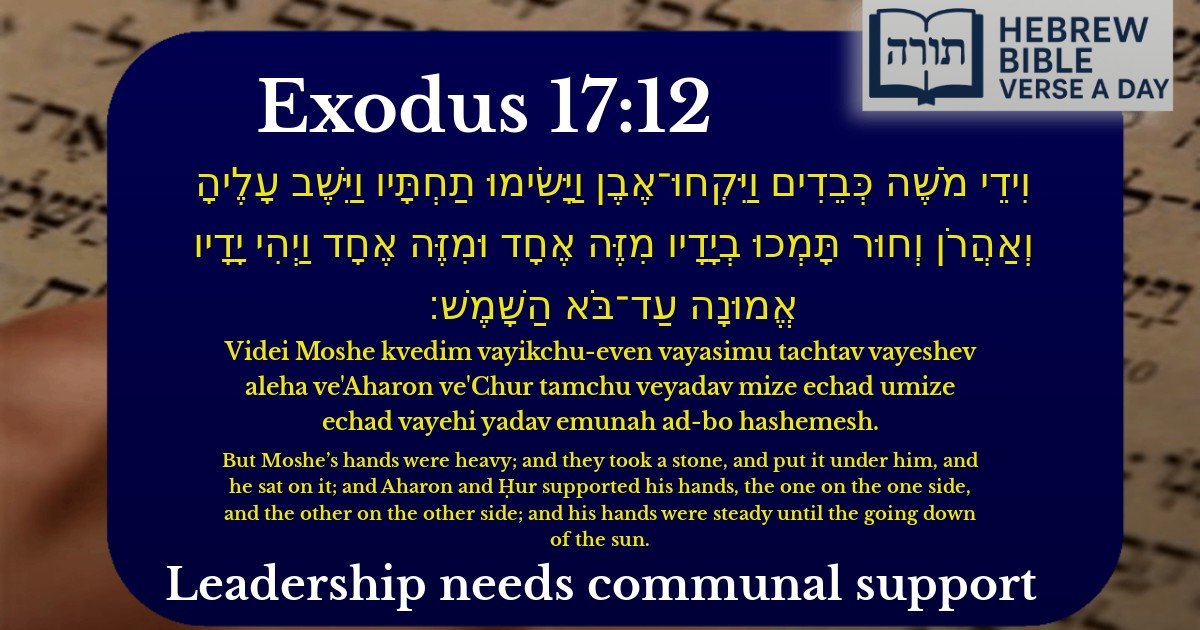
וִידֵי מֹשֶׁה כְּבֵדִים וַיִּקְחוּ־אֶבֶן וַיָּשִׂימוּ תַחְתָּיו וַיֵּשֶׁב עָלֶיהָ וְאַהֲרֹן וְחוּר תָּמְכוּ בְיָדָיו מִזֶּה אֶחָד וּמִזֶּה אֶחָד וַיְהִי יָדָיו אֱמוּנָה עַד־בֹּא הַשָּׁמֶשׁ׃
English Translation
But Moshe’s hands were heavy; and they took a stone, and put it under him, and he sat on it; and Aharon and Ḥur supported his hands, the one on the one side, and the other on the other side; and his hands were steady until the going down of the sun.
Transliteration
Videi Moshe kvedim vayikchu-even vayasimu tachtav vayeshev aleha ve'Aharon ve'Chur tamchu veyadav mize echad umize echad vayehi yadav emunah ad-bo hashemesh.
Hebrew Leining Text
וִידֵ֤י מֹשֶׁה֙ כְּבֵדִ֔ים וַיִּקְחוּ־אֶ֛בֶן וַיָּשִׂ֥ימוּ תַחְתָּ֖יו וַיֵּ֣שֶׁב עָלֶ֑יהָ וְאַהֲרֹ֨ן וְח֜וּר תָּֽמְכ֣וּ בְיָדָ֗יו מִזֶּ֤ה אֶחָד֙ וּמִזֶּ֣ה אֶחָ֔ד וַיְהִ֥י יָדָ֛יו אֱמוּנָ֖ה עַד־בֹּ֥א הַשָּֽׁמֶשׁ׃
🎵 Listen to leining
Parasha Commentary
📚 Talmud Citations
This verse is quoted in the Talmud.
📖 Rosh Hashanah 29a
The verse is referenced in a discussion about the importance of communal support in prayer and leadership, drawing a parallel between Moses being supported by Aaron and Hur during the battle with Amalek and the need for community support in spiritual matters.
The Weight of Moshe's Hands
The verse describes Moshe's hands becoming heavy (כְּבֵדִים) during the battle against Amalek (Shemot 17:12). Rashi explains that Moshe's hands grew heavy either due to his natural fatigue or because he neglected his duties in leading the people, causing his strength to wane. The Midrash Tanchuma (Ki Teitzei 11) suggests that Moshe's hands became heavy as a test for Bnei Yisrael—to see if they would rally to support him in his time of weakness.
The Stone as a Support
When Moshe could no longer hold his hands up, Aharon and Chur placed a stone beneath him for support. The Talmud (Rosh Hashanah 29a) derives from this that a leader must be given proper assistance to fulfill his role. Rambam (Hilchot Tefillah 8:1) cites this as a precedent for the importance of communal support in spiritual matters, emphasizing that even Moshe Rabbeinu required help to maintain his focus.
The Role of Aharon and Chur
Aharon and Chur each held one of Moshe's hands, symbolizing the unity required in leadership. The Midrash (Mechilta Beshalach) notes that Aharon represented the priesthood, while Chur (traditionally identified as Miriam’s son) represented the tribe of Yehudah, showing that both spiritual and tribal leadership were necessary to sustain Moshe. Their support ensured that Moshe's hands remained אֱמוּנָה ("steadfast" or "faithful")—a term the Sifrei interprets as a sign of unwavering trust in Hashem's deliverance.
Symbolism of "Until the Setting of the Sun"
The phrase עַד־בֹּא הַשָּׁמֶשׁ ("until the going down of the sun") is understood by the Baal HaTurim as an allusion to the eventual downfall of Amalek, whose power is compared to the fleeting strength of the sun (Malachi 1:3). The Zohar (Shemot 66a) further explains that Moshe's uplifted hands channeled divine energy, and their steadfastness until sunset ensured Bnei Yisrael's victory.