

Join Our Newsletter To Be Informed When New Videos Are Posted
Hebrew Text
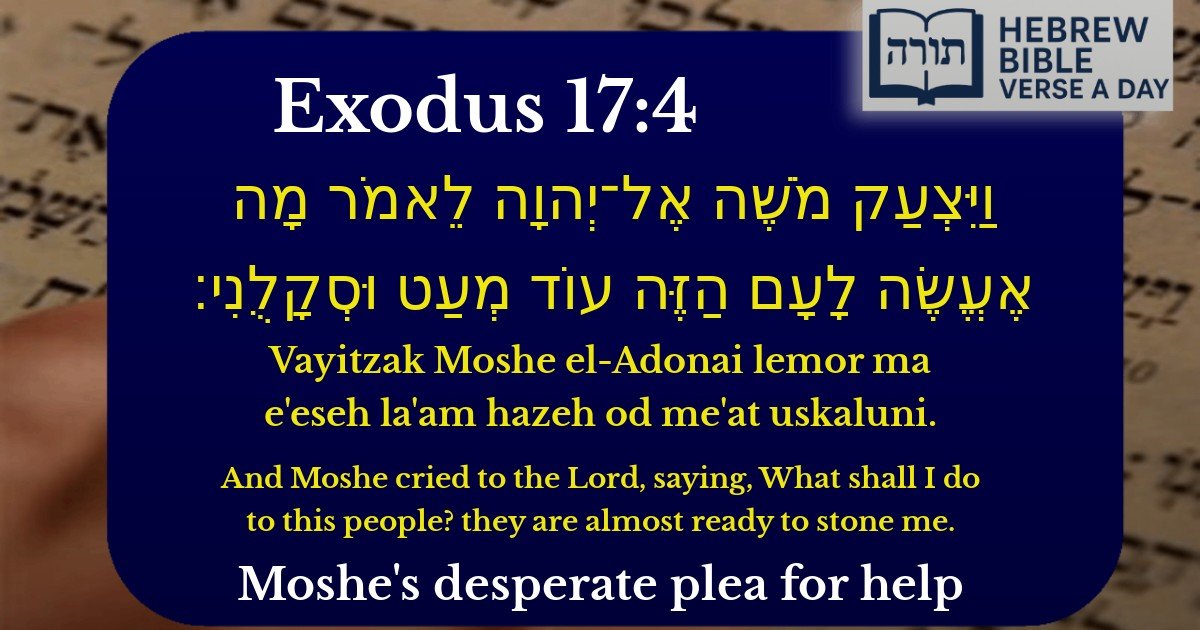
וַיִּצְעַק מֹשֶׁה אֶל־יְהוָה לֵאמֹר מָה אֶעֱשֶׂה לָעָם הַזֶּה עוֹד מְעַט וּסְקָלֻנִי׃
English Translation
And Moshe cried to the Lord, saying, What shall I do to this people? they are almost ready to stone me.
Transliteration
Vayitzak Moshe el-Adonai lemor ma e'eseh la'am hazeh od me'at uskaluni.
Hebrew Leining Text
וַיִּצְעַ֤ק מֹשֶׁה֙ אֶל־יְהֹוָ֣ה לֵאמֹ֔ר מָ֥ה אֶעֱשֶׂ֖ה לָעָ֣ם הַזֶּ֑ה ע֥וֹד מְעַ֖ט וּסְקָלֻֽנִי׃
🎵 Listen to leining
Parasha Commentary
📚 Talmud Citations
This verse is quoted in the Talmud.
📖 Ta'anit 20b
The verse is referenced in the context of discussing the challenges faced by leaders and the importance of prayer in difficult times.
📖 Sanhedrin 110a
The verse is cited in a discussion about the rebellion of Korach and his followers, illustrating the severity of opposing Moses and the consequences of such actions.
Context of the Verse
This verse (Shemot 17:4) appears during the incident of the people's complaint about lack of water at Refidim, following their exodus from Egypt. Moshe Rabbeinu expresses his distress to Hashem as the people threaten to stone him due to their thirst.
Rashi's Explanation
Rashi (Rabbi Shlomo Yitzchaki) comments on the phrase "עוֹד מְעַט וּסְקָלֻנִי" ("they are almost ready to stone me") by noting that this was not merely an idle threat. The people were truly on the verge of stoning Moshe, demonstrating their extreme desperation and lack of faith after witnessing the miracles in Egypt and at the Red Sea.
Rambam's Perspective on Leadership Challenges
Rambam (Maimonides) in Moreh Nevuchim (Guide for the Perplexed) discusses how even the greatest leaders face moments of crisis. Moshe's outcry reflects the immense burden of leadership, especially when guiding a nation through trials. This teaches that even the most righteous may feel overwhelmed when fulfilling divine missions.
Midrashic Insights
Halachic Implications
The Ramban (Nachmanides) notes that this episode underscores the severity of rebellion against divinely appointed leadership. The people's readiness to harm Moshe, despite his role as Hashem's messenger, serves as a warning about the dangers of ingratitude and insurrection.
Spiritual Lessons
The Sforno (Rabbi Ovadia Sforno) highlights that Moshe's plea—"מָה אֶעֱשֶׂה לָעָם הַזֶּה" ("What shall I do to this people?")—reflects his deep concern for their welfare, not just his own safety. This illustrates the ideal of a leader who prioritizes the needs of the people, even when they turn against him.