

Join Our Newsletter To Be Informed When New Videos Are Posted
Hebrew Text
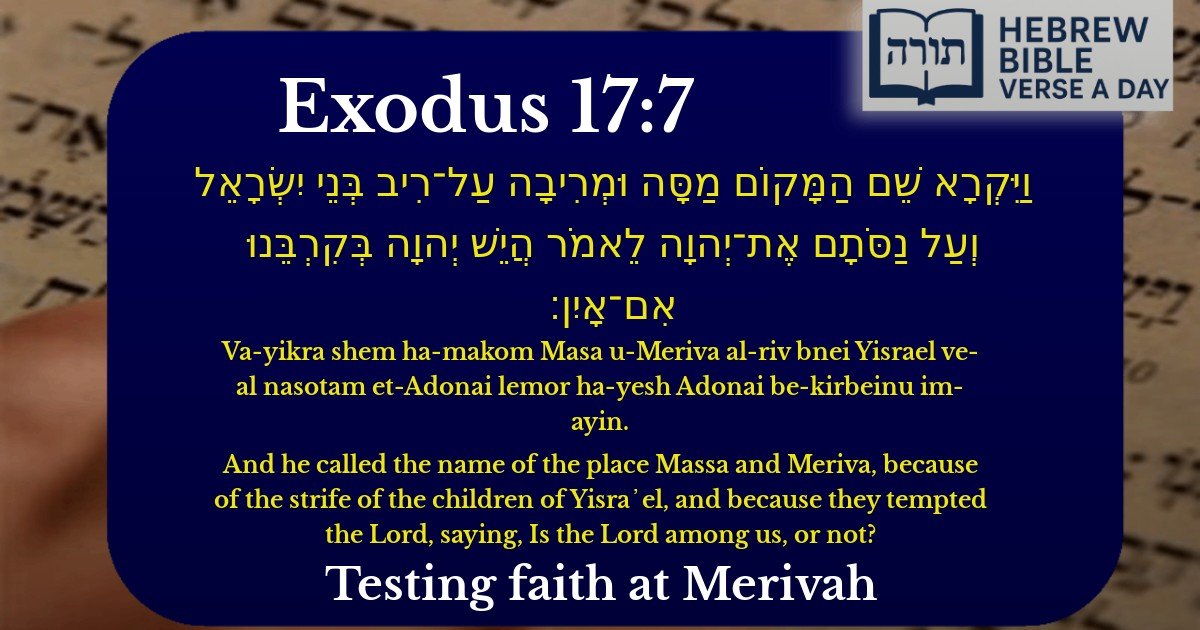
וַיִּקְרָא שֵׁם הַמָּקוֹם מַסָּה וּמְרִיבָה עַל־רִיב בְּנֵי יִשְׂרָאֵל וְעַל נַסֹּתָם אֶת־יְהוָה לֵאמֹר הֲיֵשׁ יְהוָה בְּקִרְבֵּנוּ אִם־אָיִן׃
English Translation
And he called the name of the place Massa and Meriva, because of the strife of the children of Yisra᾽el, and because they tempted the Lord, saying, Is the Lord among us, or not?
Transliteration
Va-yikra shem ha-makom Masa u-Meriva al-riv bnei Yisrael ve-al nasotam et-Adonai lemor ha-yesh Adonai be-kirbeinu im-ayin.
Hebrew Leining Text
וַיִּקְרָא֙ שֵׁ֣ם הַמָּק֔וֹם מַסָּ֖ה וּמְרִיבָ֑ה עַל־רִ֣יב ׀ בְּנֵ֣י יִשְׂרָאֵ֗ל וְעַ֨ל נַסֹּתָ֤ם אֶת־יְהֹוָה֙ לֵאמֹ֔ר הֲיֵ֧שׁ יְהֹוָ֛ה בְּקִרְבֵּ֖נוּ אִם־אָֽיִן׃ {פ}
🎵 Listen to leining
Parasha Commentary
📚 Talmud Citations
This verse is quoted in the Talmud.
📖 Sanhedrin 106a
The verse is referenced in a discussion about the Israelites' lack of faith and their testing of God during their time in the wilderness.
📖 Avodah Zarah 5a
The verse is cited in a broader discussion about the consequences of the Israelites' actions and their questioning of God's presence among them.
The Naming of Massa and Meriva
The verse (Shemot 17:7) describes how Moshe named the place Massa ("Testing") and Meriva ("Strife") due to Bnei Yisrael's quarrelsome behavior and their testing of Hashem. Rashi explains that the names commemorate their sinful demand for water and their doubt in Hashem's presence among them. The double name reflects two aspects of their transgression:
The Severity of Their Doubt
The Ramban emphasizes that their question, "הֲיֵשׁ ה' בְּקִרְבֵּנוּ אִם־אָיִן" ("Is Hashem among us or not?"), was a grave lack of emunah. Despite experiencing the Exodus, the splitting of the sea, and the manna, they doubted Hashem's constant presence. The Kli Yakar adds that this doubt was worse than their complaints about water—it was a denial of divine hashgacha pratit (individual providence).
Midrashic Insights
The Midrash Tanchuma (Beshallach 25) compares Bnei Yisrael's behavior to a child carried on their father's shoulders who, when thirsty, questions whether the father is truly there. Similarly, Hashem had carried them through miracles, yet they questioned His presence. The Sforno notes that their demand for water was not inherently wrong, but their manner—complaining instead of praying—showed a lack of trust.
Halachic Implications
The Rambam (Hilchot Teshuvah 3:3) cites this episode as a cautionary tale about how easily one can fall into doubt even after witnessing open miracles. The Chafetz Chaim teaches that the names Massa and Meriva serve as eternal reminders of the dangers of strife (machloket) and testing Hashem improperly.