

Join Our Newsletter To Be Informed When New Videos Are Posted
Hebrew Text
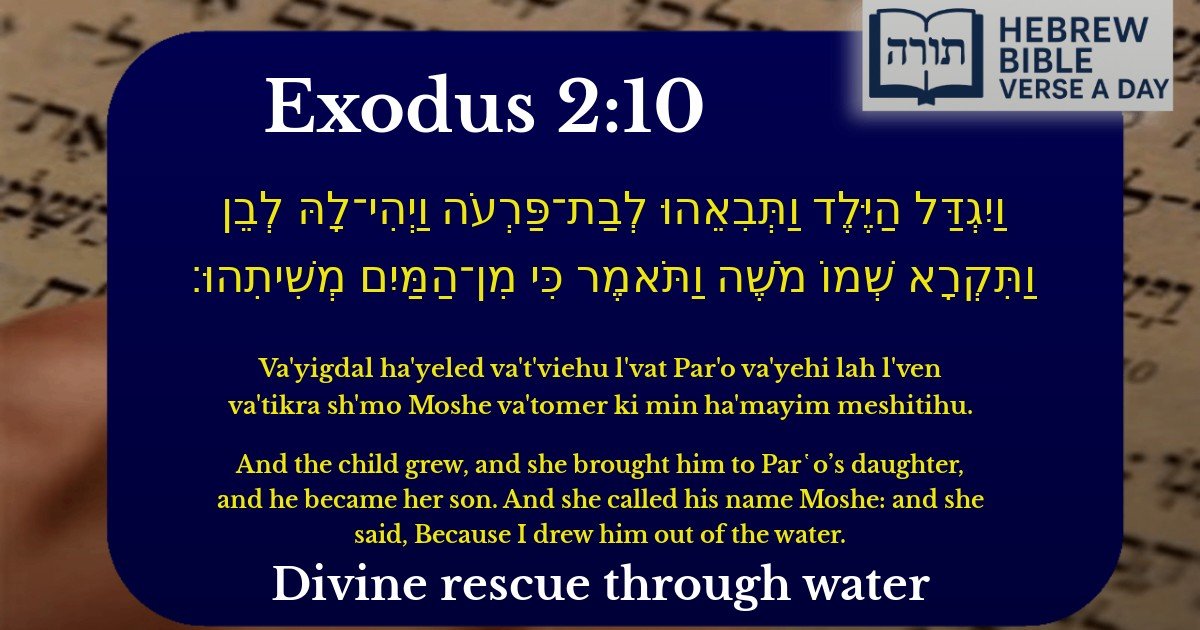
וַיִגְדַּל הַיֶּלֶד וַתְּבִאֵהוּ לְבַת־פַּרְעֹה וַיְהִי־לָהּ לְבֵן וַתִּקְרָא שְׁמוֹ מֹשֶׁה וַתֹּאמֶר כִּי מִן־הַמַּיִם מְשִׁיתִהוּ׃
English Translation
And the child grew, and she brought him to Par῾o’s daughter, and he became her son. And she called his name Moshe: and she said, Because I drew him out of the water.
Transliteration
Va'yigdal ha'yeled va't'viehu l'vat Par'o va'yehi lah l'ven va'tikra sh'mo Moshe va'tomer ki min ha'mayim meshitihu.
Hebrew Leining Text
וַיִּגְדַּ֣ל הַיֶּ֗לֶד וַתְּבִאֵ֙הוּ֙ לְבַת־פַּרְעֹ֔ה וַֽיְהִי־לָ֖הּ לְבֵ֑ן וַתִּקְרָ֤א שְׁמוֹ֙ מֹשֶׁ֔ה וַתֹּ֕אמֶר כִּ֥י מִן־הַמַּ֖יִם מְשִׁיתִֽהוּ׃
🎵 Listen to leining
Parasha Commentary
📚 Talmud Citations
This verse is quoted in the Talmud.
📖 Sotah 12b
The verse is discussed in the context of Moses' upbringing and the naming by Pharaoh's daughter, highlighting the divine providence in his rescue and upbringing.
📖 Megillah 13a
The naming of Moses is referenced in a discussion about the significance of names and their meanings in biblical narratives.
The Naming of Moshe
The verse states, "And she called his name Moshe: and she said, Because I drew him out of the water." (Shemot 2:10). The name "Moshe" (מֹשֶׁה) is derived from the Hebrew root מ-שׁ-ה, meaning "to draw out." Rashi explains that Batya, Pharaoh's daughter, named him Moshe because she drew him from the water (מִן־הַמַּיִם מְשִׁיתִהוּ). However, Rashi also notes that the name should grammatically be "Mashuy" (מָשׁוּי, "the one who was drawn out"), but Hashem inspired her to call him "Moshe" (מֹשֶׁה, "the one who draws out") because he would later draw the Jewish people out of Egypt.
Batya’s Role in Moshe’s Life
The Midrash (Shemot Rabbah 1:26) elaborates that Batya was not merely a passive figure in Moshe’s upbringing but actively defied her father’s decree to drown Jewish infants. The Talmud (Sotah 12b) teaches that she converted to Judaism, and her name, "Batya" (בַּת־יָהּ, "daughter of Hashem"), reflects her righteousness. The verse emphasizes "he became her son", indicating that she raised him with love and care, despite his Hebrew origins.
The Significance of Water
Water plays a recurring role in Moshe’s life, symbolizing both salvation and divine providence:
Divine Providence in Moshe’s Early Life
The Sforno comments that Moshe’s upbringing in Pharaoh’s palace was orchestrated by Hashem to prepare him for leadership. Being raised among royalty gave him the confidence and knowledge to later confront Pharaoh. The Ibn Ezra adds that his early exposure to Egyptian culture allowed him to understand the enemy he would one day oppose.