

Join Our Newsletter To Be Informed When New Videos Are Posted
Hebrew Text
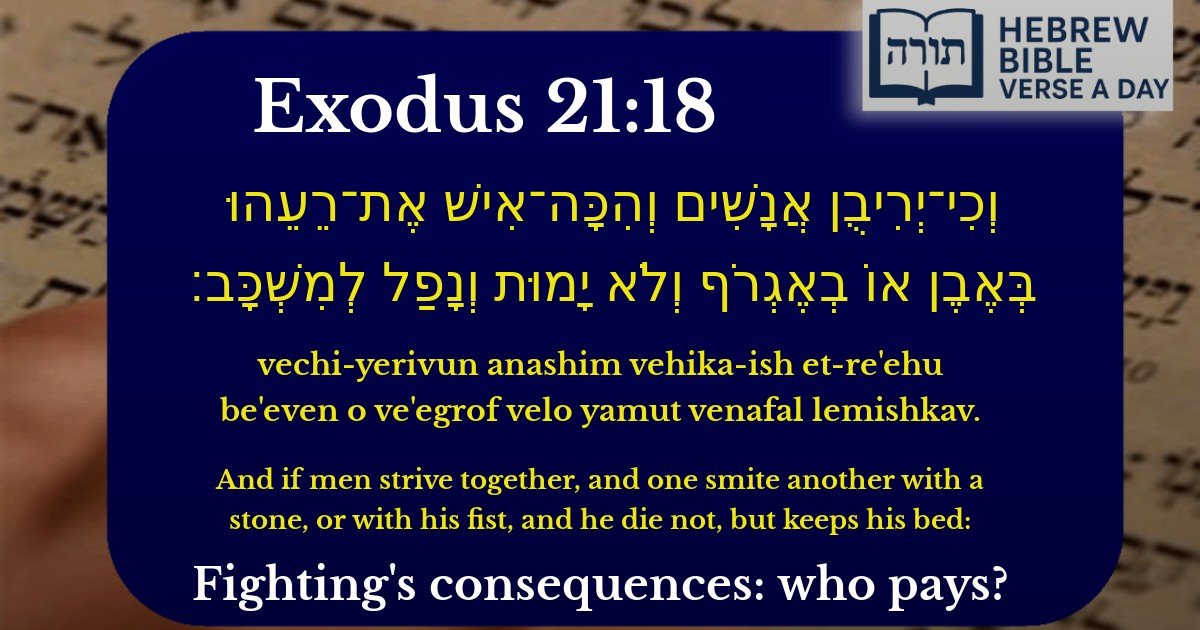
וְכִי־יְרִיבֻן אֲנָשִׁים וְהִכָּה־אִישׁ אֶת־רֵעֵהוּ בְּאֶבֶן אוֹ בְאֶגְרֹף וְלֹא יָמוּת וְנָפַל לְמִשְׁכָּב׃
English Translation
And if men strive together, and one smite another with a stone, or with his fist, and he die not, but keeps his bed:
Transliteration
Vechi-yerivun anashim vehika-ish et-re'ehu be'even o ve'egrof velo yamut venafal lemishkav.
Hebrew Leining Text
וְכִֽי־יְרִיבֻ֣ן אֲנָשִׁ֔ים וְהִכָּה־אִישׁ֙ אֶת־רֵעֵ֔הוּ בְּאֶ֖בֶן א֣וֹ בְאֶגְרֹ֑ף וְלֹ֥א יָמ֖וּת וְנָפַ֥ל לְמִשְׁכָּֽב׃
🎵 Listen to leining
Parasha Commentary
📚 Talmud Citations
This verse is quoted in the Talmud.
📖 Bava Kamma 83b
The verse is discussed in the context of liability for injuries caused by physical altercations, particularly focusing on the distinction between intentional and unintentional harm.
📖 Sanhedrin 78b
The verse is referenced in discussions about the laws of assault and the conditions under which one is liable for causing injury to another.
Context and General Meaning
The verse (Shemot 21:18) discusses a case where two individuals engage in a physical altercation, and one strikes the other with a stone or fist, causing injury but not death. The injured party is confined to bed, indicating a serious but non-fatal wound. This scenario falls under the Torah's civil and penal laws, addressing compensation for damages and personal injury.
Rashi's Commentary
Rashi (Rabbi Shlomo Yitzchaki) explains that the phrase "וְכִי־יְרִיבֻן אֲנָשִׁים" ("And if men strive together") refers to a quarrel that escalates to physical violence. He notes that the Torah uses the term "אֲנָשִׁים" (men) rather than "ישראל" (Israelites) to include all people, implying that these laws apply universally, not just to Jews. Rashi further clarifies that "בְּאֶבֶן אוֹ בְאֶגְרֹף" ("with a stone or with his fist") includes any object or bodily force used to inflict harm.
Rambam's Legal Analysis
Rambam (Maimonides) in Hilchot Chovel u'Mazzik (Laws of Injury and Damage) elaborates on the legal implications. He states that the assailant is liable for five types of compensation:
Talmudic Discussion
The Talmud (Bava Kamma 83b) analyzes the phrase "וְלֹא יָמוּת וְנָפַל לְמִשְׁכָּב" ("and he die not, but keeps his bed"). It explains that the victim's confinement to bed demonstrates the severity of the injury, even if it is not fatal. The Sages derive from this that the assailant is exempt from capital punishment but still liable for financial compensation. The Talmud also discusses scenarios where the victim later dies from complications, raising questions about the assailant's liability for murder.
Midrashic Insight
The Midrash (Mechilta d'Rabbi Yishmael) connects this verse to the broader ethical principle of avoiding conflict. It teaches that quarrels often begin with words but can escalate to violence, as seen here. The Midrash emphasizes the importance of peace (shalom) and the grave consequences of allowing disputes to spiral out of control.
Halachic Application
Later halachic authorities, such as the Shulchan Aruch (Choshen Mishpat 420), codify the laws derived from this verse. They stipulate that courts must carefully assess the extent of the injury, the intent of the assailant, and the circumstances of the altercation to determine fair compensation. The verse underscores the Torah's commitment to justice and the sanctity of human life and dignity.