

Join Our Newsletter To Be Informed When New Videos Are Posted
Hebrew Text
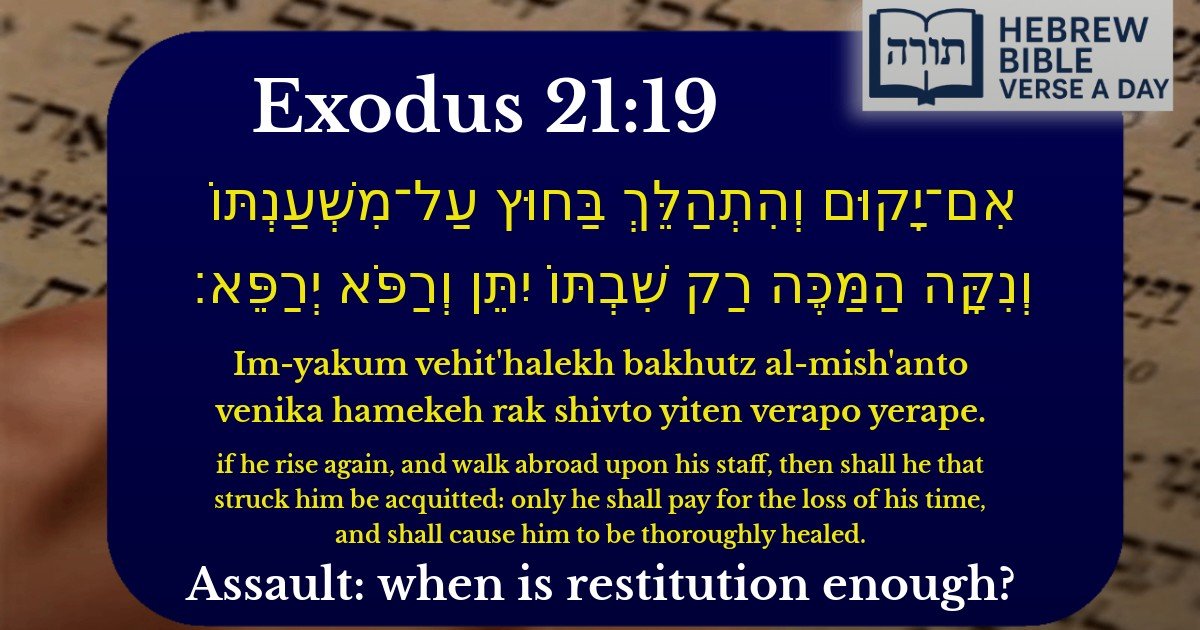
אִם־יָקוּם וְהִתְהַלֵּךְ בַּחוּץ עַל־מִשְׁעַנְתּוֹ וְנִקָּה הַמַּכֶּה רַק שִׁבְתּוֹ יִתֵּן וְרַפֹּא יְרַפֵּא׃
English Translation
if he rise again, and walk abroad upon his staff, then shall he that struck him be acquitted: only he shall pay for the loss of his time, and shall cause him to be thoroughly healed.
Transliteration
Im-yakum vehit'halekh bakhutz al-mish'anto venika hamekeh rak shivto yiten verapo yerape.
Hebrew Leining Text
אִם־יָק֞וּם וְהִתְהַלֵּ֥ךְ בַּח֛וּץ עַל־מִשְׁעַנְתּ֖וֹ וְנִקָּ֣ה הַמַּכֶּ֑ה רַ֥ק שִׁבְתּ֛וֹ יִתֵּ֖ן וְרַפֹּ֥א יְרַפֵּֽא׃ {ס}
🎵 Listen to leining
Parasha Commentary
📚 Talmud Citations
This verse is quoted in the Talmud.
📖 Bava Kamma 85a
The verse is discussed in the context of the laws of damages and compensation for injuries, particularly regarding the obligation to pay for medical expenses and lost wages.
Context and Overview
The verse (Shemot 21:19) discusses the legal consequences for one who injures another in a physical altercation. The Torah outlines that if the injured party recovers sufficiently to walk with a staff, the assailant is exempt from further punishment (nefesh tachat nefesh, "a life for a life") but remains liable for financial compensation.
Rashi's Explanation
Rashi (Rabbi Shlomo Yitzchaki) comments on this verse, emphasizing that the phrase "וְנִקָּה הַמַּכֶּה" ("the striker shall be acquitted") refers to exemption from capital punishment or further physical retribution. However, the assailant is still obligated to compensate the victim for:
Rambam's Legal Analysis
In Hilchot Chovel u'Mazik (Laws of Injury and Damages 1:4-5), Rambam (Maimonides) elaborates on the financial obligations derived from this verse. He explains that the Torah establishes a principle of full restitution for damages, including:
Midrashic Insight
The Mechilta (a halachic Midrash on Shemot) notes that the phrase "עַל־מִשְׁעַנְתּוֹ" ("upon his staff") symbolizes partial recovery—the victim is still weakened but no longer bedridden. This intermediate state demonstrates that the injury, while serious, was not life-threatening, thus limiting the assailant's liability to monetary compensation.
Halachic Implications
The Shulchan Aruch (Choshen Mishpat 420:1) codifies these principles, stating that if the victim dies from the injury later, the assailant may still be liable for capital punishment if it is proven that the initial injury caused the death. However, if the victim showed signs of recovery (as described in the verse), the assailant is only liable for financial damages.