

Join Our Newsletter To Be Informed When New Videos Are Posted
Hebrew Text
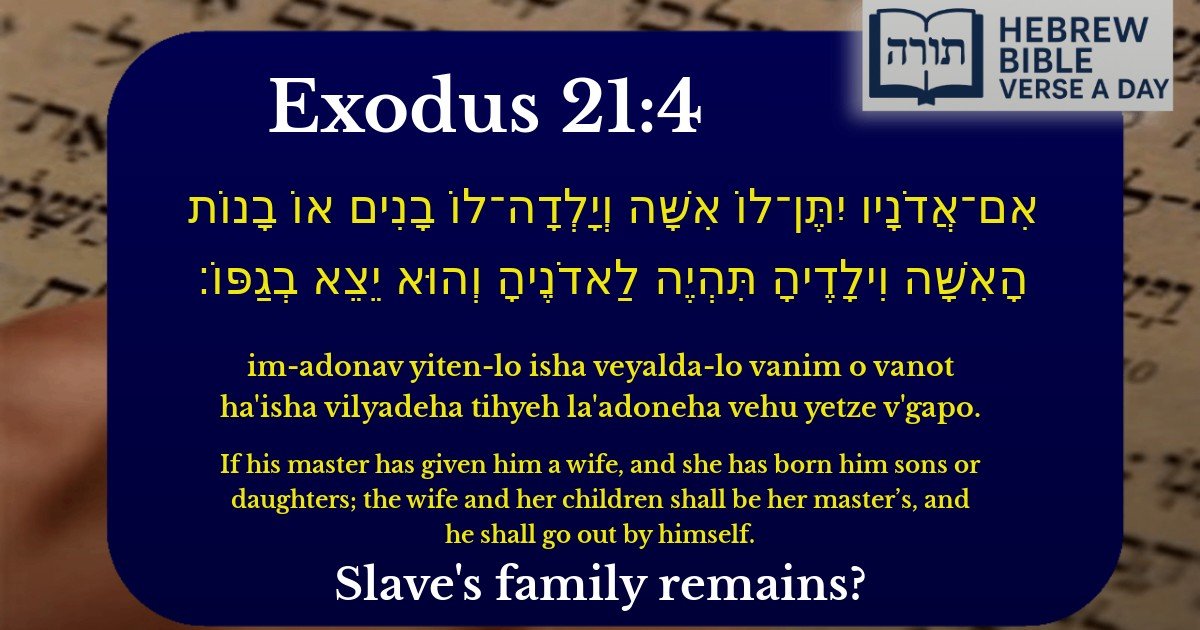
אִם־אֲדֹנָיו יִתֶּן־לוֹ אִשָּׁה וְיָלְדָה־לוֹ בָנִים אוֹ בָנוֹת הָאִשָּׁה וִילָדֶיהָ תִּהְיֶה לַאדֹנֶיהָ וְהוּא יֵצֵא בְגַפּוֹ׃
English Translation
If his master has given him a wife, and she has born him sons or daughters; the wife and her children shall be her master’s, and he shall go out by himself.
Transliteration
Im-adonav yiten-lo isha veyalda-lo vanim o vanot ha'isha vilyadeha tihyeh la'adoneha vehu yetze v'gapo.
Hebrew Leining Text
אִם־אֲדֹנָיו֙ יִתֶּן־ל֣וֹ אִשָּׁ֔ה וְיָלְדָה־ל֥וֹ בָנִ֖ים א֣וֹ בָנ֑וֹת הָאִשָּׁ֣ה וִילָדֶ֗יהָ תִּהְיֶה֙ לַֽאדֹנֶ֔יהָ וְה֖וּא יֵצֵ֥א בְגַפּֽוֹ׃
🎵 Listen to leining
Parasha Commentary
📚 Talmud Citations
This verse is quoted in the Talmud.
📖 Kiddushin 20a
The verse is discussed in the context of the laws regarding Hebrew slaves, particularly the scenario where a master gives a female slave to his male Hebrew slave as a wife, and the status of the wife and children upon the male slave's release.
Context in Jewish Law
This verse (Exodus 21:4) discusses the laws of an Eved Ivri (Hebrew indentured servant), specifically addressing the scenario where his master provides him with a Canaanite maidservant as a wife. The Torah outlines that if children are born from this union, they remain the master's property when the servant's term of service ends, while the servant himself goes free alone.
Rashi's Explanation
Rashi (Exodus 21:4) clarifies that the wife mentioned here is a Canaanite maidservant owned by the master, not a Jewish woman. He emphasizes that the Torah permits this arrangement only because the servant is under his master's jurisdiction during his term of service. However, upon gaining freedom, he cannot take the Canaanite wife or their children with him because they remain the master's property.
Rambam's Legal Perspective
Rambam (Hilchos Avadim 3:12) rules that this law applies specifically to a non-Jewish maidservant given by the master. He further states that if the servant wishes to remain with his wife and children after his term ends, he may choose to undergo the ritual of retziyah (piercing his ear with an awl) and become a permanent servant until the Yovel (Jubilee) year.
Moral and Ethical Dimensions
Midrashic Interpretation
The Mechilta (Mishpatim 3) connects this law to the broader theme of Geulas Nefesh (redemption of the soul). It suggests that just as the servant must leave behind temporary attachments to achieve freedom, so too must a Jew strive to free themselves from negative influences to serve Hashem completely.