

Join Our Newsletter To Be Informed When New Videos Are Posted
Hebrew Text
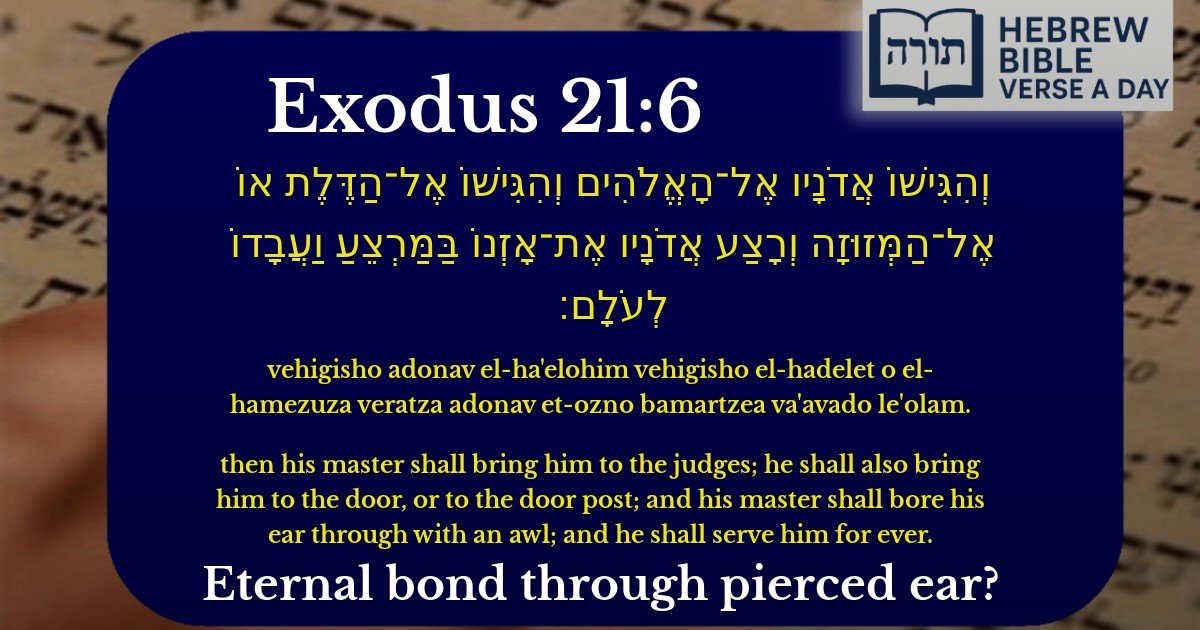
וְהִגִּישׁוֹ אֲדֹנָיו אֶל־הָאֱלֹהִים וְהִגִּישׁוֹ אֶל־הַדֶּלֶת אוֹ אֶל־הַמְּזוּזָה וְרָצַע אֲדֹנָיו אֶת־אָזְנוֹ בַּמַּרְצֵעַ וַעֲבָדוֹ לְעֹלָם׃
English Translation
then his master shall bring him to the judges; he shall also bring him to the door, or to the door post; and his master shall bore his ear through with an awl; and he shall serve him for ever.
Transliteration
Vehigisho adonav el-ha'elohim vehigisho el-hadelet o el-hamezuza veratza adonav et-ozno bamartzea va'avado le'olam.
Hebrew Leining Text
וְהִגִּישׁ֤וֹ אֲדֹנָיו֙ אֶל־הָ֣אֱלֹהִ֔ים וְהִגִּישׁוֹ֙ אֶל־הַדֶּ֔לֶת א֖וֹ אֶל־הַמְּזוּזָ֑ה וְרָצַ֨ע אֲדֹנָ֤יו אֶת־אׇזְנוֹ֙ בַּמַּרְצֵ֔עַ וַעֲבָד֖וֹ לְעֹלָֽם׃ {ס}
🎵 Listen to leining
Parasha Commentary
📚 Talmud Citations
This verse is quoted in the Talmud.
📖 Kiddushin 22b
The verse is discussed in the context of the laws regarding a Hebrew slave who chooses to remain in servitude. The Talmud explores the significance of boring the ear and the symbolism behind this act.
Context of the Verse
This verse (Exodus 21:6) describes the procedure for an eved ivri (Hebrew indentured servant) who chooses to remain in servitude beyond the six-year term prescribed by the Torah. The master brings him to the judges (elohim, meaning "judges" or "authorities" in this context) and then to the door or doorpost, where his ear is pierced with an awl, symbolizing his permanent servitude.
Rashi's Explanation
Rashi (Exodus 21:6) explains that the ear is specifically pierced because it heard at Mount Sinai the commandment, "For the Children of Israel are servants to Me" (Leviticus 25:55), yet the servant chose to remain under human servitude. The piercing serves as a reminder that he should have remained a servant of Hashem rather than submitting to another master indefinitely.
Symbolism of the Doorpost
The Mekhilta d'Rabbi Yishmael (Mishpatim 6) notes that the doorpost is significant because it recalls the doorposts of the Israelites in Egypt, which were marked with the blood of the Paschal lamb during the Exodus. Just as the Exodus marked their freedom from slavery, this act serves as a contrast—choosing servitude over freedom.
Rambam's Legal Perspective
In Hilchos Avadim (3:7), the Rambam (Maimonides) elaborates on the halachic process: the servant must explicitly declare his desire to remain in servitude, and the piercing is performed before judges. The awl is driven through the ear into the doorpost, marking his commitment to lifelong servitude.
Midrashic Insights
Halachic Implications
The Shulchan Aruch (Choshen Mishpat 67:35) codifies that this ritual is only applicable to an eved ivri who has completed his six-year term and voluntarily chooses to remain. The piercing must be done with an awl, not another tool, and only the right ear is pierced, as derived from the verse's wording (et ozno—implying a specific ear).