Frequently Asked Questions
Q: What does Exodus 2:17 teach us about Moshe's character?
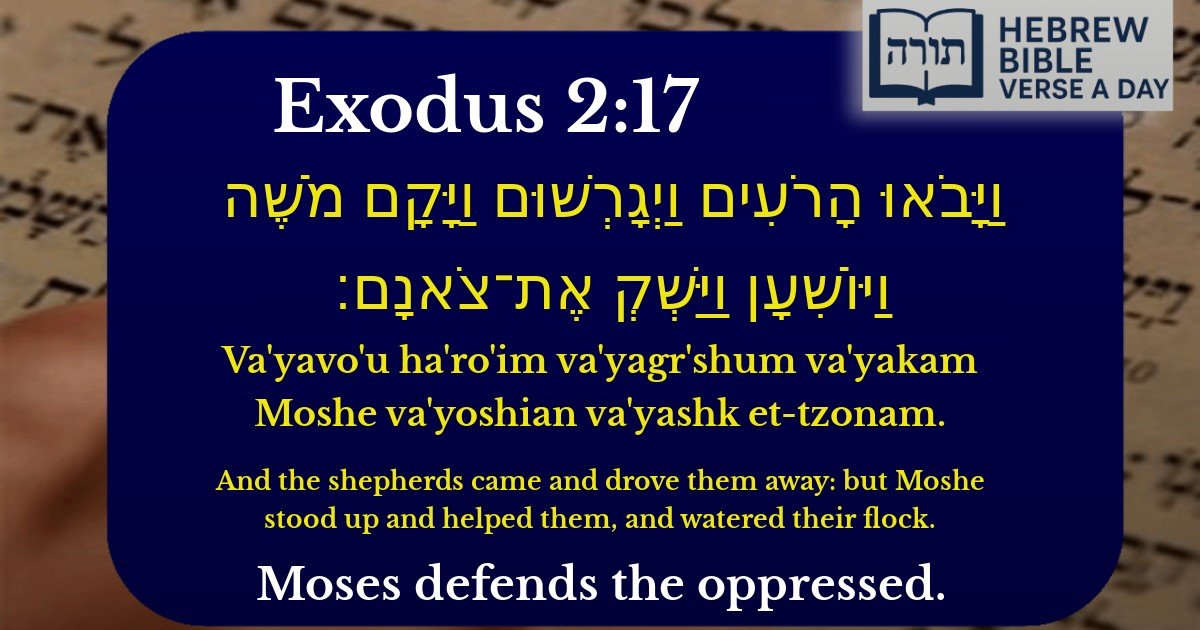
A: Exodus 2:17 shows Moshe's compassion and sense of justice. Even though he was raised in Pharaoh's palace, he stood up to help the oppressed daughters of Yitro when the shepherds drove them away. Rashi explains that this act demonstrated Moshe's readiness to help those in need, a quality that made him suitable to later lead the Jewish people.
Q: Why did Moshe help Yitro's daughters water their flock?
A: The Midrash teaches that Moshe helped Yitro's daughters because he couldn't tolerate injustice. The verse shows his natural leadership and kindness - traits that Hashem saw when choosing him to redeem Israel. The Rambam (Hilchos De'os 1:7) notes that we should learn from Moshe to actively help others, especially when they're treated unfairly.
Q: How does this verse connect to Moshe's future role?
A: This incident foreshadows Moshe's role as the savior of Israel. Just as he saved Yitro's daughters from the shepherds, he would later save the Jewish people from Egyptian oppression. The Talmud (Sotah 11a) connects this act of kindness to his divine mission, showing that leaders must first demonstrate care for individuals before leading nations.
Q: What lesson can we learn from Moshe's actions in this verse?
A: The verse teaches us to stand up against injustice, even when it doesn't directly affect us. Moshe could have ignored the conflict, but chose to intervene. As the Sforno explains, true righteousness means acting when we see others being wronged. This aligns with the Torah's commandment 'Do not stand idly by your neighbor's blood' (Vayikra 19:16).
Q: Why does the Torah mention that Moshe watered their flock?
A: Rashi notes that watering the flock shows Moshe went beyond just chasing away the bullies - he completed the kind deed by helping with their actual need. This teaches that true kindness means following through to fully help someone. The Talmud (Bava Metzia 32b) derives from this that when you start a mitzvah, you should complete it properly.


Context in Shemot (Exodus)
This verse (Shemot 2:17) describes Moshe's intervention when he witnessed the daughters of Yitro (Jethro) being harassed by shepherds at the well in Midyan. The incident occurs after Moshe fled Egypt and demonstrates his innate sense of justice and leadership.
Rashi's Commentary
Rashi explains that the shepherds drove away Yitro's daughters because their father, as a former priest of idolatry, was now rejected by the locals. Moshe's act of defending them showed his midat ha-chessed (attribute of kindness), a recurring theme in his character (see Shemot 2:11-12). Rashi also notes that Moshe "stood up" (vayakom) implies both physical action and moral courage.
Rambam's Perspective
In Hilchot De'ot (1:6), Rambam highlights this episode as an example of imitating Hashem's attributes—just as Hashem protects the vulnerable, Moshe emulated this by defending the oppressed. This aligns with the principle of "vehalachta bidrachav" (walking in His ways).
Midrashic Insights (Shemot Rabbah 1:32)
Symbolism of Watering the Flock
The Kli Yakar notes that Moshe didn't merely defend the women but actively assisted them by drawing water—a sign of complete kindness (chessed shel emet). This act mirrored Avraham's hospitality (Bereishit 18:4) and set a precedent for Moshe's future care for Klal Yisrael.