
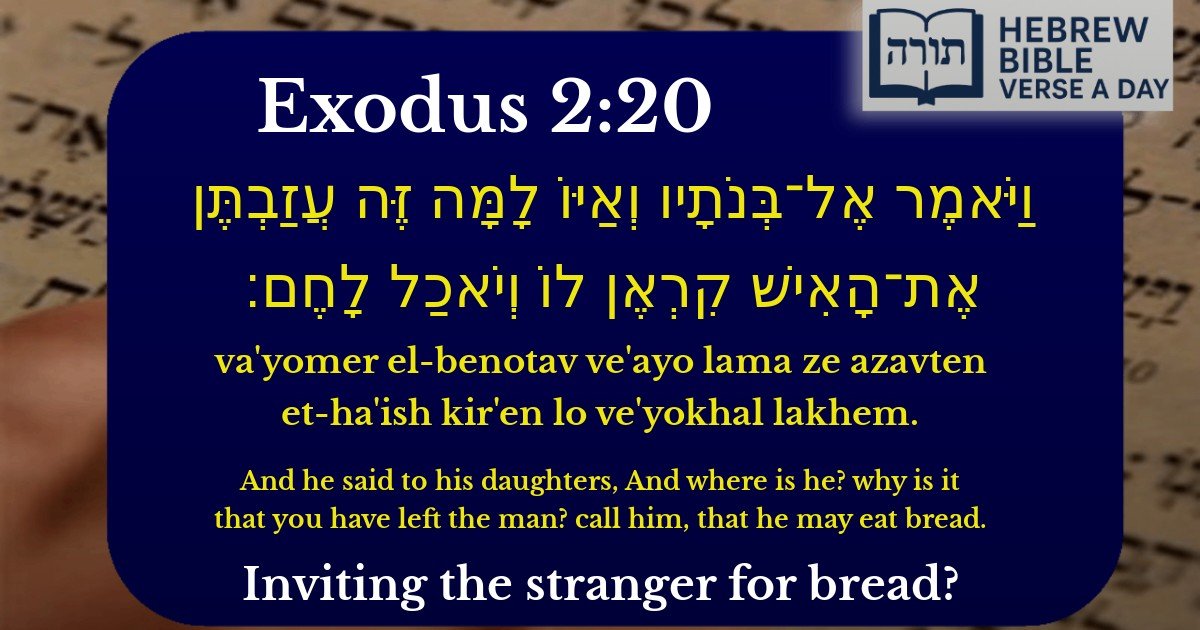

Exodus 2:20 - Inviting the stranger for bread?

Exodus 2:20 - שמות 2:20

Hebrew Text

וַיֹּאמֶר אֶל־בְּנֹתָיו וְאַיּוֹ לָמָּה זֶּה עֲזַבְתֶּן אֶת־הָאִישׁ קִרְאֶן לוֹ וְיֹאכַל לָחֶם׃

English Translation

And he said to his daughters, And where is he? why is it that you have left the man? call him, that he may eat bread.

Transliteration

Va'yomer el-benotav ve'ayo lama ze azavten et-ha'ish kir'en lo ve'yokhal lakhem.

Hebrew Leining Text

וַיֹּ֥אמֶר אֶל־בְּנֹתָ֖יו וְאַיּ֑וֹ לָ֤מָּה זֶּה֙ עֲזַבְתֶּ֣ן אֶת־הָאִ֔ישׁ קִרְאֶ֥ן ל֖וֹ וְיֹ֥אכַל לָֽחֶם׃

🎵 Listen to leining

Parasha Commentary

Context of the Verse

This verse (Shemot 2:20) appears in the Torah when Yitro (Jethro), the priest of Midian, questions his daughters about why they left Moshe (Moses) behind after he helped them at the well. The daughters had returned home without inviting Moshe, prompting Yitro to instruct them to call him so he may partake in their hospitality.

Yitro's Righteousness and Hospitality

Rashi explains that Yitro's question, "וְאַיּוֹ" (And where is he?), demonstrates his righteous character. He was disturbed that his daughters did not properly express gratitude to Moshe for his kindness. The Midrash (Shemot Rabbah 1:32) elaborates that Yitro rebuked them for failing to uphold the mitzvah of hakhnasat orchim (welcoming guests), a fundamental principle in Jewish tradition.

The Significance of "וְיֹאכַל לָחֶם" (That he may eat bread)

The Ramban (Nachmanides) notes that Yitro did not merely suggest inviting Moshe for a meal but emphasized "לָחֶם" (bread), symbolizing sustenance and life. This reflects the Jewish value of providing not just temporary hospitality but meaningful care for guests. The Talmud (Berachot 58a) teaches that sharing bread with others is akin to sharing divine blessings.

Moral Lessons from the Verse

  • Gratitude: Yitro teaches that one must acknowledge and repay kindness, as his daughters initially failed to do (based on Sforno's commentary).
  • Hakhnasat Orchim: The verse reinforces the importance of inviting guests and treating them with dignity, a value upheld by Avraham Avinu (Talmud, Shabbat 127a).
  • Leadership and Sensitivity: Yitro's response shows his wisdom in recognizing Moshe's potential greatness, hinting at his future role as Moshe's father-in-law and advisor (Ibn Ezra).

📚 Talmud Citations

This verse is not quoted in the Talmud.

Frequently Asked Questions

Q: What does Exodus 2:20 mean when Yitro asks his daughters why they left the man (Moshe)?
A: Yitro is questioning why his daughters did not show proper hospitality to Moshe, who had helped them. In Jewish tradition, hachnasat orchim (welcoming guests) is a great mitzvah. Rashi explains that Yitro was teaching his daughters the importance of gratitude and kindness by insisting they invite Moshe to eat with them.
Q: Why is hospitality (hachnasat orchim) important in this verse?
A: This verse highlights the Jewish value of hospitality, as Yitro reprimands his daughters for not inviting Moshe to their home after he helped them. The Talmud (Shabbat 127a) teaches that welcoming guests is even greater than receiving the Divine Presence. Rambam also emphasizes hospitality in Hilchot Avel (14:2) as a key Jewish trait.
Q: What lesson can we learn from Yitro's reaction in Exodus 2:20?
A: We learn the importance of recognizing kindness and responding with gratitude. Yitro understood that Moshe had done a great chesed (kindness) by helping his daughters, and the proper response was to invite him for a meal. The Midrash (Shemot Rabbah 1:32) praises Yitro for his ethical behavior in this incident.
Q: How does this verse about Moshe and Yitro's daughters apply to us today?
A: This teaches us to always acknowledge when someone helps us and to respond with kindness in return. Just as Yitro expected his daughters to show hospitality to Moshe, we should be mindful to properly thank those who assist us. The Sefer HaChinuch (Mitzvah 33) connects this to the broader mitzvah of 'V'ahavta l're'acha kamocha' (loving your neighbor as yourself).
Q: Why does the verse specifically mention 'eating bread' when Yitro tells his daughters to invite Moshe?
A: In Jewish tradition, sharing a meal represents creating a bond and showing true hospitality. Rashi notes that eating together establishes a relationship, which is why Yitro specifically mentions bread - the basic sustenance that represents welcoming someone into your home. The Talmud (Berachot 58a) teaches that sharing food is a fundamental way to build connections between people.