

Join Our Newsletter To Be Informed When New Videos Are Posted
Hebrew Text
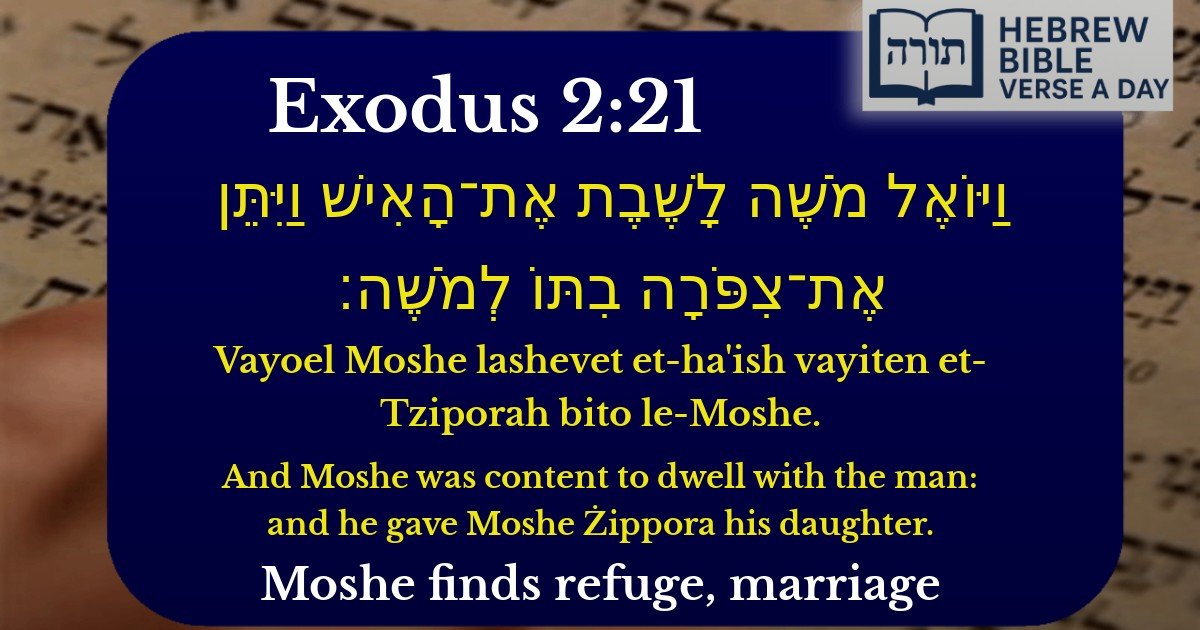
וַיּוֹאֶל מֹשֶׁה לָשֶׁבֶת אֶת־הָאִישׁ וַיִּתֵּן אֶת־צִפֹּרָה בִתּוֹ לְמֹשֶׁה׃
English Translation
And Moshe was content to dwell with the man: and he gave Moshe Żippora his daughter.
Transliteration
Vayoel Moshe lashevet et-ha'ish vayiten et-Tziporah bito le-Moshe.
Hebrew Leining Text
וַיּ֥וֹאֶל מֹשֶׁ֖ה לָשֶׁ֣בֶת אֶת־הָאִ֑ישׁ וַיִּתֵּ֛ן אֶת־צִפֹּרָ֥ה בִתּ֖וֹ לְמֹשֶֽׁה׃
🎵 Listen to leining
Parasha Commentary
📚 Talmud Citations
This verse is not quoted in the Talmud.
Context of the Verse
The verse (Shemot 2:21) describes Moshe's acceptance of Yitro's hospitality and his marriage to Tzipporah, Yitro's daughter. This occurs after Moshe flees Egypt and arrives in Midian, where he rescues Yitro's daughters from shepherds who were harassing them.
Rashi's Commentary
Rashi explains that the phrase "וַיּוֹאֶל מֹשֶׁה" ("And Moshe was content") implies that Moshe initially hesitated to stay with Yitro but ultimately agreed. Rashi cites the Midrash (Shemot Rabbah 1:32) that Moshe made an oath ("אָלָה") to Yitro that he would not leave without permission, demonstrating his integrity and commitment.
Rambam's Perspective
Rambam (Hilchos Issurei Biah 13:16) discusses how Moshe's marriage to Tzipporah was conducted with proper Jewish law in mind, even though the formal giving of the Torah had not yet occurred. This highlights that the Avot and Moshe observed mitzvot even before Matan Torah.
Midrashic Insights
Yitro's Recognition of Moshe's Greatness
Ibn Ezra notes that Yitro gave his daughter to Moshe because he recognized Moshe's exceptional character after witnessing his bravery and justice in defending his daughters. This reflects the principle that a righteous person is recognized by their actions (Mishlei 20:11).
Halachic Implications
The Ramban discusses how Moshe's dwelling with Yitro and marriage to Tzipporah set a precedent for proper conduct in marriage and interpersonal relationships, even in extraordinary circumstances. This aligns with the Torah's emphasis on derech eretz preceding Torah (Vayikra Rabbah 9:3).