Frequently Asked Questions
Q: What does Exodus 22:14 mean?
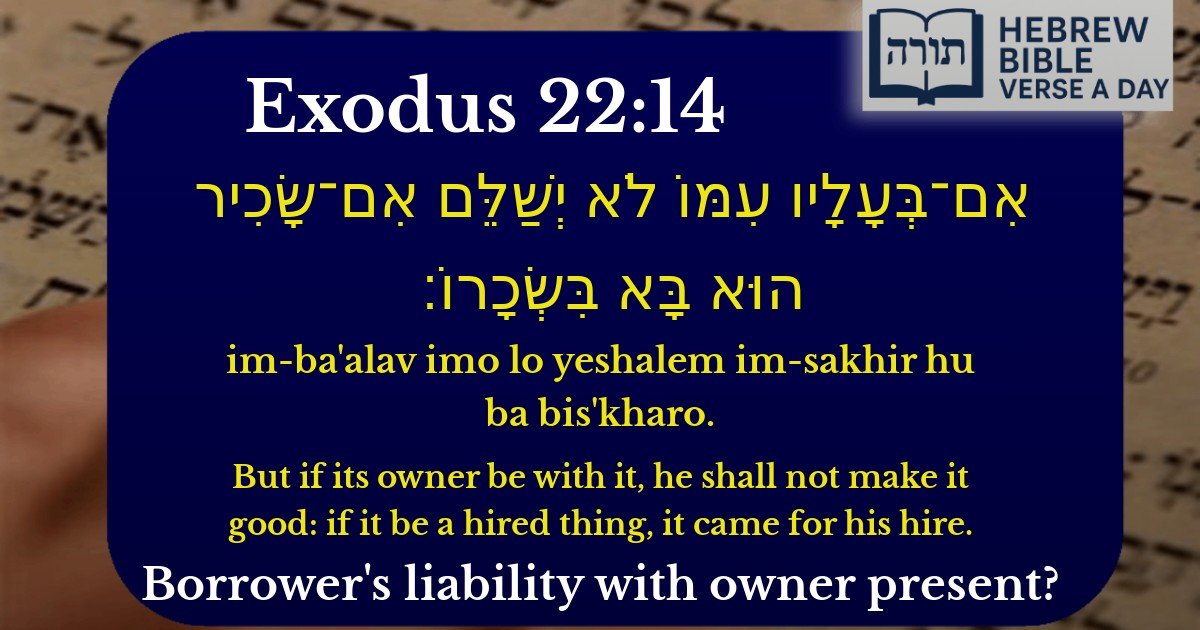
A: Exodus 22:14 discusses the laws of responsibility when borrowing or renting an animal. If the owner is present with the animal when it gets harmed, the borrower isn't liable to pay compensation because the owner could have prevented the damage. If the animal was hired (rented), the payment for its hire covers any potential loss, so no additional compensation is needed. This is part of the Torah's detailed civil laws about property and responsibility.
Q: Why is this verse important in Jewish law?
A: This verse is important because it establishes key principles in Jewish civil law (Halacha) regarding responsibility for borrowed or rented property. The Talmud (Bava Metzia 95b-96a) elaborates on these laws, explaining the differences in liability between borrowing, renting, and other transactions. It teaches fairness in financial dealings, a core value in Judaism.
Q: How does Rashi explain Exodus 22:14?
A: Rashi explains that when the owner is present ('im be'alav imo'), he can watch over his own animal, so the borrower isn't responsible if something happens. Regarding a hired animal ('im sakhir hu'), Rashi states that the rental fee the owner receives is considered compensation enough for normal wear and tear or minor incidents, unless there was negligence.
Q: What practical lesson can we learn from this verse today?
A: This verse teaches us about personal responsibility and fair business practices. When borrowing or renting items, both parties should clarify terms upfront. The owner has some responsibility to safeguard their property, and the borrower must act responsibly. These principles apply today in rental agreements, lending items, or any situation involving shared property.
Q: Does this law apply to all borrowed items or just animals?
A: While the verse specifically mentions animals, the Talmud (Bava Metzia) extends these principles to other borrowed or rented items. The general rules are: 1) If the owner is present or the item is rented, liability is reduced, 2) The exact details depend on the agreement between parties. The Shulchan Aruch (Choshen Mishpat 303) codifies these laws for all types of property.


Context in Torah
This verse (Shemot 22:14) appears in the section of Mishpatim, which details civil and monetary laws. It follows laws concerning damages caused by borrowed or rented property, establishing liability exemptions when the owner is present or when compensation is inherently part of a rental agreement.
Rashi's Explanation
Rashi clarifies that this verse refers to two distinct cases:
Rambam's Legal Analysis
In Hilchot She’eilah u’Pikadon (1:6), Rambam codifies this law, emphasizing that the borrower’s exemption applies only when the owner is actively participating in the labor. The exemption does not extend to cases where the owner is merely present but not working.
Talmudic Discussion (Bava Metzia 95b-96a)
The Gemara explores the nuances of this verse, debating:
Midrashic Insight (Mechilta d'Rabbi Yishmael)
The Mechilta highlights the ethical principle underlying this law: fairness in financial obligations. When an owner shares in the labor or when compensation is already factored into a transaction, imposing additional liability would be unjust.
Practical Halachic Implications
Later commentators, such as the Ketzot HaChoshen (304:1), apply this verse to modern cases of borrowing or renting equipment, stressing that agreements must clearly define liability based on the owner’s involvement or the nature of the rental terms.