Frequently Asked Questions
Q: What does the verse 'You shall not afflict any widow, or fatherless child' mean?
A: This verse from Exodus 22:21 teaches us the ethical obligation to treat widows and orphans with kindness and compassion. According to Rashi, the Torah emphasizes this commandment because widows and orphans are vulnerable and may not have protectors, making them easy targets for oppression. The Torah warns against taking advantage of their situation.
Q: Why is this commandment about widows and orphans important in Judaism?
A: This commandment is important because it reflects the Torah's deep concern for justice and protecting the weak. The Rambam (Hilchos De'os 6:10) explains that mistreating widows and orphans is especially severe because they often lack support. The Talmud (Bava Metzia 59b) also teaches that their cries are heard by Hashem, showing how seriously Judaism takes their protection.
Q: How does this verse apply in daily life today?
A: This verse reminds us to be mindful of those who are vulnerable in society, such as single parents or children without proper care. The Midrash (Shemos Rabbah 30:13) teaches that supporting widows and orphans is a form of imitating Hashem's kindness. Today, this can mean donating to orphanages, assisting single-parent families, or simply showing extra sensitivity to those in difficult circumstances.
Q: What happens if someone oppresses a widow or orphan?
A: The Torah (Exodus 22:22-23) warns that if someone afflicts a widow or orphan, Hashem will hear their cries and bring punishment. Rashi explains that this is because Hashem is especially close to those who are suffering. The Talmud (Shabbos 31a) also includes proper treatment of the vulnerable as part of ethical behavior expected of every Jew.
Q: Are there other Torah verses about helping widows and orphans?
A: Yes, the Torah mentions widows and orphans multiple times, showing their importance. For example, Deuteronomy 10:18 says Hashem 'loves the stranger, giving him food and clothing' and commands us to do the same. Isaiah 1:17 also instructs us to 'defend the orphan, plead for the widow.' These verses reinforce the Jewish value of caring for those in need.

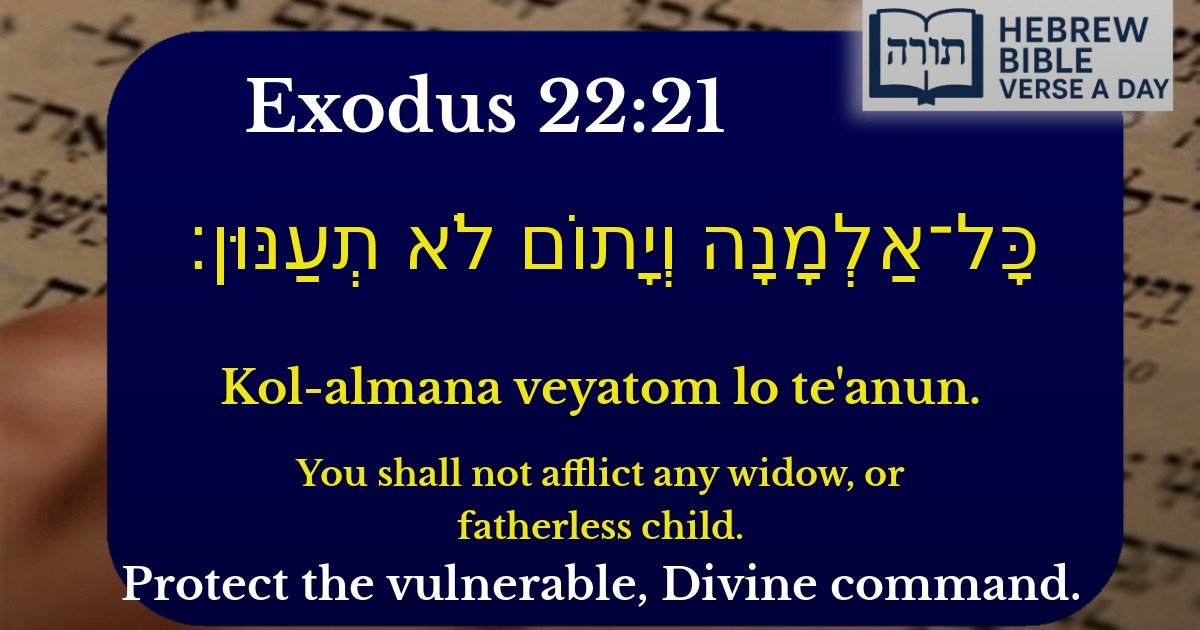

Prohibition Against Afflicting Widows and Orphans
The verse "כָּל־אַלְמָנָה וְיָתוֹם לֹא תְעַנּוּן" (Shemot 22:21) prohibits causing suffering to widows and orphans. This mitzvah appears multiple times in the Torah (e.g., Devarim 24:17), emphasizing its importance. Rashi explains that the Torah singles out widows and orphans because they are particularly vulnerable—lacking the protection of a husband or father—and are therefore more likely to be oppressed.
Severity of the Transgression
The Rambam (Hilchot De'ot 6:10) teaches that afflicting widows and orphans is a grave sin because their emotional state is fragile. The Talmud (Bava Metzia 59b) states that Hashem hears their cries immediately, as it says, "If you afflict them, and they cry out to Me, I will surely hear their cry" (Shemot 22:22). The Midrash (Shemot Rabbah 31:5) warns that those who exploit the vulnerable invite severe punishment.
Practical Applications
Spiritual Dimension
The Sforno notes that this mitzvah reflects the divine attribute of justice—Hashem acts as the protector of those without human defenders. The Kli Yakar adds that afflicting the vulnerable is akin to denying Hashem’s providence, as He explicitly declares Himself their guardian.