Frequently Asked Questions
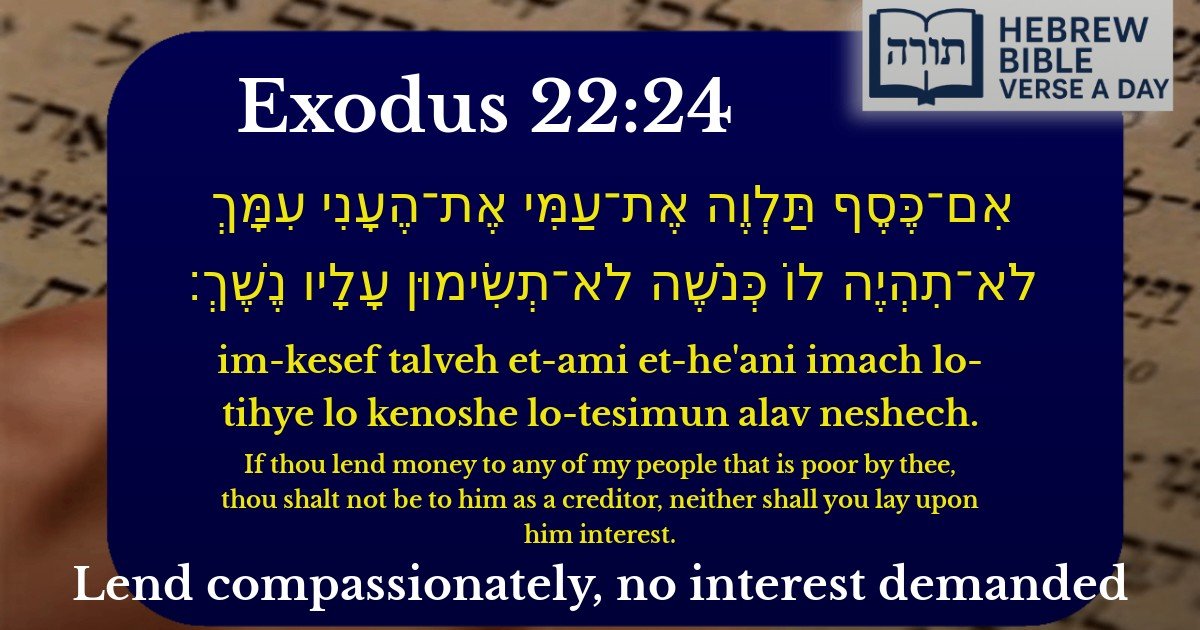
Q: What does Exodus 22:24 teach about lending money to the poor?
A: Exodus 22:24 teaches that when lending money to a poor person, one must not act like a demanding creditor or charge interest. The Torah emphasizes compassion and fairness in financial dealings, especially toward those in need. Rashi explains that this verse prohibits pressuring the borrower for repayment if they cannot pay, and the Rambam (Hilchot Malveh v'Loveh) elaborates on the laws of ethical lending.
Q: Why is it forbidden to charge interest on a loan to a poor person?
A: Charging interest on a loan to a poor person is forbidden because it exploits their vulnerable situation. The Talmud (Bava Metzia 75b) states that taking interest is considered oppressive and goes against the Torah's value of kindness (chesed). The Midrash (Shemot Rabbah 31:6) compares charging interest to denying G-d's providence, as it shows a lack of trust that He will provide without taking advantage of others.
Q: How does Exodus 22:24 apply to loans between Jews today?
A: Exodus 22:24 applies today through the laws of 'ribbit' (interest), which prohibit Jews from charging or receiving interest on loans to fellow Jews. The Shulchan Aruch (Choshen Mishpat 160) details these laws, including the requirement to write a 'heter iska' (permissible business agreement) for loans within commercial contexts. The principle remains: helping another Jew in need should be done with kindness, not for financial gain.
Q: What is the difference between a creditor and a lender according to this verse?
A: The verse distinguishes between being a compassionate lender and a harsh creditor. Rashi explains that a 'creditor' (nosheh) aggressively demands repayment, while a lender should be patient and understanding. The Talmud (Bava Metzia 75a) teaches that one should not even remind a poor borrower of the debt if it causes them distress, reflecting the Torah's emphasis on preserving human dignity.
Q: Does this verse only apply to monetary loans, or does it include other forms of help?
A: While the verse specifically mentions monetary loans, the principle extends to all forms of assistance. The Rambam (Hilchot Matnot Aniyim 10:7) teaches that helping the poor—whether through money, food, or kindness—should be done without exploitation or condescension. The Midrash (Tanchuma Mishpatim 10) connects this mitzvah to the broader idea of treating others with compassion, as we were once strangers in Egypt.


Prohibition of Interest (Ribbit) in Lending
The verse (Exodus 22:24) establishes a fundamental mitzvah regarding monetary loans to fellow Jews, particularly the poor. The Torah prohibits two behaviors:
Halachic Implications from Talmudic Sources
The Gemara (Bava Metzia 75b) derives from this verse that even indirect interest is forbidden. The prohibition includes:
Moral Dimensions in Jewish Thought
The Sefer HaChinuch (Mitzvah 66) explains this mitzvah trains us in kindness and brotherhood. By forgoing profit from another's distress, we emulate Hashem's attribute of mercy. The Midrash Tanchuma (Mishpatim 10) compares charging interest to denying the Exodus, as both demonstrate lack of faith in Divine providence.
Contemporary Applications
Poskim discuss modern scenarios including: