

Join Our Newsletter To Be Informed When New Videos Are Posted
Hebrew Text
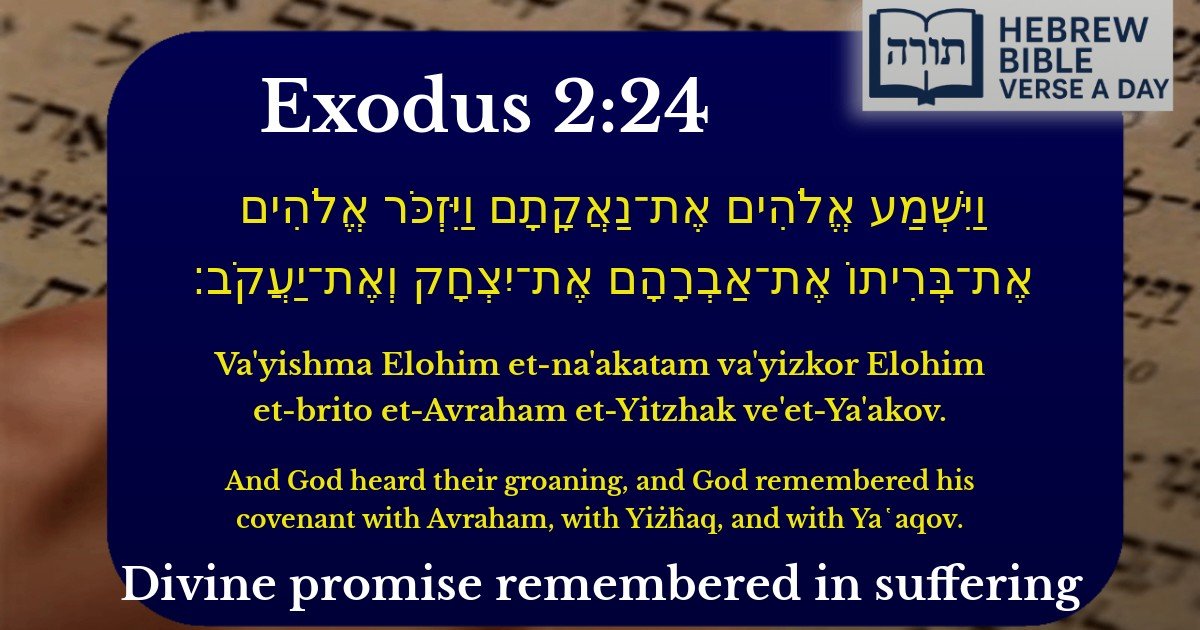
וַיִּשְׁמַע אֱלֹהִים אֶת־נַאֲקָתָם וַיִּזְכֹּר אֱלֹהִים אֶת־בְּרִיתוֹ אֶת־אַבְרָהָם אֶת־יִצְחָק וְאֶת־יַעֲקֹב׃
English Translation
And God heard their groaning, and God remembered his covenant with Avraham, with Yiżĥaq, and with Ya῾aqov.
Transliteration
Va'yishma Elohim et-na'akatam va'yizkor Elohim et-brito et-Avraham et-Yitzhak ve'et-Ya'akov.
Hebrew Leining Text
וַיִּשְׁמַ֥ע אֱלֹהִ֖ים אֶת־נַאֲקָתָ֑ם וַיִּזְכֹּ֤ר אֱלֹהִים֙ אֶת־בְּרִית֔וֹ אֶת־אַבְרָהָ֖ם אֶת־יִצְחָ֥ק וְאֶֽת־יַעֲקֹֽב׃
🎵 Listen to leining
Parasha Commentary
📚 Talmud Citations
This verse is quoted in the Talmud.
📖 Rosh Hashanah 11a
The verse is cited in the context of discussing when God remembers His covenant with the patriarchs, particularly in relation to the timing of the Exodus from Egypt.
📖 Sanhedrin 90b
The verse is referenced in a discussion about the resurrection of the dead, emphasizing God's remembrance of the covenant with the patriarchs as a basis for future redemption.
Divine Response to Suffering
The verse (Shemot 2:24) describes Hashem's response to the groaning of Bnei Yisrael in Mitzrayim. Rashi explains that "וַיִּזְכֹּר אֱלֹהִים" ("God remembered") does not imply forgetfulness, but rather denotes the activation of divine mercy in response to their suffering. The term "נַאֲקָתָם" ("their groaning") refers to their cries under oppression, as the Midrash (Shemot Rabbah 1:34) teaches that their groans ascended before Hashem like a silent scream that pierces the heavens.
The Covenant Remembered
Ramban emphasizes that the verse connects their redemption to the covenant with the Avot (Avraham, Yitzchak, and Yaakov). This teaches that their merit, not Israel's own righteousness, prompted the redemption. The Sforno adds that the covenant was "remembered" because the time had arrived for its fulfillment, as promised in Bereshit 15:13-14.
The Order of the Avot
Halachic Implications
The Rambam (Hilchot Teshuvah 2:6) derives from this verse that divine mercy responds to sincere cries, even when undeserved. The Talmud (Rosh Hashanah 11a) links this "remembrance" to the future redemption, teaching that just as they were redeemed in Nissan, so too will the final redemption occur in Nissan.