

Join Our Newsletter To Be Informed When New Videos Are Posted
Hebrew Text
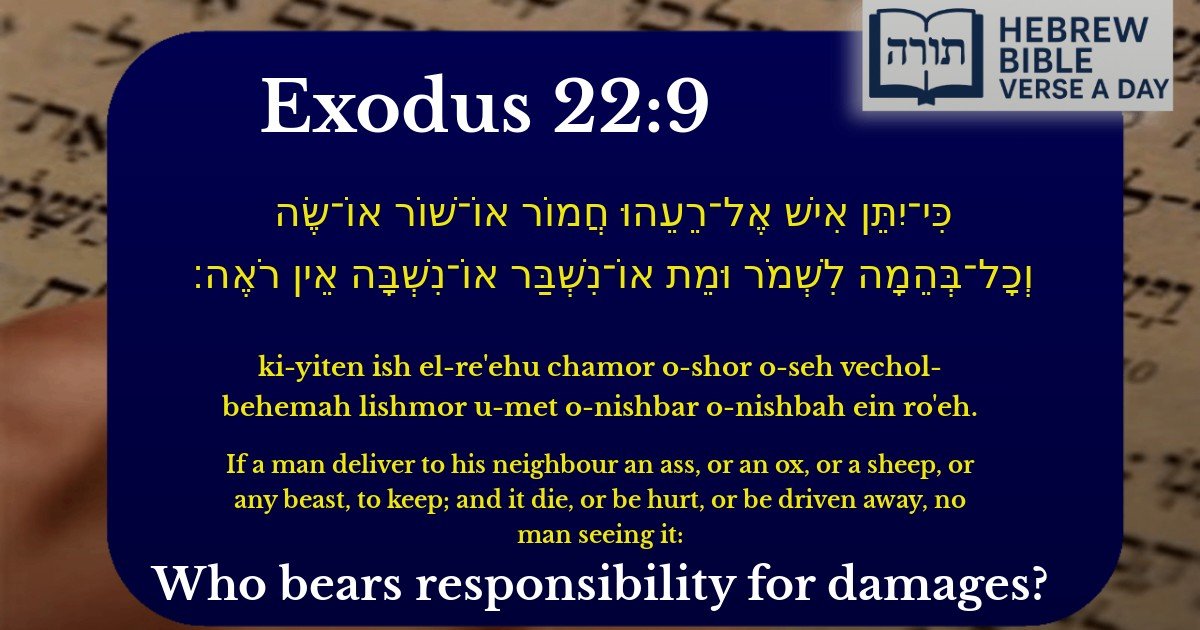
כִּי־יִתֵּן אִישׁ אֶל־רֵעֵהוּ חֲמוֹר אוֹ־שׁוֹר אוֹ־שֶׂה וְכָל־בְּהֵמָה לִשְׁמֹר וּמֵת אוֹ־נִשְׁבַּר אוֹ־נִשְׁבָּה אֵין רֹאֶה׃
English Translation
If a man deliver to his neighbour an ass, or an ox, or a sheep, or any beast, to keep; and it die, or be hurt, or be driven away, no man seeing it:
Transliteration
Ki-yiten ish el-re'ehu chamor o-shor o-seh vechol-behemah lishmor u-met o-nishbar o-nishbah ein ro'eh.
Hebrew Leining Text
כִּֽי־יִתֵּן֩ אִ֨ישׁ אֶל־רֵעֵ֜הוּ חֲמ֨וֹר אוֹ־שׁ֥וֹר אוֹ־שֶׂ֛ה וְכׇל־בְּהֵמָ֖ה לִשְׁמֹ֑ר וּמֵ֛ת אוֹ־נִשְׁבַּ֥ר אוֹ־נִשְׁבָּ֖ה אֵ֥ין רֹאֶֽה׃
🎵 Listen to leining
Parasha Commentary
📚 Talmud Citations
This verse is quoted in the Talmud.
📖 Bava Metzia 93b
The verse is discussed in the context of the laws of shomerim (bailees) and their responsibilities when entrusted with another's property.
📖 Bava Metzia 94b
Further discussion on the obligations of a shomer (bailee) and the conditions under which they are exempt from liability, referencing this verse.
Context and Overview
This verse, from Shemot (Exodus) 22:9, discusses the laws of shomrim (guardians or custodians) and their responsibilities when entrusted with another person's animal. The Torah outlines scenarios where the animal may die, be injured, or be stolen without witnesses, raising questions about the guardian's liability.
Rashi's Commentary
Rashi explains that this verse introduces the concept of a shomer chinam (an unpaid guardian), who is not liable for the animal's loss unless negligence is proven. The phrase "ein ro'eh" ("no man seeing it") implies there are no witnesses to testify whether the guardian was negligent or if the loss occurred due to circumstances beyond his control (ones).
Rambam's Legal Analysis
In Hilchos She’eilah u’Pikadon (Laws of Borrowing and Deposits), Rambam (Maimonides) elaborates that a shomer chinam is exempt from liability if he takes an oath that the loss occurred without his negligence (Hilchos She’eilah 1:2). The absence of witnesses (ein ro'eh) shifts the burden of proof to the owner, who must provide evidence of the guardian's fault.
Talmudic Discussion (Bava Metzia 42a)
The Talmud analyzes this verse in the context of the four types of guardians:
The verse here specifically addresses the shomer chinam, as the Torah later distinguishes the obligations of other guardians.
Midrashic Insight (Mechilta)
The Mechilta emphasizes the ethical dimension: even though the guardian may be exempt from financial liability, he is still morally obligated to act responsibly with his neighbor's property. The phrase "ki yiten ish el re'ehu" ("if a man delivers to his neighbor") underscores the importance of trust in interpersonal relationships.
Practical Halachic Implications
Based on this verse and its interpretations, Halacha rules that: