Frequently Asked Questions
Q: What does 'Thou shalt not raise a false report' mean in Exodus 23:1?
A: This verse prohibits spreading false rumors or giving false testimony in court. Rashi explains that it includes not only outright lies but also sharing unverified information that could harm others. The Torah emphasizes honesty and justice, especially in legal matters.
Q: Why is being a false witness considered so serious in Judaism?
A: The Talmud (Sanhedrin 7a) teaches that false testimony undermines justice, which is a foundation of society. The Rambam (Hilchot Edut 17:1) states that a false witness violates multiple Torah prohibitions and can cause irreversible harm to innocent people. Honesty in testimony is essential for maintaining a just community.
Q: How does Exodus 23:1 apply to everyday speech?
A: The Chofetz Chaim explains that this verse teaches us to be careful with our words in all situations, not just in court. Spreading rumors, gossip (lashon hara), or even sharing misleading information violates the spirit of this commandment. We must verify facts before speaking about others.
Q: What does 'put not thy hand with the wicked' mean in this verse?
A: Rashi explains that this warns against associating with wrongdoers who might pressure you to join their false testimony. The Midrash (Mechilta) adds that even passively supporting injustice by remaining silent when you know the truth is considered a violation of this commandment.
Q: How can we practice the lesson of Exodus 23:1 today?
A: We can apply this by: 1) Verifying information before sharing it, 2) Refusing to participate in gossip or slander, 3) Speaking up for truth in difficult situations, and 4) Choosing associations carefully to avoid being influenced toward dishonesty. The Sefer HaChinuch (Mitzvah 74) teaches that guarding our speech protects society's moral fabric.

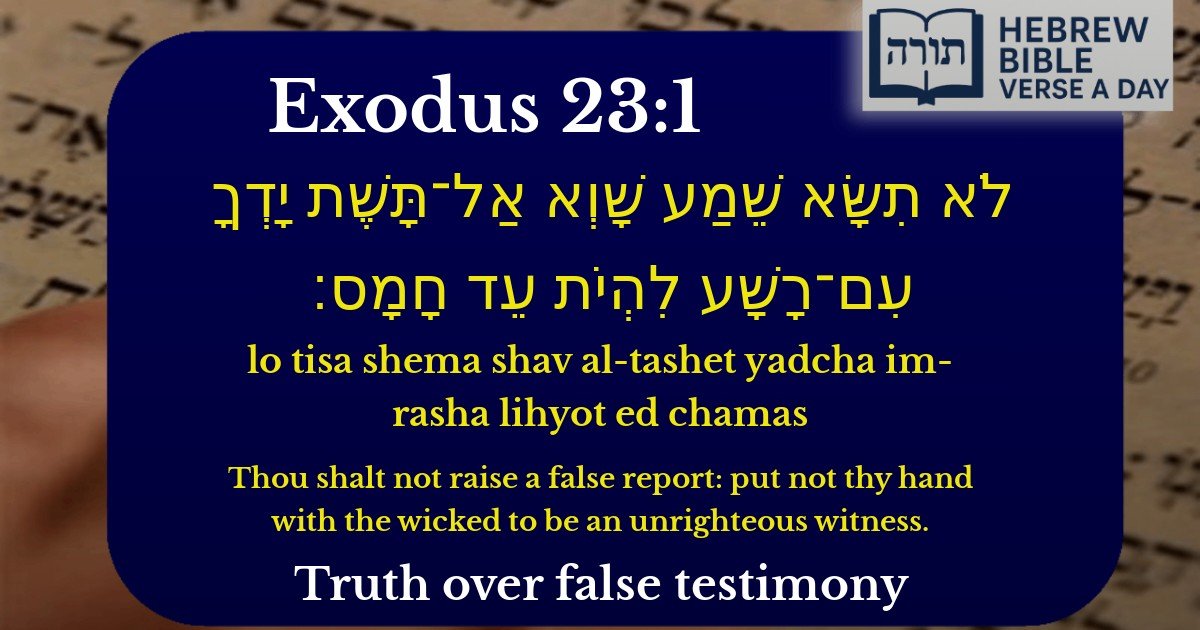

Prohibition Against False Testimony
The verse (Exodus 23:1) contains two prohibitions related to bearing false witness:
Rashi's Explanation
Rashi explains that this verse warns against two types of false testimony:
Rashi notes that the phrase "join hands" implies collusion with a wicked person to present coordinated false testimony.
Maimonides' Legal Perspective
In Hilchot Edut (Laws of Testimony), Rambam elaborates on this prohibition (10:1-4):
Talmudic Expansion
The Talmud (Sanhedrin 29a) derives from this verse that:
Moral Implications
The Midrash (Mechilta) connects this verse to broader ethical principles:
Practical Applications
Based on this verse and its interpretations, Jewish law establishes that: