

Join Our Newsletter To Be Informed When New Videos Are Posted
Hebrew Text
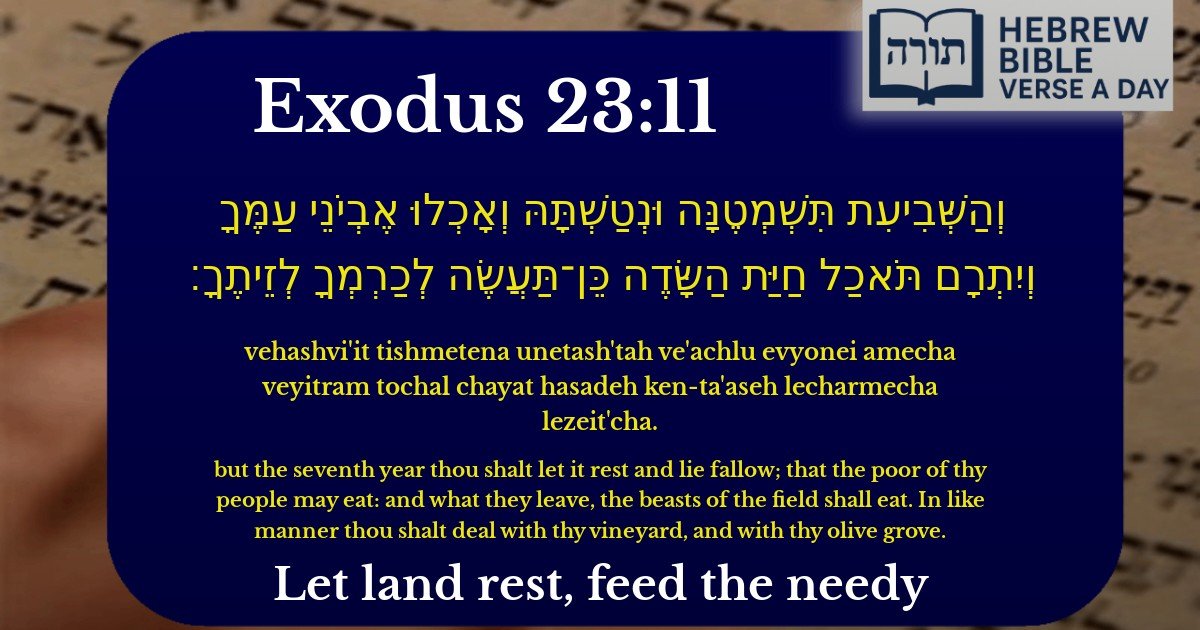
וְהַשְּׁבִיעִת תִּשְׁמְטֶנָּה וּנְטַשְׁתָּהּ וְאָכְלוּ אֶבְיֹנֵי עַמֶּךָ וְיִתְרָם תֹּאכַל חַיַּת הַשָּׂדֶה כֵּן־תַּעֲשֶׂה לְכַרְמְךָ לְזֵיתֶךָ׃
English Translation
but the seventh year thou shalt let it rest and lie fallow; that the poor of thy people may eat: and what they leave, the beasts of the field shall eat. In like manner thou shalt deal with thy vineyard, and with thy olive grove.
Transliteration
Vehashvi'it tishmetena unetash'tah ve'achlu evyonei amecha veyitram tochal chayat hasadeh ken-ta'aseh lecharmecha lezeit'cha.
Hebrew Leining Text
וְהַשְּׁבִיעִ֞ת תִּשְׁמְטֶ֣נָּה וּנְטַשְׁתָּ֗הּ וְאָֽכְלוּ֙ אֶבְיֹנֵ֣י עַמֶּ֔ךָ וְיִתְרָ֕ם תֹּאכַ֖ל חַיַּ֣ת הַשָּׂדֶ֑ה כֵּֽן־תַּעֲשֶׂ֥ה לְכַרְמְךָ֖ לְזֵיתֶֽךָ׃
🎵 Listen to leining
Parasha Commentary
📚 Talmud Citations
This verse is quoted in the Talmud.
📖 Moed Katan 3b
The verse is referenced in a discussion about the laws of the Sabbatical year (Shemittah) and the obligation to let the land lie fallow.
📖 Megillah 5b
The verse is cited in the context of discussing the agricultural laws and the care for the poor during the Sabbatical year.
The Mitzvah of Shemitah (Sabbatical Year)
The verse (Shemot 23:11) commands the observance of Shemitah, the seventh year when agricultural work in Eretz Yisrael must cease. Rashi explains that this mitzvah applies specifically to the Land of Israel, as it is a unique sanctity tied to the land itself. The owner must relinquish ownership of the produce, allowing it to be freely available to all, particularly the poor.
Equal Access for All
The Rambam (Hilchot Shemitah V'Yovel 4:1) emphasizes that during Shemitah, all produce is considered hefker (ownerless), and both the wealthy and poor have equal rights to it. However, the Torah specifically mentions "the poor of your people" to highlight that the mitzvah ensures their needs are met first, as they rely on this system for sustenance.
Leaving for Animals
The phrase "what they leave, the beasts of the field shall eat" teaches that after human needs are met, the remaining produce is designated for animals. The Sforno notes that this reflects the harmony of creation—when humans fulfill their divine obligations, even wildlife benefits from Hashem's providence.
Application to Vineyards and Olive Groves
Spiritual Purpose
The Midrash (Torat Kohanim) connects Shemitah to emunah (faith)—by refraining from work, farmers demonstrate their belief that sustenance comes from Hashem, not their labor alone. This aligns with the broader theme of Shabbat, where rest acknowledges divine creation and providence.