

Join Our Newsletter To Be Informed When New Videos Are Posted
Hebrew Text
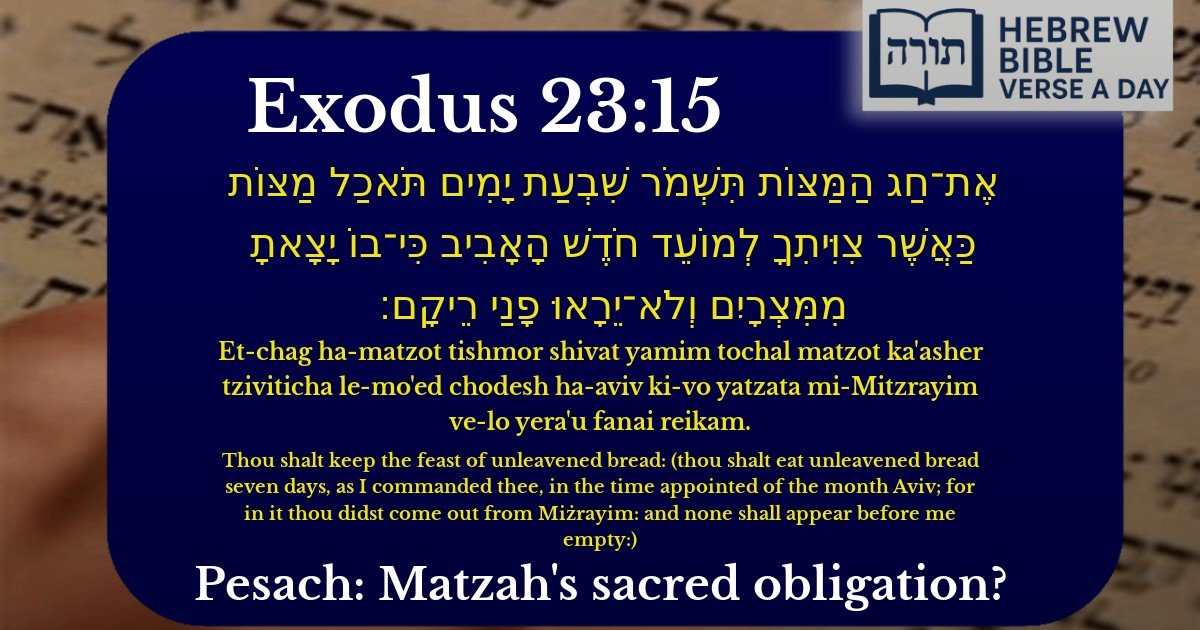
אֶת־חַג הַמַּצּוֹת תִּשְׁמֹר שִׁבְעַת יָמִים תֹּאכַל מַצּוֹת כַּאֲשֶׁר צִוִּיתִךָ לְמוֹעֵד חֹדֶשׁ הָאָבִיב כִּי־בוֹ יָצָאתָ מִמִּצְרָיִם וְלֹא־יֵרָאוּ פָנַי רֵיקָם׃
English Translation
Thou shalt keep the feast of unleavened bread: (thou shalt eat unleavened bread seven days, as I commanded thee, in the time appointed of the month Aviv; for in it thou didst come out from Miżrayim: and none shall appear before me empty:)
Transliteration
Et-chag ha-matzot tishmor shivat yamim tochal matzot ka'asher tziviticha le-mo'ed chodesh ha-aviv ki-vo yatzata mi-Mitzrayim ve-lo yera'u fanai reikam.
Hebrew Leining Text
אֶת־חַ֣ג הַמַּצּוֹת֮ תִּשְׁמֹר֒ שִׁבְעַ֣ת יָמִים֩ תֹּאכַ֨ל מַצּ֜וֹת כַּֽאֲשֶׁ֣ר צִוִּיתִ֗ךָ לְמוֹעֵד֙ חֹ֣דֶשׁ הָֽאָבִ֔יב כִּי־ב֖וֹ יָצָ֣אתָ מִמִּצְרָ֑יִם וְלֹא־יֵרָא֥וּ פָנַ֖י רֵיקָֽם׃
🎵 Listen to leining
Parasha Commentary
📚 Talmud Citations
This verse is quoted in the Talmud.
📖 Pesachim 28b
The verse is referenced in the discussion about the obligation to eat matzah during Passover and the timing of the festival in the month of Aviv.
📖 Megillah 20b
The verse is mentioned in the context of discussing the proper times for observing festivals and the importance of the month of Aviv.
Pesach and the Mitzvah of Matzah
The verse commands the observance of Chag HaMatzot (the Festival of Unleavened Bread) for seven days, during which matzah must be eaten. Rashi (Shemot 23:15) explains that this mitzvah is intrinsically linked to the Exodus from Egypt, as the Jewish people left in haste and did not have time for their dough to rise. The Rambam (Hilchot Chametz U'Matzah 6:1) emphasizes that eating matzah on Pesach is a Torah obligation, commemorating our redemption from slavery.
The Significance of the Month of Aviv
The verse specifies that this observance must take place in Chodesh HaAviv (the month of spring). The Talmud (Rosh Hashanah 21a) discusses how the Sanhedrin would ensure that the month of Nissan coincided with spring, sometimes intercalating the year to maintain this alignment. The Sforno (Shemot 23:15) notes that this timing reflects Hashem's kindness, as traveling in spring is easier—highlighting that our redemption was orchestrated with compassion.
The Prohibition Against Appearing Empty-Handed
The verse concludes with the command "וְלֹא־יֵרָאוּ פָנַי רֵיקָם" ("none shall appear before Me empty"). The Mechilta (Bo 13) explains that this refers to the obligation of bringing a korban (sacrifice) during the pilgrimage festivals. The Rambam (Hilchot Chagigah 1:1) rules that every Jew must bring a festive offering when visiting the Beit HaMikdash. Rashi (Shemot 23:15) adds that this also alludes to the mitzvah of giving charity before the holiday, ensuring all can celebrate properly.
Connections Between the Exodus and Divine Service