Frequently Asked Questions
Q: What does Exodus 23:18 mean when it says not to offer sacrifice with leavened bread?
A: This verse teaches that when bringing a sacrifice (korban) to Hashem, it must not be offered with chametz (leavened bread). According to Rashi, this is because chametz symbolizes arrogance and sin, while sacrifices represent humility and atonement. The Torah wants us to separate these opposites.
Q: Why does the Torah say not to leave the fat of the sacrifice until morning?
A: The Rambam explains in Hilchos Ma'aseh HaKorbanos that leaving the fat (cheilev) of the sacrifice overnight shows disrespect to the mitzvah. All parts of the sacrifice must be burned on the altar before morning to demonstrate our eagerness to serve Hashem properly and not delay holy matters.
Q: How does Exodus 23:18 apply to Jewish practice today?
A: While we don't have the Temple today, we learn from this verse important principles about serving Hashem properly: 1) We must remove 'chametz' (negative traits) when approaching holiness, 2) We shouldn't delay performing mitzvos, and 3) We must treat holy matters with respect and urgency.
Q: What's the connection between this verse and Passover?
A: The Talmud (Pesachim 5b) connects this verse to the Passover offering which also couldn't be offered with chametz. Just as we remove chametz before Passover, this verse teaches us to remove spiritual 'chametz' (arrogance) when serving Hashem throughout the year.
Q: Why does the Torah mention both blood and fat in this verse?
A: The Midrash (Mechilta) explains that blood represents life and fat represents richness. The verse teaches that when we serve Hashem, we must dedicate both our vitality (blood) and our material blessings (fat) to Him completely, without mixture with negative influences (chametz) and without delay.

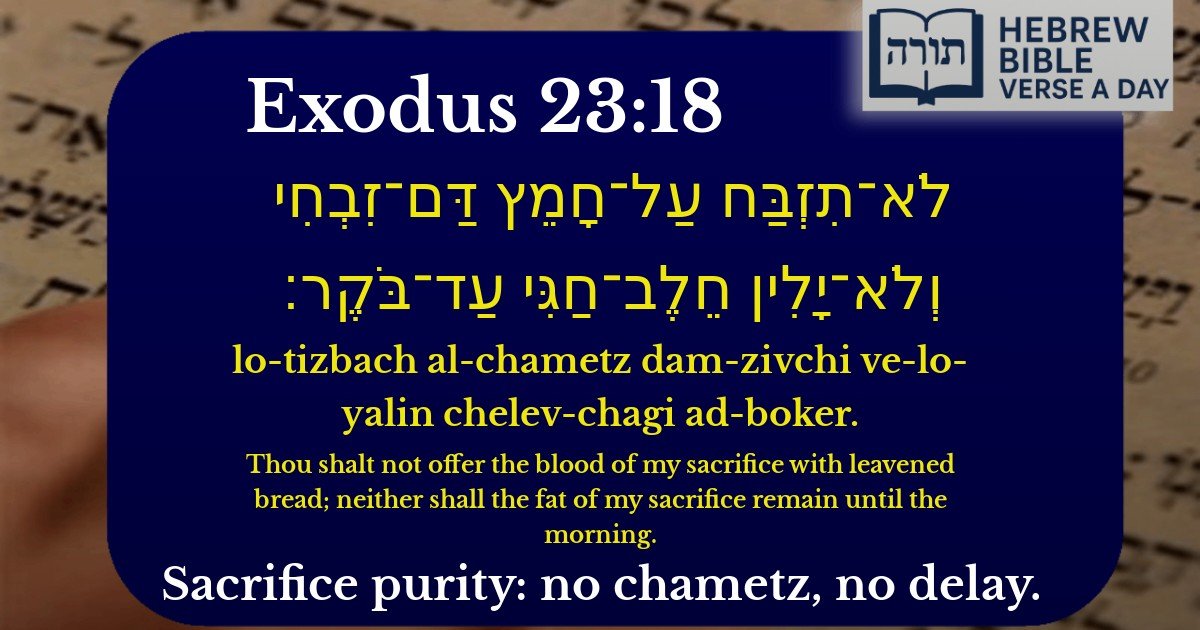

Prohibition of Offering Sacrifice with Chametz
The verse states: "לֹא־תִזְבַּח עַל־חָמֵץ דַּם־זִבְחִי" ("Thou shalt not offer the blood of my sacrifice with leavened bread"). Rashi (Exodus 23:18) explains that this prohibition refers to the Pesach sacrifice, which must not be slaughtered while chametz is present in one's possession. The Talmud (Pesachim 63a) derives from this that one may not slaughter the Korban Pesach while owning chametz, as it would render the sacrifice invalid.
Prohibition of Leaving the Fat Overnight
The second part of the verse states: "וְלֹא־יָלִין חֵלֶב־חַגִּי עַד־בֹּקֶר" ("Neither shall the fat of my sacrifice remain until the morning"). Rambam (Hilchos Ma'aseh HaKorbanos 10:12) rules that this refers to the cheilev (fat) of the Korban Chagigah, which must be burned on the altar before dawn. The Midrash (Mechilta) connects this to the broader principle of zerizus (alacrity) in performing mitzvos, emphasizing that delaying the burning of the sacrificial fats is a neglect of divine service.
Key Halachic Principles Derived