
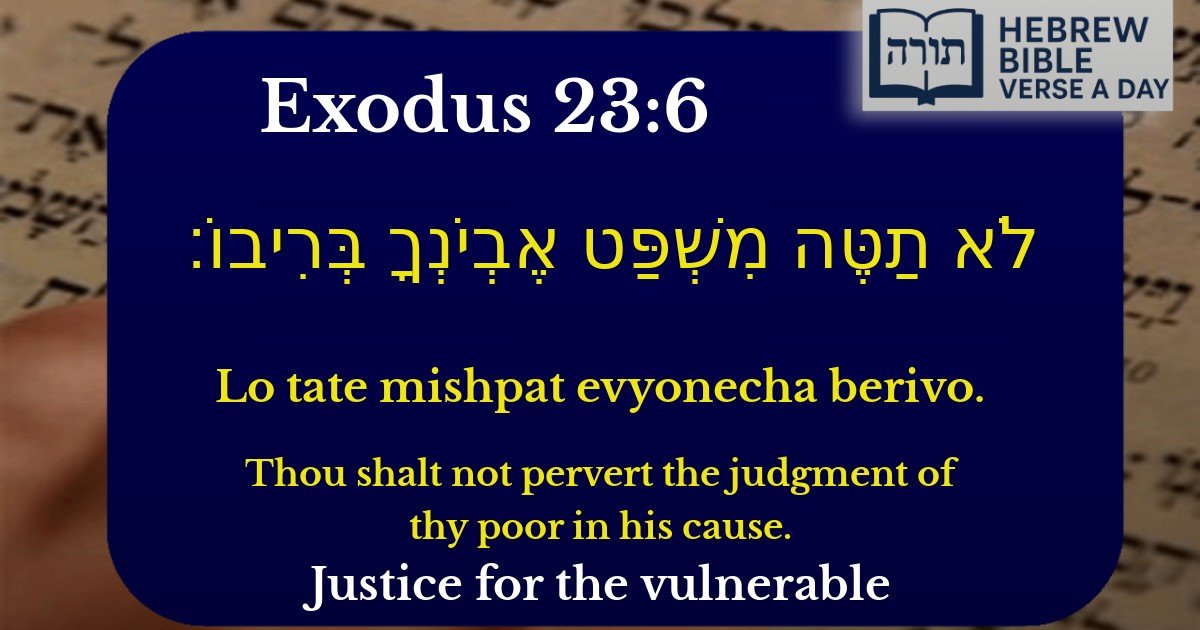

Exodus 23:6 - Justice for the vulnerable

Exodus 23:6 - שמות 23:6

Hebrew Text

לֹא תַטֶּה מִשְׁפַּט אֶבְיֹנְךָ בְּרִיבוֹ׃

English Translation

Thou shalt not pervert the judgment of thy poor in his cause.

Transliteration

Lo tate mishpat evyonecha berivo.

Hebrew Leining Text

לֹ֥א תַטֶּ֛ה מִשְׁפַּ֥ט אֶבְיֹנְךָ֖ בְּרִיבֽוֹ׃

🎵 Listen to leining

Parasha Commentary

Prohibition Against Perverting Justice for the Poor

The verse "לֹא תַטֶּה מִשְׁפַּט אֶבְיֹנְךָ בְּרִיבוֹ" (Exodus 23:6) commands us not to distort justice for the poor in their legal disputes. This is one of several Torah commandments emphasizing the importance of impartial justice, particularly for vulnerable members of society.

Rashi's Explanation

Rashi (Exodus 23:6) explains that the verse specifically warns against favoring the poor merely because they are poor. While one might assume that the Torah only prohibits favoring the wealthy, this verse clarifies that justice must be blind to economic status. Rashi cites the Sifrei (Devarim 16:19), which states that judges must not say, "This person is poor, and the wealthy party is obligated to support him—I will rule in the poor man's favor so he can receive financial support." Such reasoning perverts justice.

Rambam's Legal Perspective

Rambam (Mishneh Torah, Hilchot Sanhedrin 21:1) expands on this principle, ruling that a judge must treat both litigants equally—neither showing undue deference to a wealthy person nor pity to a poor one. The judge must evaluate the case strictly based on the merits, as the Torah states, "בְּצֶדֶק תִּשְׁפֹּט עֲמִיתֶךָ" ("You shall judge your fellow righteously," Leviticus 19:15).

Midrashic Insight

The Mekhilta (Mishpatim 20) connects this verse to the broader ethical obligation of tzedek (justice). It teaches that perverting justice for the poor is particularly grievous because they lack the resources to advocate for themselves. The Midrash warns that Hashem hears the cries of the oppressed (Exodus 22:22-23), and unjust rulings provoke divine scrutiny.

Practical Implications in Halacha

  • Equal Treatment: Judges must ensure that both parties have equal opportunity to present their case, regardless of social standing (Shulchan Aruch, Choshen Mishpat 17:1).
  • No Pity-Based Rulings: Even if a poor litigant evokes sympathy, the judge must rule strictly according to the evidence (Sefer HaChinuch, Mitzvah 82).
  • Broader Application: The prohibition extends beyond judges—anyone involved in arbitration or testimony must avoid bias (Talmud Bavli, Shevuot 30b).

📚 Talmud Citations

This verse is quoted in the Talmud.

📖 Shevuot 31a
The verse is cited in a discussion about the prohibition of perverting justice, emphasizing the importance of fair judgment for all, especially the poor.
📖 Sanhedrin 7b
The verse is referenced in the context of judicial ethics, highlighting the obligation to judge fairly without bias, particularly towards the disadvantaged.

Frequently Asked Questions

Q: What does 'Thou shalt not pervert the judgment of thy poor in his cause' mean?
A: This verse from Exodus 23:6 teaches that judges must not distort justice when dealing with a poor person's legal case. Rashi explains that this specifically warns against favoring either the poor (out of pity) or the rich (out of respect) - justice must be impartial (based on Shemot Rabbah 30:4).
Q: Why does the Torah single out the poor in this law about fair judgment?
A: The Talmud (Shevuot 30a) explains that the Torah mentions the poor specifically because they are more vulnerable to unfair treatment. However, Rambam (Hilchot Sanhedrin 21:1) clarifies that this prohibition applies equally to all litigants - the verse emphasizes the poor since their rights are more easily overlooked.
Q: How does this verse apply to everyday life beyond court cases?
A: The Sefer HaChinuch (Mitzvah 82) teaches that this commandment applies to all interpersonal dealings. We must judge people fairly in business, social matters, and personal relationships - especially when dealing with those less fortunate. The Midrash Tanchuma (Mishpatim 8) extends this to giving the poor the benefit of the doubt in disputes.
Q: What's the difference between this verse and the similar one in Exodus 23:3?
A: While Exodus 23:3 prohibits favoring a poor person in judgment (out of pity), our verse (23:6) prohibits ruling against them unfairly. The Mechilta explains these are two sides of the same coin - justice must be blind to economic status. Rambam (Hilchot Sanhedrin 20:1) combines both as a single prohibition against any biased judgment.
Q: How can we implement this teaching in modern society?
A: The Chofetz Chaim (Ahavat Chesed 2:8) applies this to ensuring equal access to justice. Today this means supporting proper legal representation for the poor, fair business practices, and charitable organizations that help the needy navigate systems. The verse reminds us that true justice requires actively protecting the rights of the disadvantaged.