

Join Our Newsletter To Be Informed When New Videos Are Posted
Hebrew Text
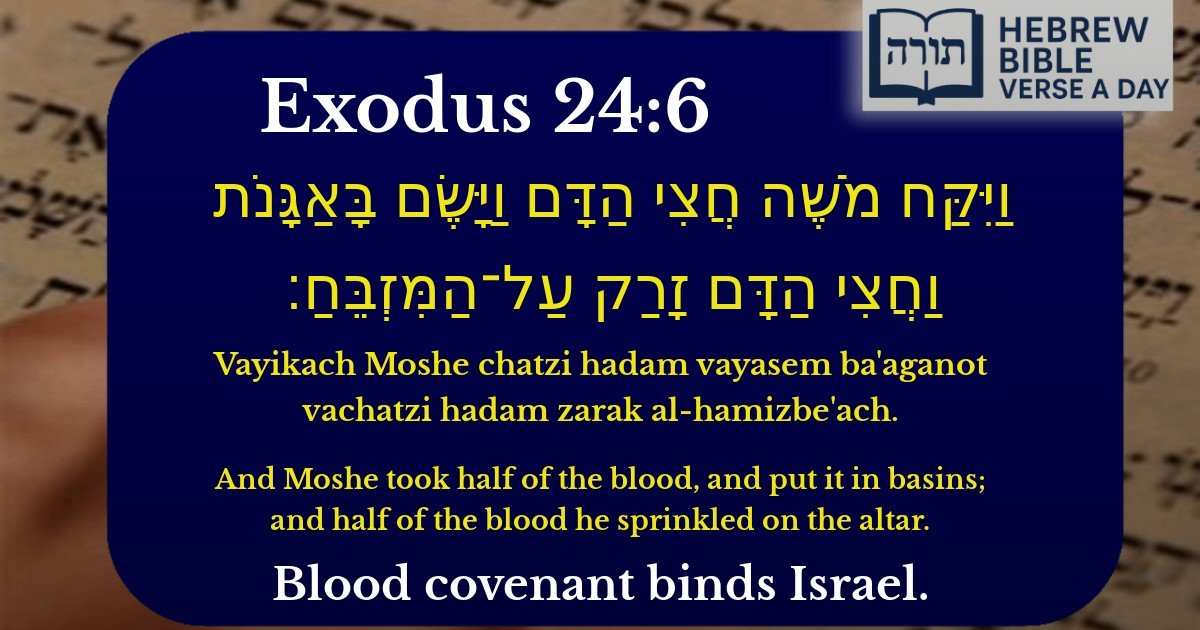
וַיִּקַּח מֹשֶׁה חֲצִי הַדָּם וַיָּשֶׂם בָּאַגָּנֹת וַחֲצִי הַדָּם זָרַק עַל־הַמִּזְבֵּחַ׃
English Translation
And Moshe took half of the blood, and put it in basins; and half of the blood he sprinkled on the altar.
Transliteration
Vayikach Moshe chatzi hadam vayasem ba'aganot vachatzi hadam zarak al-hamizbe'ach.
Hebrew Leining Text
וַיִּקַּ֤ח מֹשֶׁה֙ חֲצִ֣י הַדָּ֔ם וַיָּ֖שֶׂם בָּאַגָּנֹ֑ת וַחֲצִ֣י הַדָּ֔ם זָרַ֖ק עַל־הַמִּזְבֵּֽחַ׃
🎵 Listen to leining
Parasha Commentary
📚 Talmud Citations
This verse is quoted in the Talmud.
📖 Zevachim 96a
The verse is discussed in the context of the procedures for sacrificial offerings, particularly how the blood was divided and applied during the covenant at Sinai.
Context in the Torah
The verse (Shemot 24:6) describes Moshe's actions during the covenant ceremony at Har Sinai, where he divided the blood of the korbanot (sacrifices) between the altar and the people, symbolizing the mutual commitment between Hashem and Bnei Yisrael.
Rashi's Explanation
Rashi (ad loc.) explains that Moshe divided the blood into two parts:
Symbolism of the Blood Division
The Midrash (Mechilta) and Ramban (Nachmanides) elaborate on the deeper meaning:
Halachic Significance
The Rambam (Hilchot Yesodei HaTorah 1:7) derives from this episode that the covenant at Sinai established an eternal bond between Hashem and Klal Yisrael. The division of blood teaches that:
Kabbalistic Insight
The Zohar (Shemot 88a) interprets the two halves as representing: