

Join Our Newsletter To Be Informed When New Videos Are Posted
Hebrew Text
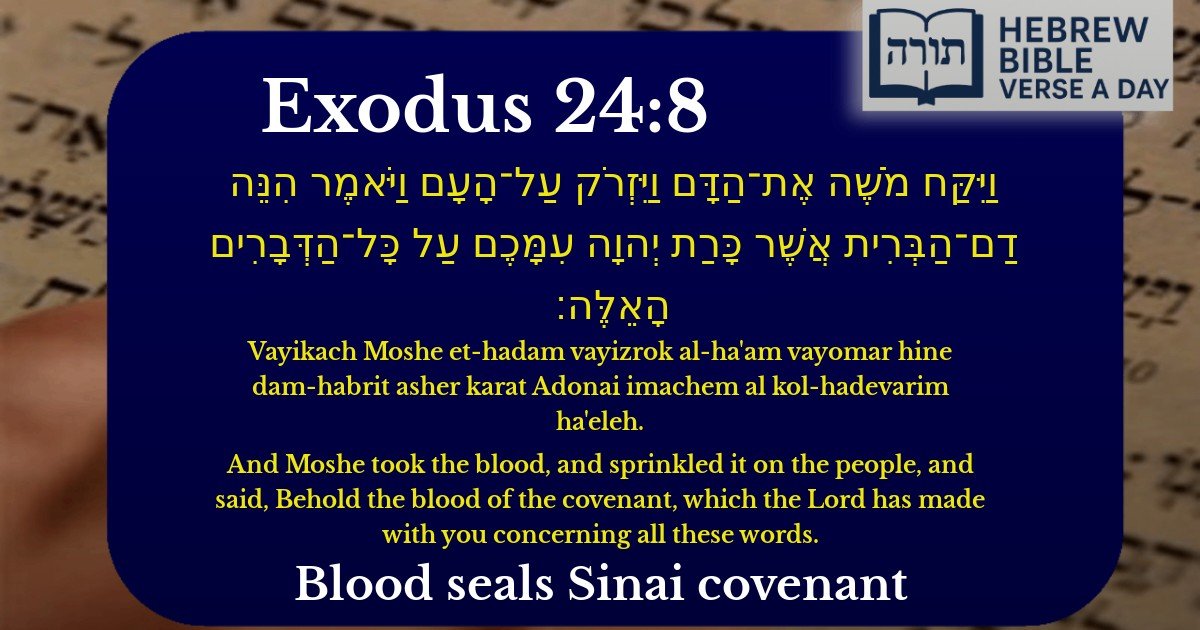
וַיִּקַּח מֹשֶׁה אֶת־הַדָּם וַיִּזְרֹק עַל־הָעָם וַיֹּאמֶר הִנֵּה דַם־הַבְּרִית אֲשֶׁר כָּרַת יְהוָה עִמָּכֶם עַל כָּל־הַדְּבָרִים הָאֵלֶּה׃
English Translation
And Moshe took the blood, and sprinkled it on the people, and said, Behold the blood of the covenant, which the Lord has made with you concerning all these words.
Transliteration
Vayikach Moshe et-hadam vayizrok al-ha'am vayomar hine dam-habrit asher karat Adonai imachem al kol-hadevarim ha'eleh.
Hebrew Leining Text
וַיִּקַּ֤ח מֹשֶׁה֙ אֶת־הַדָּ֔ם וַיִּזְרֹ֖ק עַל־הָעָ֑ם וַיֹּ֗אמֶר הִנֵּ֤ה דַֽם־הַבְּרִית֙ אֲשֶׁ֨ר כָּרַ֤ת יְהֹוָה֙ עִמָּכֶ֔ם עַ֥ל כׇּל־הַדְּבָרִ֖ים הָאֵֽלֶּה׃
🎵 Listen to leining
Parasha Commentary
📚 Talmud Citations
This verse is quoted in the Talmud.
📖 Shabbat 88a
The verse is referenced in the context of discussing the covenant at Sinai and the acceptance of the Torah by the Israelites.
📖 Zevachim 115b
The verse is cited in a discussion about the sprinkling of blood as part of the sacrificial service and its significance in establishing covenants.
The Significance of the Blood in the Covenant
The verse describes Moshe taking the blood of the sacrifices and sprinkling it on Bnei Yisrael as part of the covenant at Har Sinai. Rashi (Shemos 24:8) explains that this act symbolizes the mutual commitment between Hashem and the Jewish people, akin to the way parties entering a covenant would seal their agreement with a symbolic act. The blood represents both the korbanot (offerings) and the binding nature of the covenant, emphasizing the seriousness of accepting the Torah.
The Dual Nature of the Covenant
Rambam (Hilchos Yesodei HaTorah 8:1) teaches that the covenant at Har Sinai was not merely a one-time event but an eternal bond between Hashem and Klal Yisrael. The sprinkling of the blood signifies that the people accepted the Torah willingly, as the Midrash (Mechilta, Yisro) states: "They were bound by oath through the blood of the covenant." This act reinforced their commitment to uphold all the mitzvos.
The Symbolism of Blood in Jewish Thought
The Talmud (Zevachim 6a) discusses how blood represents life (as stated in Devarim 12:23, "the blood is the life"). By sprinkling the blood, Moshe emphasized that the covenant was not just an intellectual agreement but a commitment that permeates every aspect of Jewish life. The Kli Yakar (Shemos 24:8) adds that the blood also serves as a reminder of the consequences of abandoning the covenant, as blood is associated with both life and judgment.
The Role of "All These Words"
The phrase "עַל כָּל־הַדְּבָרִים הָאֵלֶּה" ("concerning all these words") underscores that the covenant encompasses the entire Torah—both the Written and Oral Law. The Sforno explains that this includes not only the Aseres HaDibros but all future halachic interpretations transmitted through Moshe Rabbeinu. This aligns with the Talmudic teaching (Shabbos 88a) that Bnei Yisrael accepted the Torah unconditionally, binding themselves to its full observance.
Lessons for Future Generations