
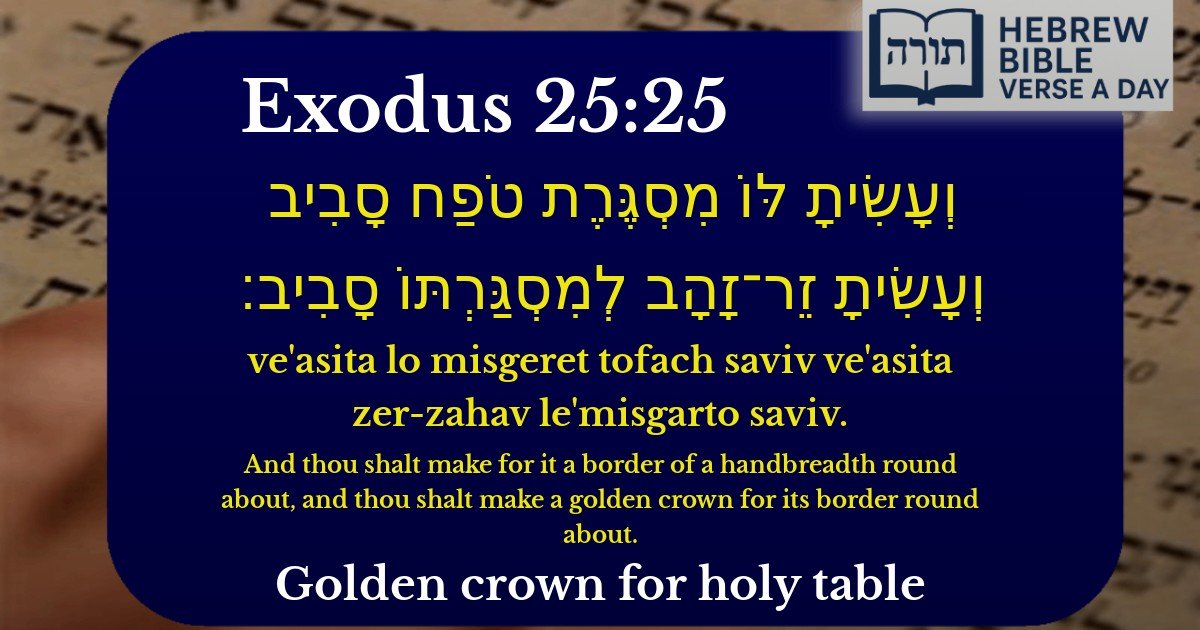

Exodus 25:25 - Golden crown for holy table

Exodus 25:25 - שמות 25:25

Hebrew Text

וְעָשִׂיתָ לּוֹ מִסְגֶּרֶת טֹפַח סָבִיב וְעָשִׂיתָ זֵר־זָהָב לְמִסְגַּרְתּוֹ סָבִיב׃

English Translation

And thou shalt make for it a border of a handbreadth round about, and thou shalt make a golden crown for its border round about.

Transliteration

Ve'asita lo misgeret tofach saviv ve'asita zer-zahav le'misgarto saviv.

Hebrew Leining Text

וְעָשִׂ֨יתָ לּ֥וֹ מִסְגֶּ֛רֶת טֹ֖פַח סָבִ֑יב וְעָשִׂ֧יתָ זֵר־זָהָ֛ב לְמִסְגַּרְתּ֖וֹ סָבִֽיב׃

🎵 Listen to leining

Parasha Commentary

Context of the Verse

This verse (Shemot 25:25) describes the construction of the Shulchan (Table) in the Mishkan (Tabernacle). The verse specifies two details:

  • A misgeret (border) of a tophach (handbreadth) surrounding the table.
  • A zer zahav (golden crown) atop this border.

Explanation of the Border (Misgeret)

Rashi explains that the misgeret was a raised frame around the edge of the table, one handbreadth (approximately 8-9 cm) in width, serving both a functional and symbolic purpose:

  • Functional: It prevented the lechem hapanim (showbread) from sliding off the table (Rashi, Shemot 25:25).
  • Symbolic: The border represents boundaries and structure, teaching that holiness requires defined limits (based on Rambam's emphasis on order in divine service).

The Golden Crown (Zer Zahav)

The zer zahav is interpreted by the Talmud (Yoma 72b) as a symbol of kingship and honor:

  • The crown signifies the Shulchan's role in sustaining physical life, paralleling the Aron's crown of Torah and the Mizbeach's crown of service (Avot 4:13).
  • Midrash Tanchuma (Terumah 11) connects it to the prosperity granted to those who support Torah scholars, as the table represents material sustenance.

Spiritual Lessons

The Or HaChaim (Shemot 25:25) highlights deeper meanings:

  • The misgeret teaches restraint in physical pursuits, ensuring they remain elevated (like the bread on the table).
  • The golden crown reminds us to sanctify material wealth by using it for divine purposes (see Malbim).

📚 Talmud Citations

This verse is not quoted in the Talmud.

Frequently Asked Questions

Q: What is the 'border of a handbreadth' referring to in Exodus 25:25?
A: The 'border of a handbreadth' refers to a raised rim or frame around the Shulchan (the Table in the Mishkan/Tabernacle), measuring approximately 3-4 inches wide (a 'tēfach' in Hebrew). According to Rashi, this border prevented the showbread from sliding off the table.
Q: Why was there a golden crown on the Shulchan's border?
A: The golden crown (zer zahav) symbolized the honor and sanctity of the Shulchan, which held the showbread (Lechem HaPanim). The Ramban explains that this crown represented kingship, as the table was a symbol of material sustenance granted by Hashem.
Q: What lesson can we learn from the design of the Shulchan in Exodus 25:25?
A: The Shulchan teaches us that even material sustenance (represented by the bread) must be treated with holiness. The border and crown remind us to elevate our physical needs with dignity and gratitude to Hashem, as taught in the Talmud (Berachos 55a).
Q: How does the Shulchan's design apply to us today?
A: Just as the Shulchan had a border to protect its sanctity, we should set boundaries in our lives to elevate mundane activities (like eating) into spiritual acts. The Mishnah (Avot 3:3) teaches that a table with Torah discussion becomes like the Mizbe'ach (altar).
Q: Why was the border specifically a handbreadth (tēfach) wide?
A: A tēfach was a practical measurement to securely hold the showbread, but it also carries symbolic meaning. Midrash Tanchuma (Terumah 11) connects it to the idea that Hashem's blessings are 'within reach' when we sanctify our physical world.