

Join Our Newsletter To Be Informed When New Videos Are Posted
Hebrew Text
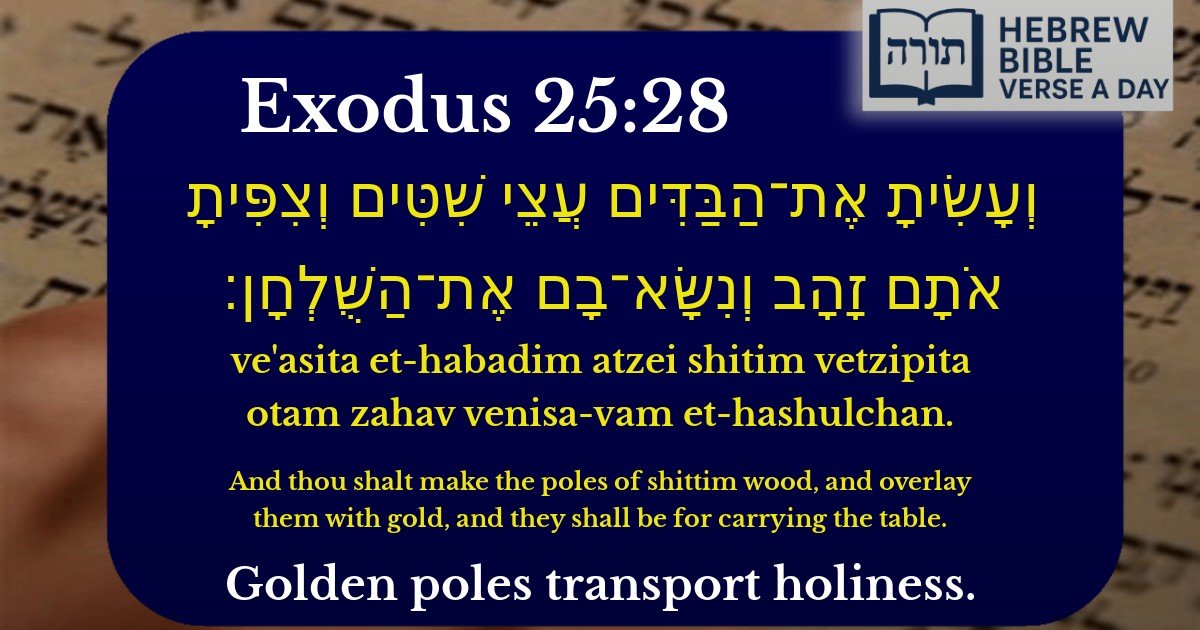
וְעָשִׂיתָ אֶת־הַבַּדִּים עֲצֵי שִׁטִּים וְצִפִּיתָ אֹתָם זָהָב וְנִשָּׂא־בָם אֶת־הַשֻּׁלְחָן׃
English Translation
And thou shalt make the poles of shittim wood, and overlay them with gold, and they shall be for carrying the table.
Transliteration
Ve'asita et-habadim atzei shitim vetzipita otam zahav venisa-vam et-hashulchan.
Hebrew Leining Text
וְעָשִׂ֤יתָ אֶת־הַבַּדִּים֙ עֲצֵ֣י שִׁטִּ֔ים וְצִפִּיתָ֥ אֹתָ֖ם זָהָ֑ב וְנִשָּׂא־בָ֖ם אֶת־הַשֻּׁלְחָֽן׃
🎵 Listen to leining
Parasha Commentary
📚 Talmud Citations
This verse is quoted in the Talmud.
📖 Menachot 96b
The verse is referenced in a discussion about the construction and carrying of the Table in the Tabernacle, emphasizing the materials used and the method of transport.
📖 Shabbat 28a
The verse is mentioned in a broader discussion about the materials and craftsmanship involved in the Tabernacle's furnishings, including the Table.
The Poles of the Shulchan (Table)
The verse (Shemot 25:28) commands the construction of poles made from shittim wood (acacia wood) overlaid with gold, used to carry the Shulchan (the Table of Showbread) in the Mishkan (Tabernacle). This detail is part of the broader instructions for crafting the sacred vessels.
Material Significance: Shittim Wood and Gold
Rashi (on Shemot 25:28) explains that the poles were made of shittim wood—a durable and lightweight material—to facilitate carrying the Shulchan. The overlay of gold signifies the sanctity of the vessel, as gold represents purity and divine service (Rambam, Hilchos Beis HaBechira). The combination of wood and gold reflects a balance between humility (wood, a modest material) and splendor (gold, representing holiness).
Function and Permanence
The Talmud (Menachos 96a) teaches that the poles of the Shulchan were never removed, unlike those of the Aron (Ark), which were only inserted when transport was necessary. This distinction highlights the Shulchan’s role as a symbol of sustenance and material blessing, which must always be connected to divine service. The permanent poles suggest that the sanctity of physical sustenance (represented by the showbread) is an ongoing necessity.
Midrashic Insights
Halachic Implications
Rambam (Hilchos Klei HaMikdash 2:5) rules that the poles must remain attached to the Shulchan at all times, reinforcing the idea that material blessings are inseparable from their divine source. This halacha underscores the Torah’s perspective on wealth—it is a tool for avodas Hashem (divine service), not an end in itself.