

Join Our Newsletter To Be Informed When New Videos Are Posted
Hebrew Text
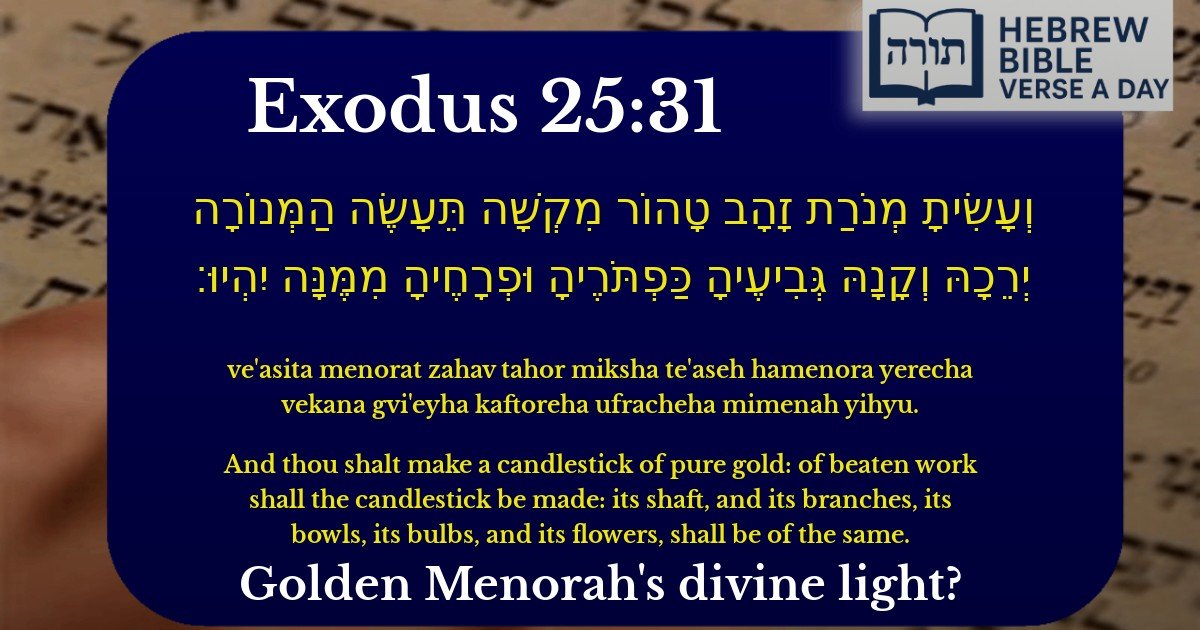
וְעָשִׂיתָ מְנֹרַת זָהָב טָהוֹר מִקְשָׁה תֵּעָשֶׂה הַמְּנוֹרָה יְרֵכָהּ וְקָנָהּ גְּבִיעֶיהָ כַּפְתֹּרֶיהָ וּפְרָחֶיהָ מִמֶּנָּה יִהְיוּ׃
English Translation
And thou shalt make a candlestick of pure gold: of beaten work shall the candlestick be made: its shaft, and its branches, its bowls, its bulbs, and its flowers, shall be of the same.
Transliteration
Ve'asita menorat zahav tahor miksha te'aseh hamenora yerecha vekana gvi'eyha kaftoreha ufracheha mimenah yihyu.
Hebrew Leining Text
וְעָשִׂ֥יתָ מְנֹרַ֖ת זָהָ֣ב טָה֑וֹר מִקְשָׁ֞ה תֵּעָשֶׂ֤ה*(בספרי ספרד ואשכנז תֵּיעָשֶׂ֤ה) הַמְּנוֹרָה֙ יְרֵכָ֣הּ וְקָנָ֔הּ גְּבִיעֶ֛יהָ כַּפְתֹּרֶ֥יהָ וּפְרָחֶ֖יהָ מִמֶּ֥נָּה יִהְיֽוּ׃
🎵 Listen to leining
Parasha Commentary
📚 Talmud Citations
This verse is quoted in the Talmud.
📖 Menachot 28b
The verse is discussed in relation to the construction of the Menorah in the Temple, particularly focusing on the requirement that it be made of pure gold and of beaten work.
📖 Shabbat 22b
The verse is referenced in the context of the laws concerning the lighting of the Menorah, emphasizing its purity and craftsmanship.
The Construction of the Menorah
The verse (Shemot 25:31) commands the creation of the Menorah, a central fixture in the Mishkan (Tabernacle) and later in the Beit HaMikdash (Holy Temple). Rashi explains that the term "מִקְשָׁה" (beaten work) means the Menorah was to be hammered out of a single block of gold rather than assembled from separate pieces. This highlights the unity and indivisibility of the Menorah, symbolizing the divine light of Torah and wisdom.
Symbolism of the Menorah's Design
The Rambam (Hilchot Beit HaBechira 3:10) elaborates on the intricate details of the Menorah's construction, noting that its components—ירכה (base), קנה (shaft), גביעים (bowls), כפתורים (bulbs), and פרחים (flowers)—each carry symbolic meaning. The Talmud (Menachot 28b) teaches that these elements represent the different branches of Torah knowledge and the flourishing of wisdom among the Jewish people.
The Menorah as a Reflection of Divine Light
The Zohar (Terumah 152a) interprets the Menorah as a microcosm of the celestial light, with its seven branches corresponding to the seven days of Creation and the seven heavenly spheres. The requirement for "זהב טהור" (pure gold) underscores the purity of divine wisdom, untainted by external influences.
Practical Halachic Considerations
According to the Shulchan Aruch (Orach Chaim 673), the Menorah's design teaches enduring lessons about the mitzvah of lighting the Chanukah menorah, which commemorates the miracle of the oil. The original Menorah’s construction from a single piece of gold reminds us of the importance of unity and dedication in serving Hashem.