

Join Our Newsletter To Be Informed When New Videos Are Posted
Hebrew Text
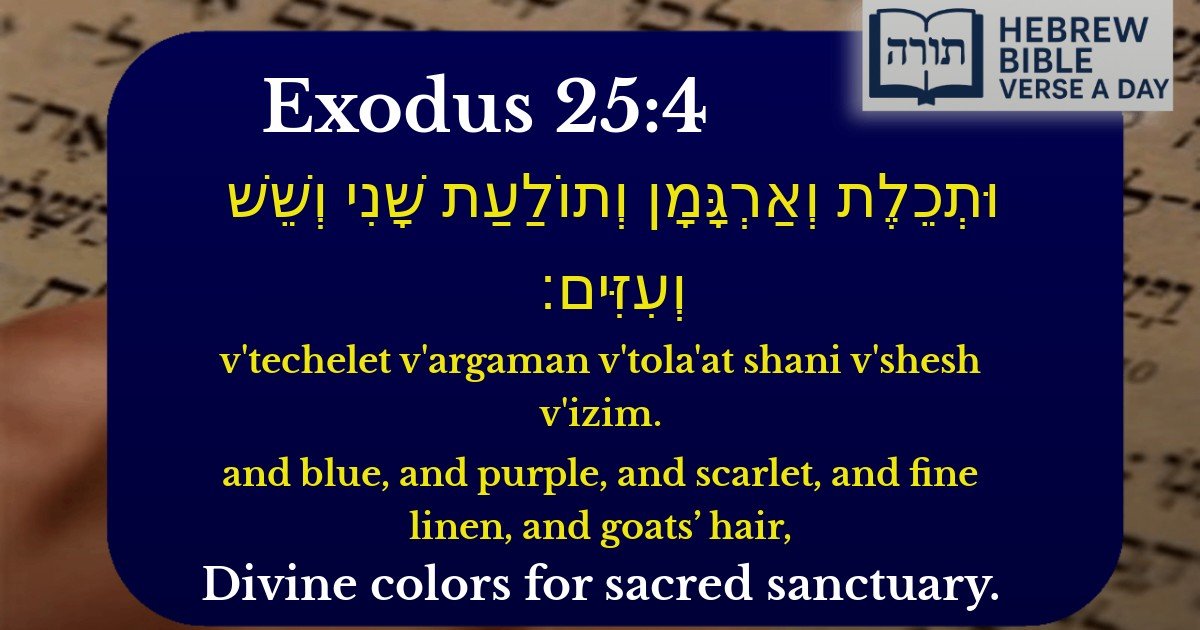
וּתְכֵלֶת וְאַרְגָּמָן וְתוֹלַעַת שָׁנִי וְשֵׁשׁ וְעִזִּים׃
English Translation
and blue, and purple, and scarlet, and fine linen, and goats’ hair,
Transliteration
V'techelet v'argaman v'tola'at shani v'shesh v'izim.
Hebrew Leining Text
וּתְכֵ֧לֶת וְאַרְגָּמָ֛ן וְתוֹלַ֥עַת שָׁנִ֖י וְשֵׁ֥שׁ וְעִזִּֽים׃
🎵 Listen to leining
Parasha Commentary
📚 Talmud Citations
This verse is quoted in the Talmud.
📖 Yoma 71b
The verse is referenced in a discussion about the materials used for the priestly garments and the Tabernacle.
📖 Menachot 42b
The verse is cited in a discussion about the types of materials and colors used in the making of the priestly garments and the Tabernacle curtains.
📖 Sotah 48b
The verse is mentioned in a broader discussion about the materials and craftsmanship involved in the construction of the Tabernacle and its components.
The Significance of the Colors and Materials
The verse lists materials used in the construction of the Mishkan (Tabernacle): blue (תכלת), purple (ארגמן), scarlet (תולעת שני), fine linen (שש), and goats' hair (עזים). These materials held deep symbolic meaning in Jewish tradition, as explained by classical commentators.
Rashi's Explanation
Rashi (Exodus 25:4) notes that these materials were donated by the Israelites for the Mishkan's construction. He emphasizes that:
Midrashic Insights
The Midrash (Shemot Rabbah 35:1) connects these materials to spiritual concepts:
Rambam's Perspective
In Hilchot Klei HaMikdash (8:13), the Rambam explains that these materials were chosen for their durability and beauty, ensuring the Mishkan's honor. The colors also reflected the splendor of the Divine Presence, as royalty and sanctity were often associated with such hues.
Kabbalistic Interpretation
The Zohar (Terumah 136a) associates these materials with the Sefirot (divine attributes):