Frequently Asked Questions
Q: What does Exodus 25:6 mean when it mentions 'oil for the light'?
A: The 'oil for the light' refers to the pure olive oil used to light the Menorah in the Mishkan (Tabernacle) and later in the Beit HaMikdash (Holy Temple). Rashi explains that this oil had to be specially pressed and not processed, ensuring it burned clearly for the mitzvah of kindling the Menorah (Exodus 27:20).
Q: Why were spices mentioned in Exodus 25:6 important for the Mishkan?
A: The spices were used for two sacred purposes: 1) The 'shemen hamishcha' (anointing oil) to consecrate vessels and Kohanim (priests), and 2) The 'ketoret' (incense) offered daily on the golden altar. The Talmud (Keritot 5a) teaches that these fragrances represented spiritual elevation and the sweetness of divine service.
Q: What can we learn today from the items listed in Exodus 25:6?
A: The Rambam (Hilchot Klei HaMikdash 1:3) explains that these materials teach us about hiddur mitzvah (beautifying commandments). Just as the Mishkan required the finest oil and spices for sacred purposes, we should strive to perform mitzvot with the best materials we can obtain, showing honor to Hashem's commandments.
Q: How was the anointing oil made according to Jewish tradition?
A: The Midrash (Shemot Rabbah 30:3) describes that the 'shemen hamishcha' contained four specific spices (myrrh, cinnamon, aromatic cane, and cassia) mixed with olive oil (Exodus 30:23-24). This unique blend was prepared with precise measurements and could never be replicated for personal use (Keritot 5a).
Q: Why does the Torah specify these donations for the Mishkan?
A: Rashi (on Exodus 25:2) explains that these materials represent voluntary contributions given with generosity of heart. The oil, spices, and incense were essential for the Avodah (service) in the Mishkan, showing that both physical items (oil) and sensory elements (fragrance) elevate our connection to Hashem when used for sacred purposes.

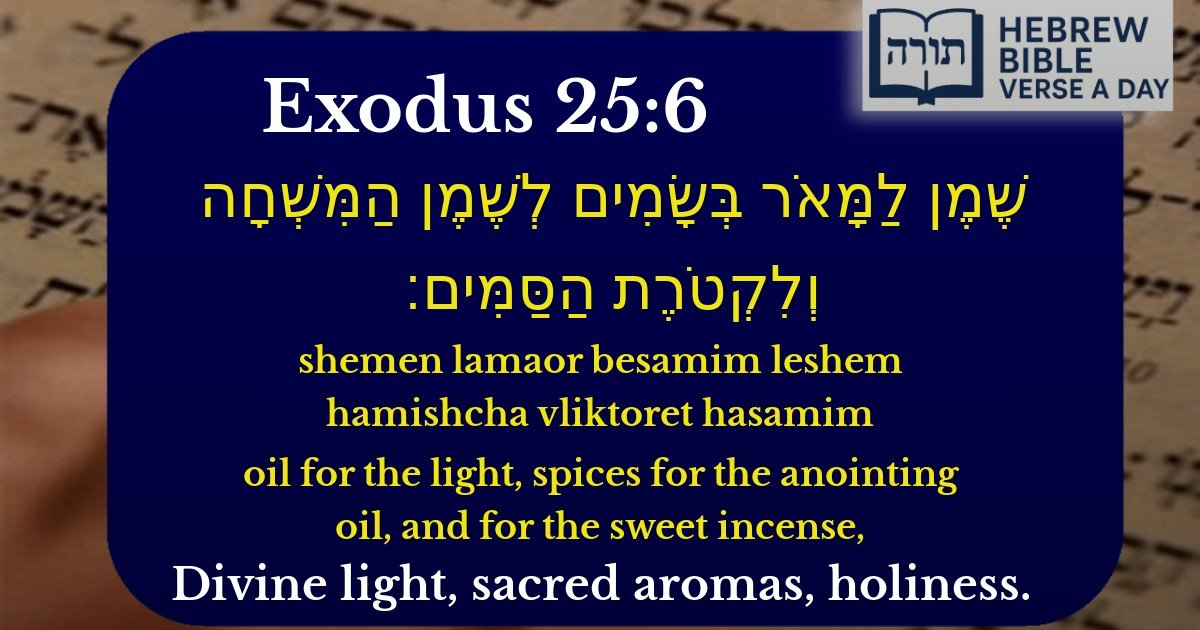

Explanation of the Verse
The verse (Exodus 35:8) lists three essential materials required for the Mishkan (Tabernacle): oil for the menorah, spices for the anointing oil, and spices for the incense. Each of these items holds deep significance in Jewish tradition and halacha.
1. Oil for the Light (שֶׁמֶן לַמָּאֹר)
Rashi (Exodus 35:14) explains that this refers to pure olive oil, specifically for the menorah in the Mishkan. The Talmud (Menachot 86a) elaborates that the oil had to be of the highest quality, extracted from the first pressing of the olives (כתית למאור). Rambam (Hilchot Temidin u'Musafin 3:10) emphasizes that the menorah's light symbolizes the Divine presence and the continuous spiritual illumination of the Jewish people.
2. Spices for the Anointing Oil (בְּשָׂמִים לְשֶׁמֶן הַמִּשְׁחָה)
The anointing oil (shemen hamishchah) was a sacred mixture used to consecrate the vessels of the Mishkan and the Kohanim (priests). The Midrash (Shemot Rabbah 35:5) teaches that it contained four key spices: myrrh, cinnamon, fragrant cane, and cassia (Exodus 30:23-24). Rambam (Hilchot Kelei HaMikdash 1:3) notes that this oil was forbidden for personal use and was reserved exclusively for sanctification purposes.
3. Spices for the Incense (לִקְטֹרֶת הַסַּמִּים)
The ketoret (incense) was a unique blend of eleven spices, as detailed in the Talmud (Keritot 6a). Rashi (Exodus 30:34) explains that the incense was offered twice daily on the golden altar. The Midrash (Tanchuma, Tetzaveh 15) highlights its spiritual significance, teaching that the ketoret atoned for sins and brought unity among the Jewish people. Rambam (Hilchot Temidin u'Musafin 3:1) emphasizes the meticulous preparation required for this sacred service.
Symbolic Meaning