

Join Our Newsletter To Be Informed When New Videos Are Posted
Hebrew Text
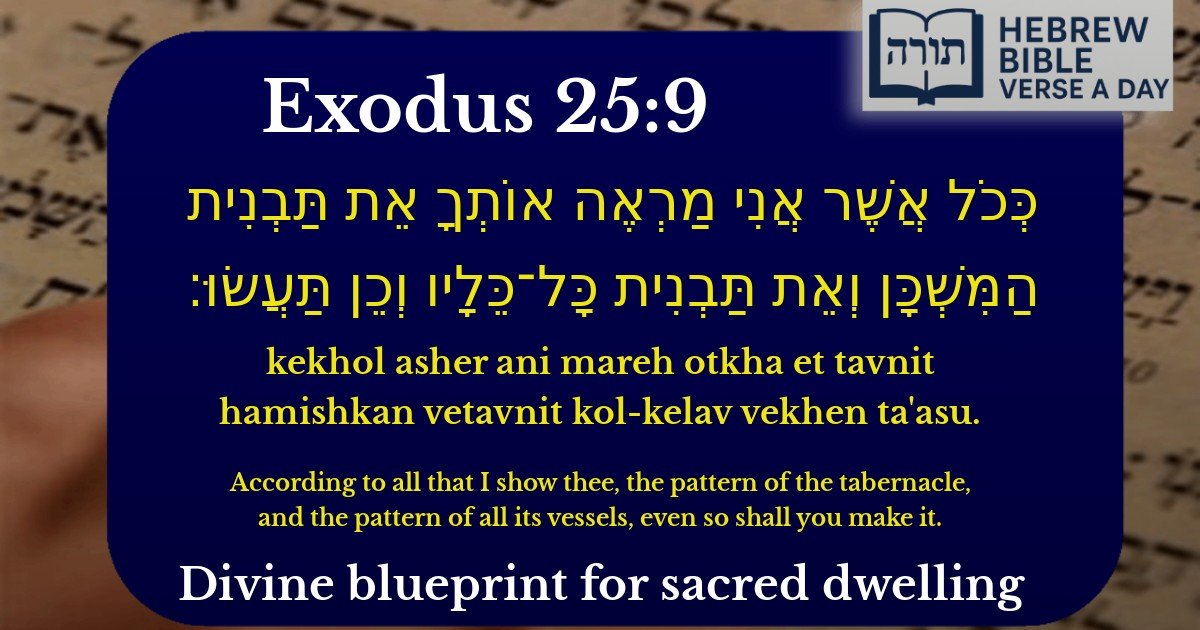
כְּכֹל אֲשֶׁר אֲנִי מַרְאֶה אוֹתְךָ אֵת תַּבְנִית הַמִּשְׁכָּן וְאֵת תַּבְנִית כָּל־כֵּלָיו וְכֵן תַּעֲשׂוּ׃
English Translation
According to all that I show thee, the pattern of the tabernacle, and the pattern of all its vessels, even so shall you make it.
Transliteration
Kekhol asher ani mareh otkha et tavnit hamishkan vetavnit kol-kelav vekhen ta'asu.
Hebrew Leining Text
כְּכֹ֗ל אֲשֶׁ֤ר אֲנִי֙ מַרְאֶ֣ה אוֹתְךָ֔ אֵ֚ת תַּבְנִ֣ית הַמִּשְׁכָּ֔ן וְאֵ֖ת תַּבְנִ֣ית כׇּל־כֵּלָ֑יו וְכֵ֖ן תַּעֲשֽׂוּ׃ {ס}
🎵 Listen to leining
Parasha Commentary
📚 Talmud Citations
This verse is quoted in the Talmud.
📖 Eruvin 2b
The verse is referenced in a discussion about the construction of the Tabernacle and its implications for building structures with specific measurements.
📖 Menachot 29a
The verse is cited in a discussion about the divine instructions for making the Tabernacle and its vessels, emphasizing the importance of following exact specifications.
The Divine Blueprint of the Mishkan
The verse (Shemot 25:9) emphasizes that the construction of the Mishkan and its vessels must follow precisely the pattern shown by Hashem to Moshe. Rashi explains that this teaches us Moshe was shown a tavnit (spiritual blueprint) of the Mishkan in a prophetic vision, including every detail of its construction. The Ramban adds that this heavenly model was not merely symbolic but contained the sod (mystical secret) of the Mishkan's role as a dwelling place for the Divine Presence.
Literal and Spiritual Dimensions
The Sforno notes the double language of "תבנית המשכן...וכן תעשו" ("the pattern of the Tabernacle...so shall you make it") implies two requirements:
Halachic Precision and Kabbalistic Meaning
The Talmud (Menachot 29a) derives from this verse that even minor deviations in the Mishkan's construction would invalidate it. The Zohar (Terumah 152a) expands on this, teaching that each detail of the Mishkan corresponded to supernal spiritual realities—the menorah reflected divine wisdom, the ark represented Torah, etc. Thus, exactness in construction maintained the cosmic harmony between physical and spiritual realms.
Eternal Principle for Divine Service
Rabbi Samson Raphael Hirsch explains that this commandment establishes a lasting principle: avodat Hashem (service of G-d) must follow divine instruction without human innovation. Just as the Mishkan's physical form was dictated from above, so too must our spiritual service adhere to Torah's exact guidelines rather than subjective preferences.