Frequently Asked Questions
Q: What are the ten curtains of the Mishkan (Tabernacle) made of?
A: The ten curtains of the Mishkan are made of fine twined linen (שֵׁשׁ מָשְׁזָר) and three special dyes: blue (תְּכֵלֶת), purple (אַרְגָּמָן), and scarlet (תֹּלַעַת שָׁנִי). They also feature artistic designs of keruvim (כְּרֻבִים), woven with skilled craftsmanship (מַעֲשֵׂה חֹשֵׁב). Rashi explains that the keruvim were woven into the fabric, not embroidered on top.
Q: Why are the colors blue, purple, and scarlet significant in the Mishkan?
A: The colors blue (תְּכֵלֶת), purple (אַרְגָּמָן), and scarlet (תֹּלַעַת שָׁנִי) represent royalty, holiness, and the divine presence. The Midrash teaches that these colors correspond to spiritual concepts: blue resembles the sea and heaven (reminding us of G-d's throne), purple signifies majesty, and scarlet recalls atonement. Rambam notes that these materials were costly and reflected the honor due to the Mishkan as G-d's dwelling place.
Q: What is the meaning of the keruvim (cherubim) on the curtains?
A: The keruvim woven into the Mishkan's curtains symbolize the heavenly beings that serve G-d. The Talmud (Chagigah 13b) explains that keruvim represent spiritual guardianship and closeness to the Divine. Rashi adds that their presence on the curtains reminds us that just as the keruvim face each other in the Holy of Holies (Exodus 25:20), the Mishkan is a place where heaven and earth connect.
Q: Why does the Torah specify 'artistic work' (מַעֲשֵׂה חֹשֵׁב) for the Mishkan's construction?
A: The term 'מַעֲשֵׂה חֹשֵׁב' (artistic work) emphasizes that the Mishkan's craftsmanship had to be done with wisdom, skill, and intention. The Ramban explains that this teaches us that serving G-d requires our best efforts—both in physical actions and spiritual devotion. The Sages also derive from this that beauty and excellence in mitzvah performance (hiddur mitzvah) are important.
Q: How does the Mishkan's design apply to us today?
A: While we no longer have the physical Mishkan, the Talmud (Berachos 8a) teaches that synagogues and study halls are considered 'miniature sanctuaries.' The Mishkan's details remind us to approach prayer and Torah study with the same reverence, beauty, and attention to detail. Just as the Mishkan's materials were chosen carefully, we too should elevate our actions with holiness.

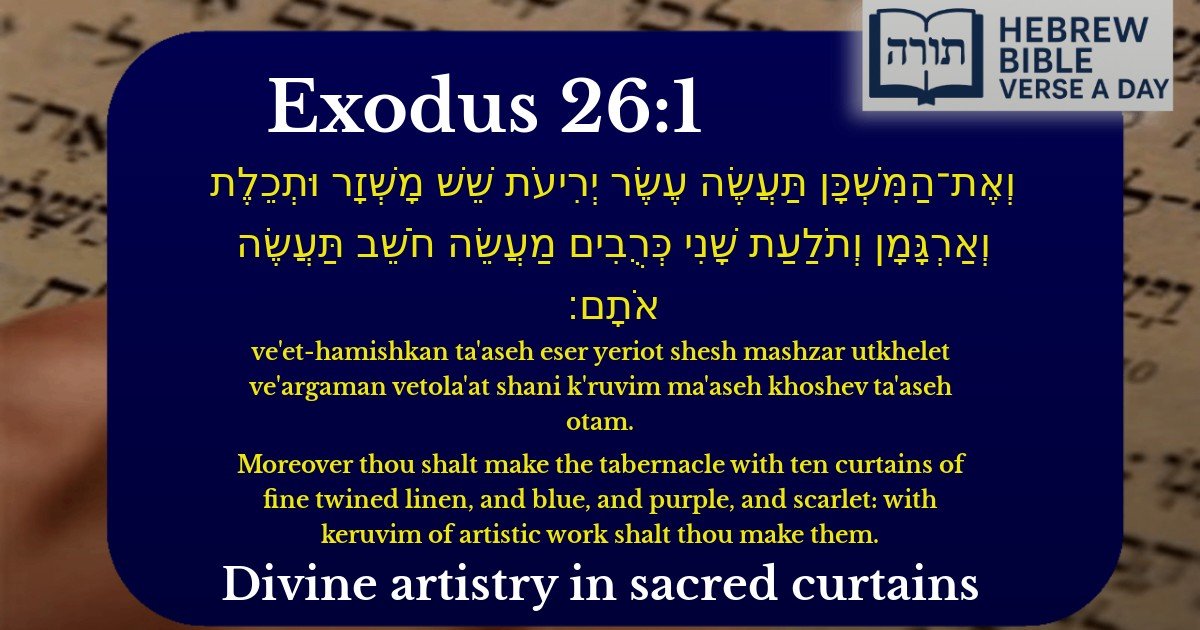

The Materials and Construction of the Mishkan's Curtains
The verse describes the ten curtains (yeriot) that formed the inner covering of the Mishkan (Tabernacle). These curtains were made of:
The Keruvim (Cherubim) on the Curtains
The verse states that the curtains were to be adorned with keruvim (cherubim) made by a skilled artisan (ma'aseh choshev). According to the Talmud (Yoma 72b), the keruvim were woven into the fabric, not embroidered on top, demonstrating the highest level of craftsmanship.
Spiritual Significance of the Ten Curtains
The Zohar (Terumah 129a) connects the ten curtains to the Ten Commandments, suggesting that just as the Torah is the foundation of Jewish life, the Mishkan's structure reflects divine wisdom. Additionally, the Sforno (Exodus 26:1) emphasizes that the unity of the ten curtains symbolizes the unity of the Jewish people in serving Hashem.