

Join Our Newsletter To Be Informed When New Videos Are Posted
Hebrew Text
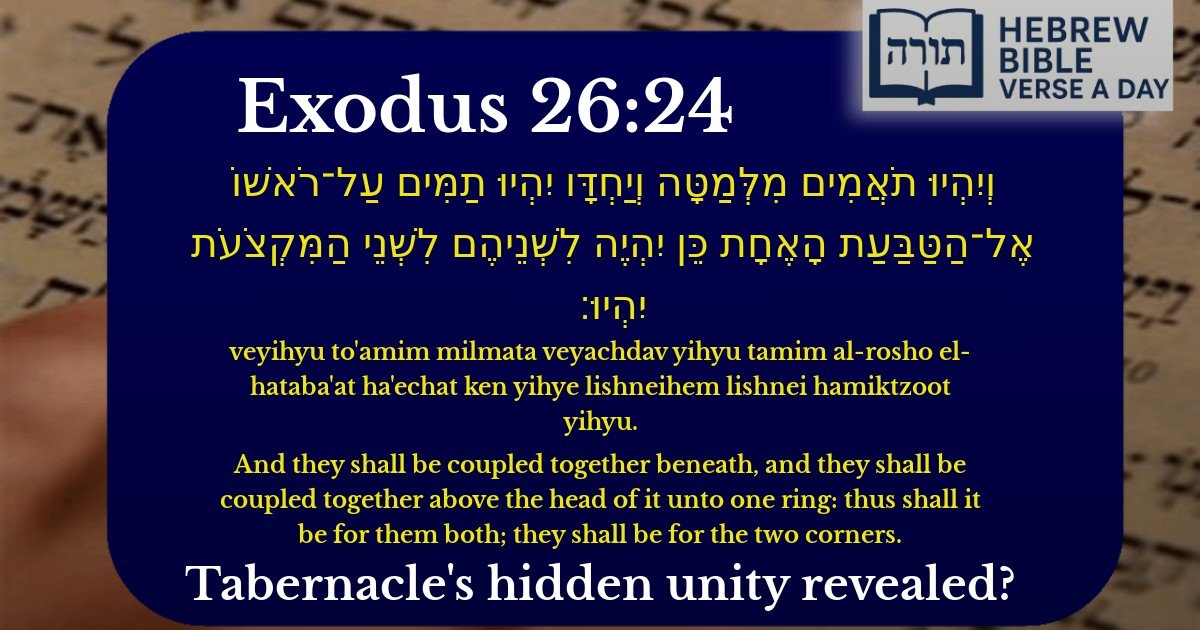
וְיִהְיוּ תֹאֲמִים מִלְּמַטָּה וְיַחְדָּו יִהְיוּ תַמִּים עַל־רֹאשׁוֹ אֶל־הַטַּבַּעַת הָאֶחָת כֵּן יִהְיֶה לִשְׁנֵיהֶם לִשְׁנֵי הַמִּקְצֹעֹת יִהְיוּ׃
English Translation
And they shall be coupled together beneath, and they shall be coupled together above the head of it unto one ring: thus shall it be for them both; they shall be for the two corners.
Transliteration
Veyihyu to'amim milmata veyachdav yihyu tamim al-rosho el-hataba'at ha'echat ken yihye lishneihem lishnei hamiktzoot yihyu.
Hebrew Leining Text
וְיִֽהְי֣וּ תֹֽאֲמִם֮ מִלְּמַ֒טָּה֒ וְיַחְדָּ֗ו יִהְי֤וּ תַמִּים֙ עַל־רֹאשׁ֔וֹ אֶל־הַטַּבַּ֖עַת הָאֶחָ֑ת כֵּ֚ן יִהְיֶ֣ה לִשְׁנֵיהֶ֔ם לִשְׁנֵ֥י הַמִּקְצֹעֹ֖ת יִהְיֽוּ׃
🎵 Listen to leining
Parasha Commentary
📚 Talmud Citations
This verse is not quoted in the Talmud.
Context of the Verse
This verse (Exodus 28:24) is part of the Torah's description of the Choshen Mishpat (Breastplate of Judgment), one of the sacred garments worn by the Kohen Gadol (High Priest) in the Mishkan (Tabernacle) and later in the Beit HaMikdash (Holy Temple). The verse discusses the arrangement of the golden chains and rings that connect the Breastplate to the Ephod (a type of apron).
Explanation of the Text
The phrase "וְיִהְיוּ תֹאֲמִים מִלְּמַטָּה" ("they shall be coupled together beneath") refers to the two lower chains of the Breastplate being joined at the bottom, while "וְיַחְדָּו יִהְיוּ תַמִּים עַל־רֹאשׁוֹ" ("and they shall be coupled together above the head of it") describes the upper chains meeting at the top, secured by a single ring ("אֶל־הַטַּבַּעַת הָאֶחָת"). This design ensured the Breastplate remained firmly attached to the Ephod.
Rashi's Commentary
Rashi (Exodus 28:24) explains that the chains were intertwined in such a way that they formed a unified structure, both above and below. The term "תֹאֲמִים" (coupled) implies symmetry and balance, reflecting the precision required in the service of the Kohen Gadol. Rashi emphasizes that this arrangement was not merely functional but carried deeper symbolic meaning—representing the unity of the Jewish people and their connection to divine justice (as the Breastplate was used for seeking divine guidance).
Symbolism in the Midrash
The Midrash Tanchuma (Tetzaveh 10) connects this verse to the unity of the Twelve Tribes of Israel. Just as the chains were bound together, the tribes were interconnected in their service to Hashem. The phrase "כֵּן יִהְיֶה לִשְׁנֵיהֶם" ("thus shall it be for them both") suggests that the unity of the people was mirrored in the unity of the sacred garments.
Rambam's Halachic Perspective
In Hilchot Klei HaMikdash (Laws of Temple Vessels 9:7), the Rambam (Maimonides) details the practical construction of the Breastplate based on this verse. He notes that the rings and chains were made of pure gold and had to be crafted with exactness, as any deviation would invalidate the garment for use in the Temple service. This underscores the importance of precision in fulfilling divine commandments.
Key Lessons