Frequently Asked Questions
Q: What does Exodus 26:29 mean in the context of building the Mishkan (Tabernacle)?
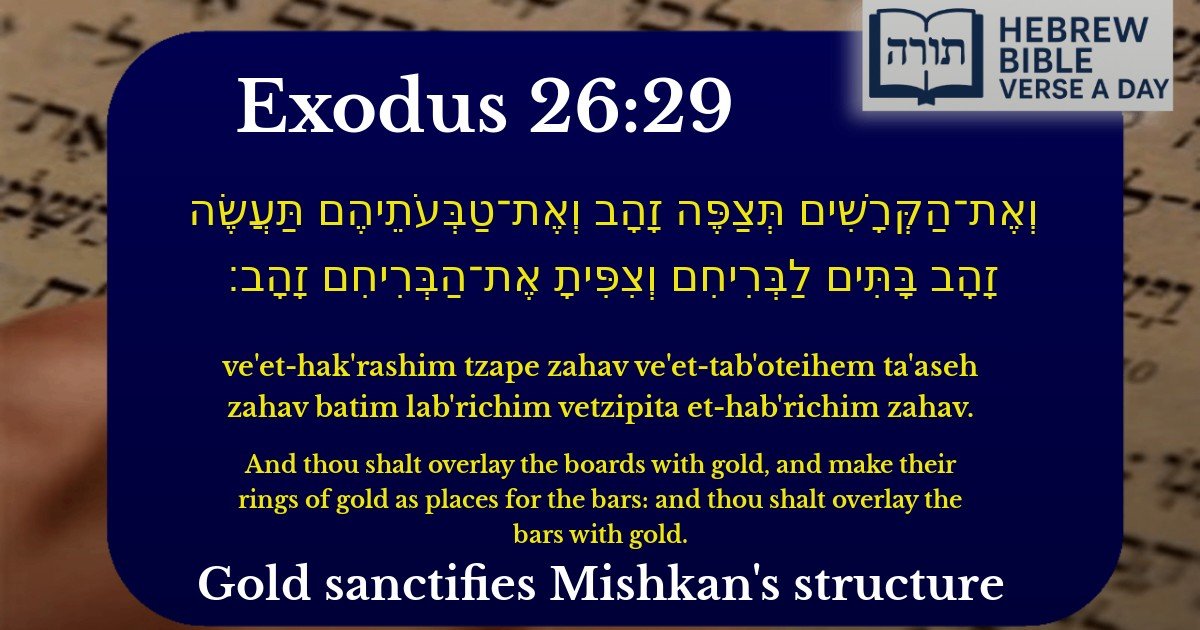
A: This verse describes the commandment to overlay the wooden boards (kerashim) of the Mishkan with gold, make golden rings for the bars (b'richim), and cover the bars themselves with gold. According to Rashi, this emphasizes the importance of beautifying the Mishkan, as it was the dwelling place of the Divine Presence (Shechinah). The gold covering symbolizes honor and sanctity.
Q: Why was gold used specifically for the Mishkan's structure?
A: Gold represents purity, value, and holiness in Jewish tradition. The Rambam explains that using gold for the Mishkan's components—boards, rings, and bars—demonstrates that even the structural elements of the Mishkan must reflect dignity and reverence for Hashem's presence. The Midrash Tanchuma also teaches that gold was chosen because it does not tarnish, symbolizing eternal sanctity.
Q: What lesson can we learn from overlaying the Mishkan's boards with gold?
A: The Talmud (Yoma 72b) teaches that just as the wooden boards were covered with gold to elevate their appearance, a person should strive to beautify mitzvot (commandments) and sacred objects. For example, we use beautiful Torah scrolls, mezuzot, and tefillin to honor Hashem. This verse teaches that external beauty in avodat Hashem (service of G-d) reflects inner devotion.
Q: How does the commandment to overlay the bars with gold apply today?
A: While we no longer build the Mishkan, the principle remains relevant. The Kli Yakar explains that just as the bars—which held the Mishkan together—were covered in gold, we must ensure that the 'support structures' of our spiritual lives (Torah study, prayer, and community) are treated with dignity. This includes maintaining beautiful synagogues and treating sefarim (holy books) with respect.
Q: What is the significance of the golden rings mentioned in Exodus 26:29?
A: Rashi explains that the golden rings served as holders for the bars that kept the Mishkan's boards firmly connected. The Midrash (Shemot Rabbah 35:4) notes that the rings symbolize unity—just as they bound the structure together, the Jewish people must remain united in serving Hashem. The gold emphasizes that unity should be pursued with sincerity and holiness.


Overview of the Verse
This verse (Exodus 26:29) describes the construction of the Mishkan (Tabernacle), specifically the gold overlay for the wooden boards (kerashim), their rings (taba'ot), and the bars (b'richim) that held the structure together. The emphasis on gold highlights the sanctity and splendor of the Mishkan as the dwelling place of the Divine Presence (Shechinah).
Rashi's Commentary
Rashi (Exodus 26:29) explains that the rings (taba'ot) were attached to the boards to serve as holders for the bars, ensuring the stability of the Mishkan. He emphasizes that the gold overlay was not merely decorative but symbolized the spiritual elevation of the Mishkan’s components. The gold covering the boards represents the refinement of physical materials for a holy purpose.
Rambam's Perspective
In Hilchot Beit HaBechirah (Laws of the Temple), Rambam (Maimonides) discusses the importance of beauty and excellence in sacred structures. The gold overlays reflect the principle of hidur mitzvah (beautifying a commandment), where one enhances the performance of mitzvot with the finest materials, as befits the honor of Hashem.
Midrashic Insights
Kabbalistic Interpretation
The Arizal (Rabbi Isaac Luria) explains that the gold overlay alludes to the divine light (or ein sof) that permeates physical existence. The wooden boards, representing the material world, are elevated through the gold, signifying the infusion of kedushah (holiness) into the mundane.
Halachic Significance
The Shulchan Aruch (Orach Chaim 153) derives from this verse the principle that objects used for mitzvot should be treated with dignity. Just as the Mishkan’s components were overlaid with gold, we should honor mitzvah objects (e.g., Torah scrolls, tefillin) with beautiful craftsmanship.