
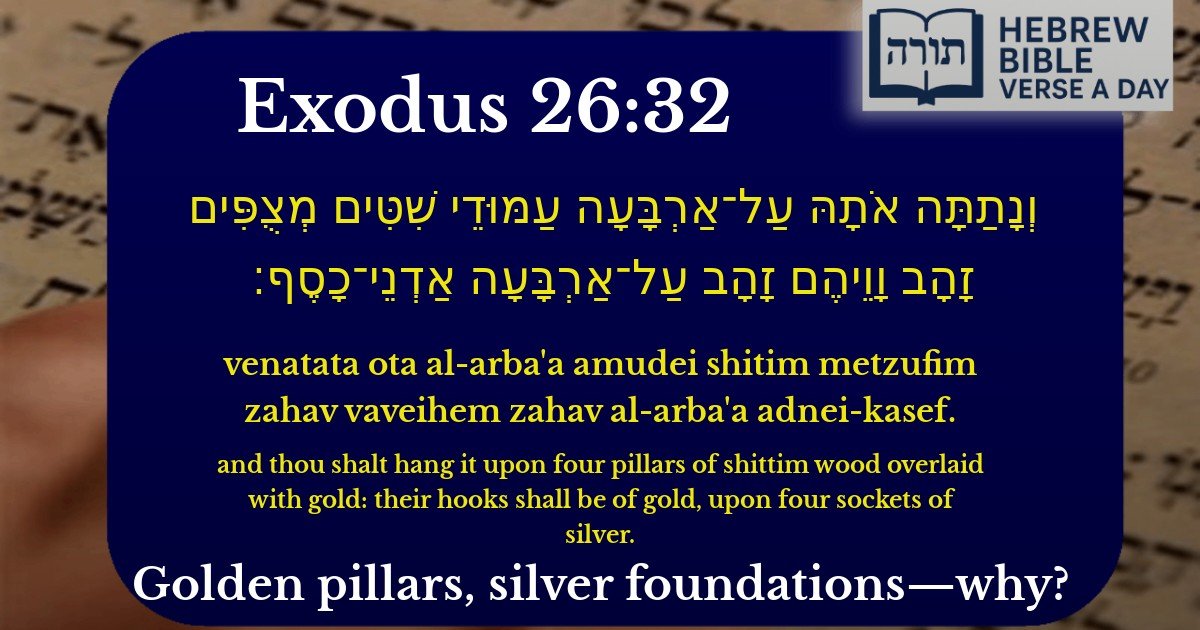

Exodus 26:32 - Golden pillars, silver foundations—why?

Exodus 26:32 - שמות 26:32

Hebrew Text

וְנָתַתָּה אֹתָהּ עַל־אַרְבָּעָה עַמּוּדֵי שִׁטִּים מְצֻפִּים זָהָב וָוֵיהֶם זָהָב עַל־אַרְבָּעָה אַדְנֵי־כָסֶף׃

English Translation

and thou shalt hang it upon four pillars of shittim wood overlaid with gold: their hooks shall be of gold, upon four sockets of silver.

Transliteration

Venatata ota al-arba'a amudei shitim metzufim zahav vaveihem zahav al-arba'a adnei-kasef.

Hebrew Leining Text

וְנָתַתָּ֣ה אֹתָ֗הּ עַל־אַרְבָּעָה֙ עַמּוּדֵ֣י שִׁטִּ֔ים מְצֻפִּ֣ים זָהָ֔ב וָוֵיהֶ֖ם זָהָ֑ב עַל־אַרְבָּעָ֖ה אַדְנֵי־כָֽסֶף׃

🎵 Listen to leining

Parasha Commentary

Explanation of the Verse

The verse (Exodus 26:32) describes the construction of the parochet (veil) that separated the Holy of Holies (Kodesh HaKodashim) from the rest of the Mishkan (Tabernacle). The parochet was to be hung upon four pillars of shittim (acacia) wood overlaid with gold, with golden hooks, and set upon four silver sockets.

Symbolism of the Materials

  • Shittim Wood: Rashi (Exodus 25:5) explains that shittim wood was chosen because it is a sturdy and durable material, symbolizing the enduring nature of the Divine Presence (Shechinah) in the Mishkan.
  • Gold Overlay: The gold covering the wood represents purity and sanctity, as gold is a precious metal associated with holiness (Rambam, Guide for the Perplexed 3:45).
  • Silver Sockets: The silver sockets (adnei kesef) signify stability and foundation, as silver is often linked to redemption (see Exodus 30:12-16). The Midrash (Shemot Rabbah 35:2) connects the silver to the atonement of the Jewish people.

Significance of the Number Four

The four pillars correspond to the four directions of the world, symbolizing that the Divine Presence is accessible from all corners of the earth (Malbim on Exodus 26:32). Additionally, the Talmud (Yoma 54a) teaches that the four pillars allude to the four kingdoms that would later dominate Israel, yet the presence of the parochet signifies that holiness remains protected despite external influences.

The Parochet as a Separation

The parochet served as a barrier between the Holy and the Holy of Holies, emphasizing the gradations of sanctity in the Mishkan. The Kli Yakar (Exodus 26:33) explains that this separation teaches the importance of approaching holiness with reverence and proper preparation, as only the Kohen Gadol (High Priest) could enter the Holy of Holies on Yom Kippur.

📚 Talmud Citations

This verse is quoted in the Talmud.

📖 Shabbat 28b
The verse is referenced in a discussion about the materials used in the construction of the Tabernacle, specifically the use of shittim wood and gold overlays.
📖 Yoma 72a
The verse is cited in a discussion about the holiness and construction details of the Tabernacle, emphasizing the materials and craftsmanship involved.

Frequently Asked Questions

Q: What does Exodus 26:32 describe?
A: Exodus 26:32 describes the construction of the Parochet (the curtain) that separated the Holy of Holies (Kodesh HaKodashim) from the rest of the Mishkan (Tabernacle). It was to be hung on four pillars made of shittim (acacia) wood overlaid with gold, with golden hooks, and set upon four silver sockets.
Q: Why were the pillars made of shittim wood overlaid with gold?
A: According to Rashi and other commentators, the shittim wood symbolizes humility (as wood is a simple material), while the gold overlay represents spiritual refinement and holiness. This combination teaches that true holiness requires humility as a foundation, elevated by spiritual growth.
Q: What is the significance of the four pillars in Exodus 26:32?
A: The four pillars represent the four foundational elements of divine service in the Mishkan: Torah study, prayer, acts of kindness, and repentance. The Midrash teaches that just as these pillars supported the Parochet, these spiritual pillars uphold a person's connection to Hashem.
Q: Why were the sockets made of silver?
A: The silver sockets (adnei kesef) signify stability and purity in divine service. Silver often represents Torah wisdom (as in Proverbs 3:14) and moral refinement. The Talmud (Yoma 72b) connects silver with the sanctity required for the Mishkan's foundation.
Q: How does this verse apply to us today?
A: Just as the Parochet separated the Holy of Holies, we learn the importance of creating boundaries for holiness in our lives. The Rambam teaches that the Mishkan's details provide eternal lessons about structuring our homes and communities to reflect spiritual values, with beauty (gold), humility (wood), and wisdom (silver) in balance.