

Join Our Newsletter To Be Informed When New Videos Are Posted
Hebrew Text
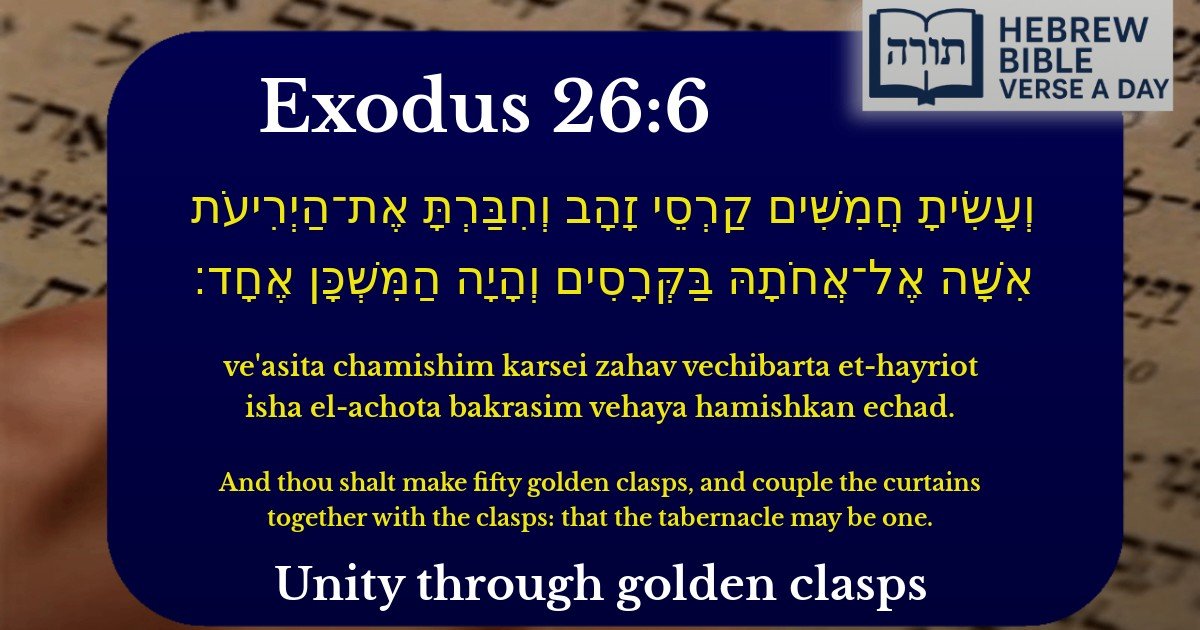
וְעָשִׂיתָ חֲמִשִּׁים קַרְסֵי זָהָב וְחִבַּרְתָּ אֶת־הַיְרִיעֹת אִשָּׁה אֶל־אֲחֹתָהּ בַּקְּרָסִים וְהָיָה הַמִּשְׁכָּן אֶחָד׃
English Translation
And thou shalt make fifty golden clasps, and couple the curtains together with the clasps: that the tabernacle may be one.
Transliteration
Ve'asita chamishim karsei zahav vechibarta et-hayriot isha el-achota bakrasim vehaya hamishkan echad.
Hebrew Leining Text
וְעָשִׂ֕יתָ חֲמִשִּׁ֖ים קַרְסֵ֣י זָהָ֑ב וְחִבַּרְתָּ֨ אֶת־הַיְרִיעֹ֜ת אִשָּׁ֤ה אֶל־אֲחֹתָהּ֙ בַּקְּרָסִ֔ים וְהָיָ֥ה הַמִּשְׁכָּ֖ן אֶחָֽד׃
🎵 Listen to leining
Parasha Commentary
📚 Talmud Citations
This verse is quoted in the Talmud.
📖 Shabbat 99a
The verse is referenced in a discussion about the construction of the Tabernacle, specifically regarding the joining of the curtains with golden clasps.
📖 Yoma 72a
The verse is cited in a discussion about the unity and integrity of the Tabernacle, emphasizing how the clasps symbolize the connection between different parts.
The Golden Clasps and the Unity of the Mishkan
The verse (Shemot 26:6) commands the making of fifty golden clasps (karsei zahav) to join the curtains of the Mishkan together, emphasizing that the result should be "vehayah haMishkan echad"—"the Mishkan shall be one." Rashi explains that these clasps served a practical purpose—to connect the two sets of five curtains each, forming a unified covering. However, the deeper symbolism lies in the unity they represent.
Symbolism of the Fifty Clasps
According to the Midrash (Shemot Rabbah 35:2), the fifty clasps correspond to the fifty gates of understanding (sha'arei binah), of which only forty-nine were accessible to Moshe Rabbeinu. The golden clasps, therefore, symbolize the striving for divine wisdom and the unification of physical and spiritual realms in the service of Hashem. The Ramban adds that gold, being the most precious metal, signifies the importance of unity in holiness.
The Mishkan as a Unified Entity
The phrase "vehayah haMishkan echad" teaches that the Mishkan was not merely a collection of parts but a single, cohesive entity. The Talmud (Yoma 72a) derives from this that just as the Mishkan's components must unite harmoniously, so too must Klal Yisrael strive for unity. The clasps, though small in size, played a critical role in binding the structure together, paralleling how individual Jews, through shared purpose, create a unified nation.
Practical and Spiritual Lessons