

Join Our Newsletter To Be Informed When New Videos Are Posted
Hebrew Text
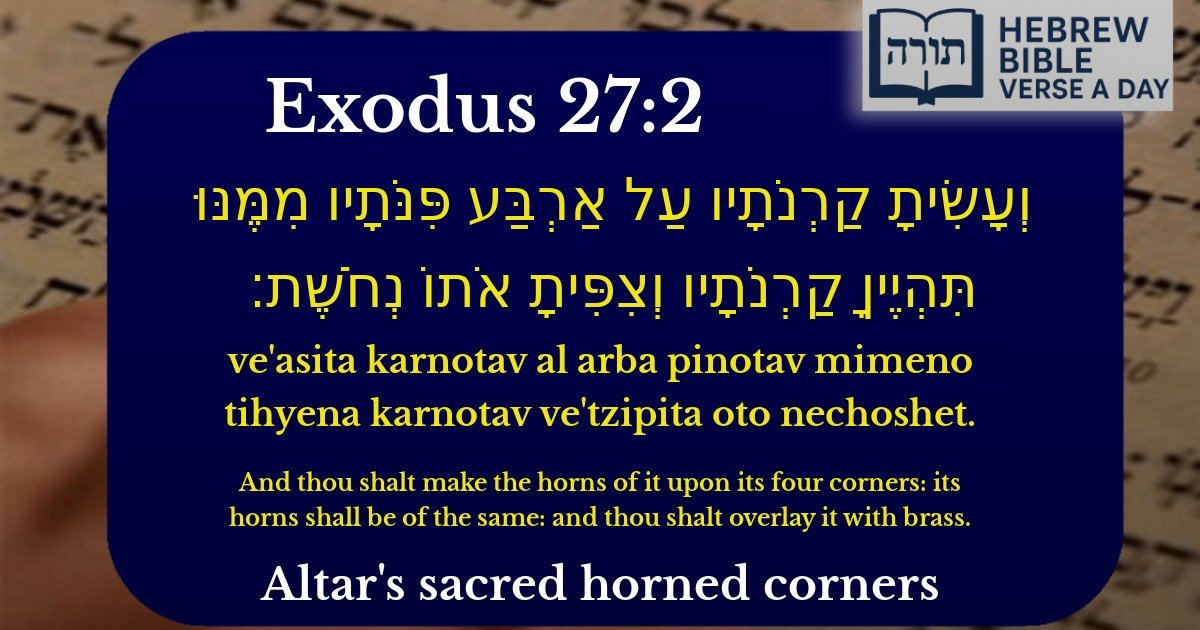
וְעָשִׂיתָ קַרְנֹתָיו עַל אַרְבַּע פִּנֹּתָיו מִמֶּנּוּ תִּהְיֶיןָ קַרְנֹתָיו וְצִפִּיתָ אֹתוֹ נְחֹשֶׁת׃
English Translation
And thou shalt make the horns of it upon its four corners: its horns shall be of the same: and thou shalt overlay it with brass.
Transliteration
Ve'asita karnotav al arba pinotav mimeno tihyena karnotav ve'tzipita oto nechoshet.
Hebrew Leining Text
וְעָשִׂ֣יתָ קַרְנֹתָ֗יו עַ֚ל אַרְבַּ֣ע פִּנֹּתָ֔יו מִמֶּ֖נּוּ תִּהְיֶ֣יןָ קַרְנֹתָ֑יו וְצִפִּיתָ֥ אֹת֖וֹ נְחֹֽשֶׁת׃
🎵 Listen to leining
Parasha Commentary
📚 Talmud Citations
This verse is quoted in the Talmud.
📖 Zevachim 53b
The verse is referenced in a discussion about the construction and dimensions of the altar, specifically regarding the horns of the altar and their overlay with brass.
📖 Menachot 97b
The verse is cited in the context of discussing the materials and construction details of the altar, emphasizing the requirement for the horns to be made from the same material as the altar and overlaid with brass.
Context of the Verse
This verse (Exodus 27:2) describes the construction of the mizbe'ach (altar) for the Mishkan (Tabernacle). The horns (karnot) were protrusions on the four corners of the altar, made from the same material as the altar itself and overlaid with copper (nechoshet).
Rashi's Explanation
Rashi (Exodus 27:2) explains that the horns were an integral part of the altar, formed from the same block of material rather than being attached separately. He notes that the word mimenu ("from it") emphasizes this unity. Rashi also cites the Talmud (Zevachim 53b), which states that the horns had halachic significance—specifically, that the blood of certain sacrifices was applied to them.
Symbolism of the Horns
Halachic Significance
The Rambam (Hilchos Beis HaBechirah 2:5-7) details the practical halachos of the altar's horns, including their dimensions and the requirement that they be squarely positioned. The Mishnah (Zevachim 5:3) further explains that the horns were essential for certain korbanot (offerings), such as the chatas (sin offering), where blood was applied to them.
Material: Copper Overlay
The copper overlay (nechoshet) is interpreted by the Chizkuni as a practical measure to protect the altar from fire damage. The Sforno adds that copper symbolizes durability and judgment, reflecting the altar's role in atonement and divine service.