Frequently Asked Questions
Q: What is the significance of the stones in Exodus 28:18?
A: The stones mentioned in Exodus 28:18 were part of the Choshen (Breastplate) worn by the Kohen Gadol (High Priest). Each stone represented one of the twelve tribes of Israel (Shmot Rabbah 38:9). The turquoise (nofech), sapphire (sapir), and diamond (yahalom) in the second row symbolized the tribes of Issachar, Judah, and Zebulun respectively (Rashi on Exodus 28:18).
Q: Why were specific stones chosen for the High Priest's breastplate?
A: The stones were chosen based on their unique qualities and colors, which corresponded to the spiritual attributes of each tribe (Zohar, Terumah 170b). The Torah does not specify why these particular stones were assigned to each tribe, but our Sages teach that each stone reflected the tribe's character and role within the Jewish people (Ramban on Exodus 28:17-20).
Q: What does the sapphire (sapir) stone represent in Jewish tradition?
A: In Jewish tradition, the sapphire (sapir) is associated with the tribe of Judah and is connected to royalty and leadership (Rashi on Exodus 28:18). The Midrash (Bamidbar Rabbah 2:7) also connects sapphire to the tablets of the Ten Commandments, which were said to be made of sapphire (Exodus 24:10).
Q: How do we know which stone corresponds to which tribe?
A: The order of the stones is given in the Torah (Exodus 28:17-21), and our Sages (including Rashi and Ramban) explain the correspondence based on the order of the tribes' birth and their encampment around the Mishkan (Tabernacle). The second row's stones correspond to Issachar, Judah, and Zebulun based on this arrangement.
Q: Are these stones still significant in Judaism today?
A: While we no longer have the actual Choshen, these stones remain significant as they represent the unity of the Jewish people and our connection to the twelve tribes. Some have customs to wear jewelry with these stones as a remembrance (Kitzur Shulchan Aruch 168:8), and they are often referenced in Jewish art and synagogue decorations.

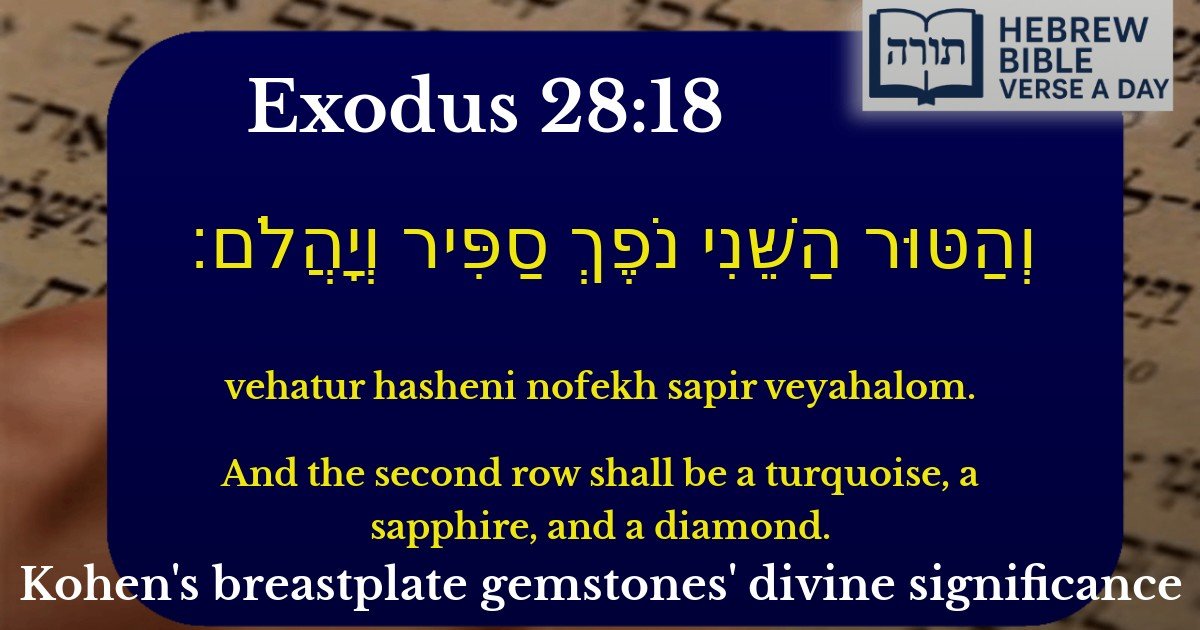

The Stones of the Choshen (Breastplate)
The verse describes the second row of stones in the Choshen (Breastplate) of the Kohen Gadol (High Priest), which contained three precious stones: נֹפֶךְ (nofech, turquoise), סַפִּיר (sappir, sapphire), and יָהֲלֹם (yahalom, diamond). Each stone corresponded to one of the twelve tribes of Israel, as detailed in Shemot Rabbah (38:8).
Interpretations of the Stones
Symbolism and Kabbalistic Insights
According to the Arizal (Etz Chaim, Shaar HaTefillin), each stone in the Choshen channeled divine energy to the corresponding tribe. The second row—linked to the Sefirah of Gevurah (strength)—reflects the balance of justice and mercy in divine governance, as taught in Sefer Yetzirah (1:5).
Practical Halachic Considerations
The Shulchan Aruch (Orach Chaim 98:4, based on Rosh Hashanah 17b) notes that the stones’ arrangement influenced the Kohen Gadol’s prayers, ensuring divine favor for each tribe. The Mishneh Torah (Hilchos Klei HaMikdash 9:9) emphasizes their precise placement as a mitzvah of the highest sanctity.