

Join Our Newsletter To Be Informed When New Videos Are Posted
Hebrew Text
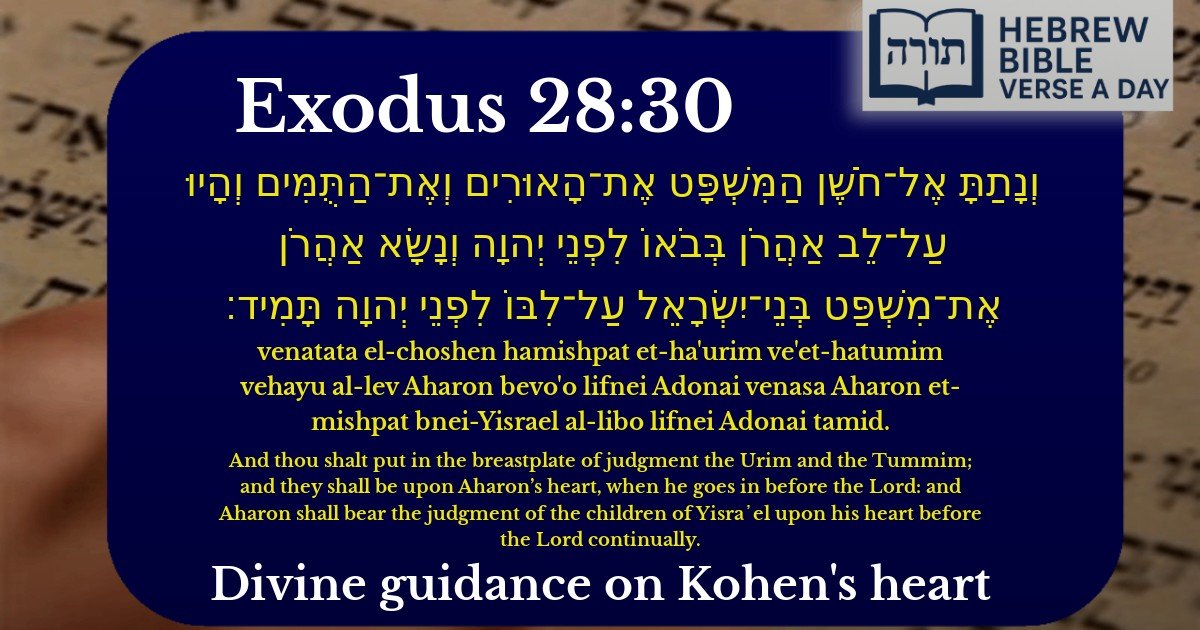
וְנָתַתָּ אֶל־חֹשֶׁן הַמִּשְׁפָּט אֶת־הָאוּרִים וְאֶת־הַתֻּמִּים וְהָיוּ עַל־לֵב אַהֲרֹן בְּבֹאוֹ לִפְנֵי יְהוָה וְנָשָׂא אַהֲרֹן אֶת־מִשְׁפַּט בְּנֵי־יִשְׂרָאֵל עַל־לִבּוֹ לִפְנֵי יְהוָה תָּמִיד׃
English Translation
And thou shalt put in the breastplate of judgment the Urim and the Tummim; and they shall be upon Aharon’s heart, when he goes in before the Lord: and Aharon shall bear the judgment of the children of Yisra᾽el upon his heart before the Lord continually.
Transliteration
Venatata el-choshen hamishpat et-ha'urim ve'et-hatumim vehayu al-lev Aharon bevo'o lifnei Adonai venasa Aharon et-mishpat bnei-Yisrael al-libo lifnei Adonai tamid.
Hebrew Leining Text
וְנָתַתָּ֞ אֶל־חֹ֣שֶׁן הַמִּשְׁפָּ֗ט אֶת־הָאוּרִים֙ וְאֶת־הַתֻּמִּ֔ים וְהָיוּ֙ עַל־לֵ֣ב אַהֲרֹ֔ן בְּבֹא֖וֹ לִפְנֵ֣י יְהֹוָ֑ה וְנָשָׂ֣א אַ֠הֲרֹ֠ן אֶת־מִשְׁפַּ֨ט בְּנֵי־יִשְׂרָאֵ֧ל עַל־לִבּ֛וֹ לִפְנֵ֥י יְהֹוָ֖ה תָּמִֽיד׃ {ס}
🎵 Listen to leining
Parasha Commentary
📚 Talmud Citations
This verse is quoted in the Talmud.
📖 Yoma 73b
The verse is discussed in the context of the Urim and Thummim and their role in divine communication, particularly how they were used by the High Priest.
📖 Sotah 48b
Mentions the cessation of the Urim and Thummim after the destruction of the First Temple, referencing this verse to explain their original function.
The Urim and Thummim in the Choshen Mishpat
The verse (Shemot 28:30) describes the placement of the Urim and Thummim within the Choshen Mishpat (Breastplate of Judgment), which Aharon the Kohen Gadol wore when entering before Hashem. According to Rashi, the Urim and Thummim were a divine mechanism through which the Kohen Gadol could receive answers from Hashem regarding matters of national importance. The name "Urim" (אורים) is derived from "or" (light), symbolizing clarity, while "Thummim" (תומים) comes from "tamim" (perfect), representing truth and completion.
The Function of the Urim and Thummim
The Rambam (Hilchos Klei HaMikdash 10:11) explains that the Urim and Thummim were used to answer questions posed by the king or the Sanhedrin, particularly regarding matters of war or national policy. The letters on the stones of the Choshen would illuminate in response to inquiries, forming words through divine inspiration. The Talmud (Yoma 73b) elaborates that the Kohen Gadol would face the Shechinah, concentrate on the question, and the letters would shine in sequence to provide an answer.
Aharon Bearing the Judgment of Bnei Yisrael
The verse emphasizes that Aharon would "bear the judgment of Bnei Yisrael upon his heart before Hashem continually." Rashi explains that this means the Kohen Gadol must always be mindful of the needs and struggles of the Jewish people, interceding on their behalf. The Midrash Tanchuma (Tetzaveh 6) adds that the Choshen served as a reminder of the 12 tribes, ensuring that Aharon carried their spiritual and physical welfare in his heart at all times.
Symbolism of the Heart
The placement of the Urim and Thummim "upon Aharon’s heart" signifies the necessity of sincere devotion in seeking divine guidance. The Kli Yakar notes that just as the heart is the center of a person’s emotions and intellect, the Kohen Gadol’s service required both deep emotional connection and intellectual clarity when inquiring of Hashem. This teaches that true leadership involves carrying the burdens of the people with genuine care and wisdom.
Contemporary Lessons