
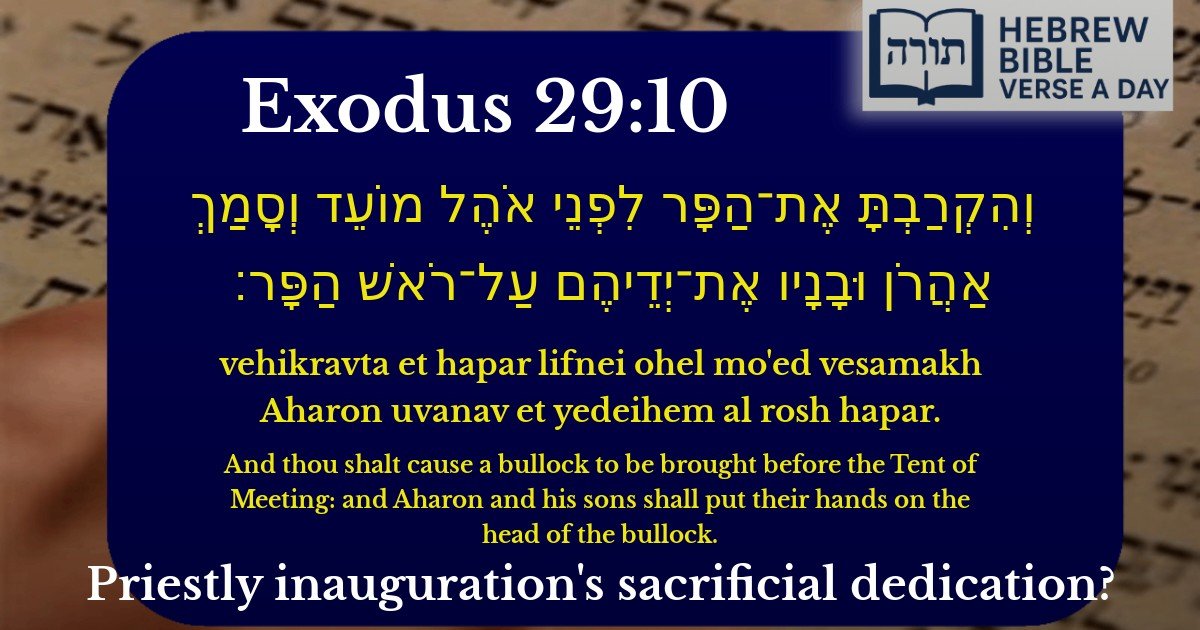

Exodus 29:10 - Priestly inauguration's sacrificial dedication?

Exodus 29:10 - שמות 29:10

Hebrew Text

וְהִקְרַבְתָּ אֶת־הַפָּר לִפְנֵי אֹהֶל מוֹעֵד וְסָמַךְ אַהֲרֹן וּבָנָיו אֶת־יְדֵיהֶם עַל־רֹאשׁ הַפָּר׃

English Translation

And thou shalt cause a bullock to be brought before the Tent of Meeting: and Aharon and his sons shall put their hands on the head of the bullock.

Transliteration

Vehikravta et hapar lifnei ohel mo'ed vesamakh Aharon uvanav et yedeihem al rosh hapar.

Hebrew Leining Text

וְהִקְרַבְתָּ֙ אֶת־הַפָּ֔ר לִפְנֵ֖י אֹ֣הֶל מוֹעֵ֑ד וְסָמַ֨ךְ אַהֲרֹ֧ן וּבָנָ֛יו אֶת־יְדֵיהֶ֖ם עַל־רֹ֥אשׁ הַפָּֽר׃

🎵 Listen to leining

Parasha Commentary

Context of the Verse

This verse (Shemot 29:10) is part of the Torah's instructions regarding the consecration of Aharon and his sons as Kohanim (priests) for the Mishkan (Tabernacle). The bullock (פָּר) mentioned here serves as a chatat (sin offering) to atone for any impurities or missteps during their inauguration.

Symbolism of Semichah (Laying Hands)

The act of semichah (סְמִיכָה), where Aharon and his sons place their hands on the bullock's head, is interpreted by Rashi (based on Torat Kohanim) as a symbolic transfer of ownership and identification with the offering. By pressing their hands upon the animal, they acknowledge that this sacrifice atones for them.

  • Rambam (Hilchot Ma'aseh HaKorbanot 3:15) explains that semichah is a crucial step in the sacrificial process, demonstrating the owner's direct involvement in the korban.
  • Midrash Tanchuma (Tzav 14) adds that the pressure of the hands represents a form of confession (viduy), as the korban serves to rectify spiritual shortcomings.

The Bullock as a Sin Offering

The choice of a bullock (פָּר) specifically relates to its role as a chatat for the Kohanim. The Talmud (Horayot 11b) notes that a bullock is brought for communal or priestly sins, emphasizing the gravity of their role and the need for atonement before assuming service in the Mishkan.

Aharon and His Sons as a Unified Entity

The verse mentions Aharon and his sons performing semichah together, symbolizing their collective responsibility in the priesthood. Ramban explains that this unity underscores the transmission of the Kehunah (priesthood) as a hereditary covenant, binding future generations to the sanctity of their role.

📚 Talmud Citations

This verse is quoted in the Talmud.

📖 Zevachim 32b
The verse is discussed in the context of the laws concerning the laying of hands (semikha) on sacrificial animals, specifically addressing the procedure for the bullock brought before the Tent of Meeting.
📖 Menachot 92a
The verse is referenced in a discussion about the proper performance of sacrificial rites, emphasizing the role of Aharon and his sons in the sacrificial process.

Frequently Asked Questions

Q: What does it mean to 'put their hands on the head of the bullock' in Exodus 29:10?
A: In this verse, Aharon and his sons placing their hands on the bullock's head is an act called 'semichah' (סְמִיכָה). According to Rashi and the Talmud (Menachot 93a), this symbolizes transferring ownership and atonement onto the animal before it is offered as a sacrifice. It shows that the sacrifice is being done on their behalf.
Q: Why was a bullock brought before the Tent of Meeting in Exodus 29:10?
A: The bullock was brought as part of the consecration ceremony for Aharon and his sons to become Kohanim (priests). Rambam explains in Hilchot Klei HaMikdash that this was a 'chatat' (sin offering) to purify them before beginning their sacred service in the Mishkan (Tabernacle).
Q: What lesson can we learn today from the act of semichah (laying hands) in this verse?
A: The Midrash (Tanchuma Vayikra 8) teaches that semichah demonstrates humility and taking responsibility. Even though the Kohanim were being elevated to holy service, they had to acknowledge their imperfections and seek atonement. Today, we learn the importance of introspection and spiritual preparation before approaching sacred matters.
Q: Why specifically a bullock and not another animal in Exodus 29:10?
A: Rashi (based on Chullin 11b) explains that a bullock was chosen because it represents strength and leadership. Since this was the inaugural sacrifice for the priesthood - a position of spiritual leadership - the bull symbolized the gravity of their new role and the power needed to fulfill it properly.
Q: How does this verse connect to the broader context of the Kohanim's consecration?
A: As the Ramban explains, this was the first step in the seven-day inauguration process described in this chapter. The laying of hands on the bullock initiated a series of sacrifices and rituals (like anointing with oil) that would fully sanctify Aharon and his sons for their priestly duties in serving Hashem and the Jewish people.